
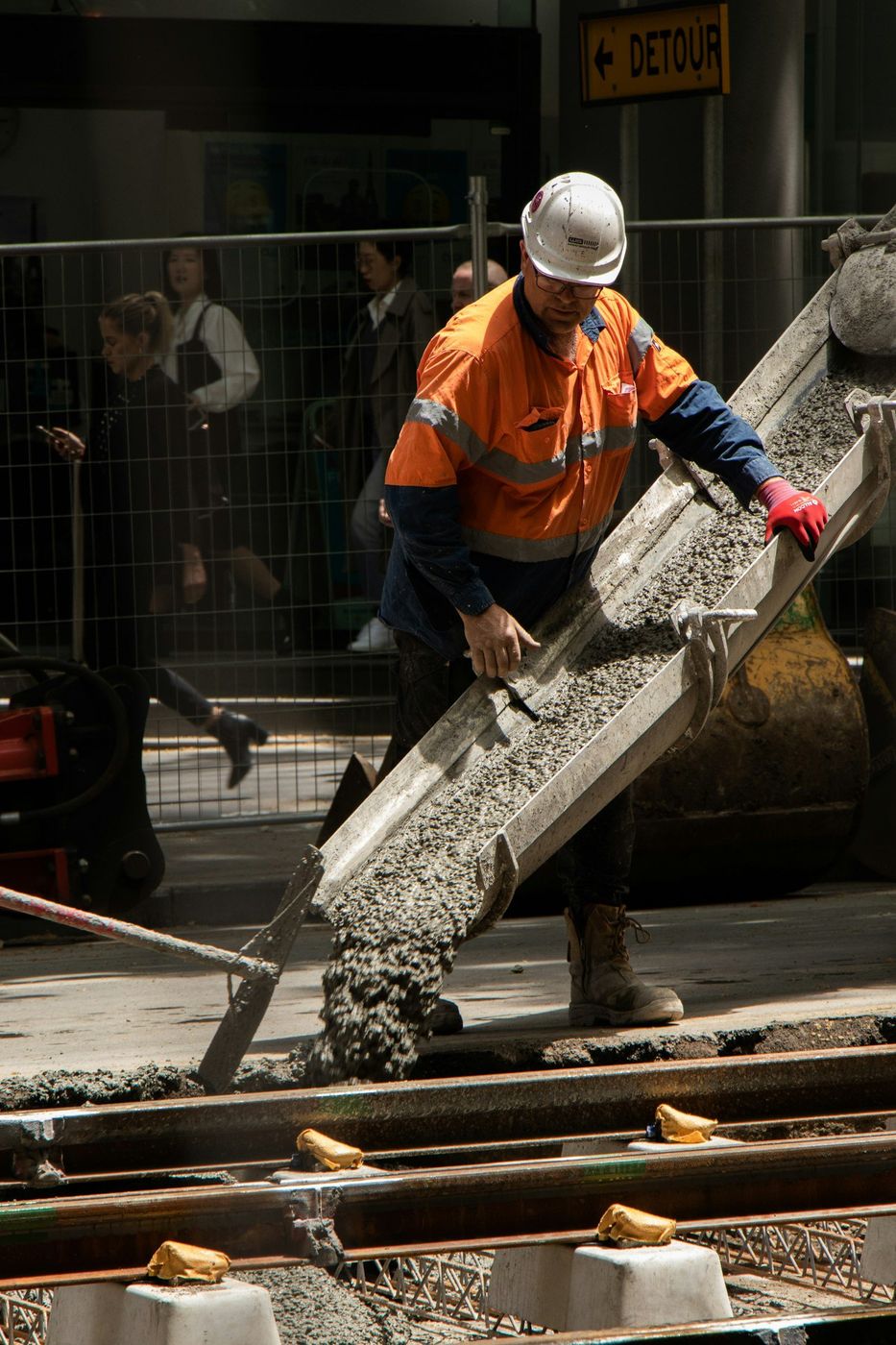
The truck is the least interesting thing that happens all morning. The holes are the job.
The truck is the least interesting part of a footing pour. It arrives, it turns, it discharges, and when the morning went right that's forty boring minutes. What decides whether your deck, porch, detached garage, or shop still sits level in fifteen years happened before the chute ever swung out, down in holes nobody will look at again.
We drill and pour bearing all over Lakewood, and the ground hands us a different morning depending on which part of town we're standing in. Applewood gives us one thing, the rise toward Green Mountain gives us another, and the low ground around Bear Creek gives us water. Here's how the day actually runs, hole by hole, including everything that can stop it.
Layout goes down the afternoon before, so the morning starts with drilling. Then the part crews earn their money on: cleaning. Every hole gets the loose spoil pulled out of the bottom, because a pier bearing on four inches of its own cuttings is a pier bearing on nothing. Standing water gets pumped. Sidewalls get checked for sloughing. Depth gets measured against two requirements people constantly confuse.
Frost sets a minimum depth. Load sets the width, or in a drilled pier, the diameter and the side friction the shaft develops. Different questions, different answers, and satisfying one doesn't satisfy the other. A wide, shallow pad under a porch post carries the weight beautifully and still gets shoved upward by soil freezing underneath it. Our engineer sizes both. The crew's job is confirming the hole matches what got drawn.
| What's in the hole | Why it stops the pour | What happens next |
|---|---|---|
| Water standing in the bottom | Concrete placed into water washes cement out of the mix | Pump it, let it recover, and re-check before anything goes in |
| Soft, spongy material underfoot | The bearing number on the plan assumed firm ground | Dig deeper to something solid, or the engineer resizes it |
| A sidewall crumbling into the shaft | Loose soil falling in ends up under the concrete | Case the hole, or open it up and step back to stable material |
| Rock ledge under one half, soil under the other | Half the footing settles and half doesn't | Carry the whole footing to the rock, or bridge it by design |
| A frozen crust in the top of the excavation | Frozen ground thaws later and leaves the footing hanging | Strip the frozen material out before a single yard is placed |
| Old buried concrete or a big root | Neither one is bearing material and both hide voids | Break it out, chase it to clean soil, then reassess depth |
Cages get tied on the ground and dropped in, then held so they sit centered instead of leaning against dirt. That gap matters more than most people expect. Steel needs concrete completely around it, so it stays dry and does its job for the life of the structure. Bar pressed against a soil wall is bar with a rust clock running on it.
Then the small things that are miserable to fix later. Dowels for whatever ties in above. Sleeves for conduit somebody will want next year. Anchor hardware set to the layout rather than eyeballed while the concrete stiffens. Elevation marks so the tops come out at one height across a row of piers, because posts cut to different lengths read crooked from the yard forever.
We'll walk the site, tell you how deep we expect to go, and put it in writing before anybody rents a machine. (303) 569-4046.
Late spring through fall is the easy stretch, and even then the afternoon is a factor. A storm that fills six open holes turns a clean morning into a pumping exercise, so we drill and pour the same day whenever we can. Open holes collect water, collapse edges, and become a hazard around a house with kids and dogs in it.
Winter work happens, it just costs attention. Frost in the upper ground is slow to auger and has to come out entirely, warm mix water and blankets protect the concrete while it sets, and nobody places on frozen bearing. Rock is its own season on the west side of town, indifferent to the calendar. If you want a deck usable by Memorial Day, get the holes in during a February or March window and let the concrete take its time while your builder orders material.
Still unsure about something?
Call the crew at (303) 569-4046 and we will talk it through.

Get a free, no-obligation estimate from a crew that knows Colorado soil, Colorado weather, and how to finish concrete that lasts.
Accessibility
Adjust the site to fit how you read and browse. Your choices are saved on this device.