
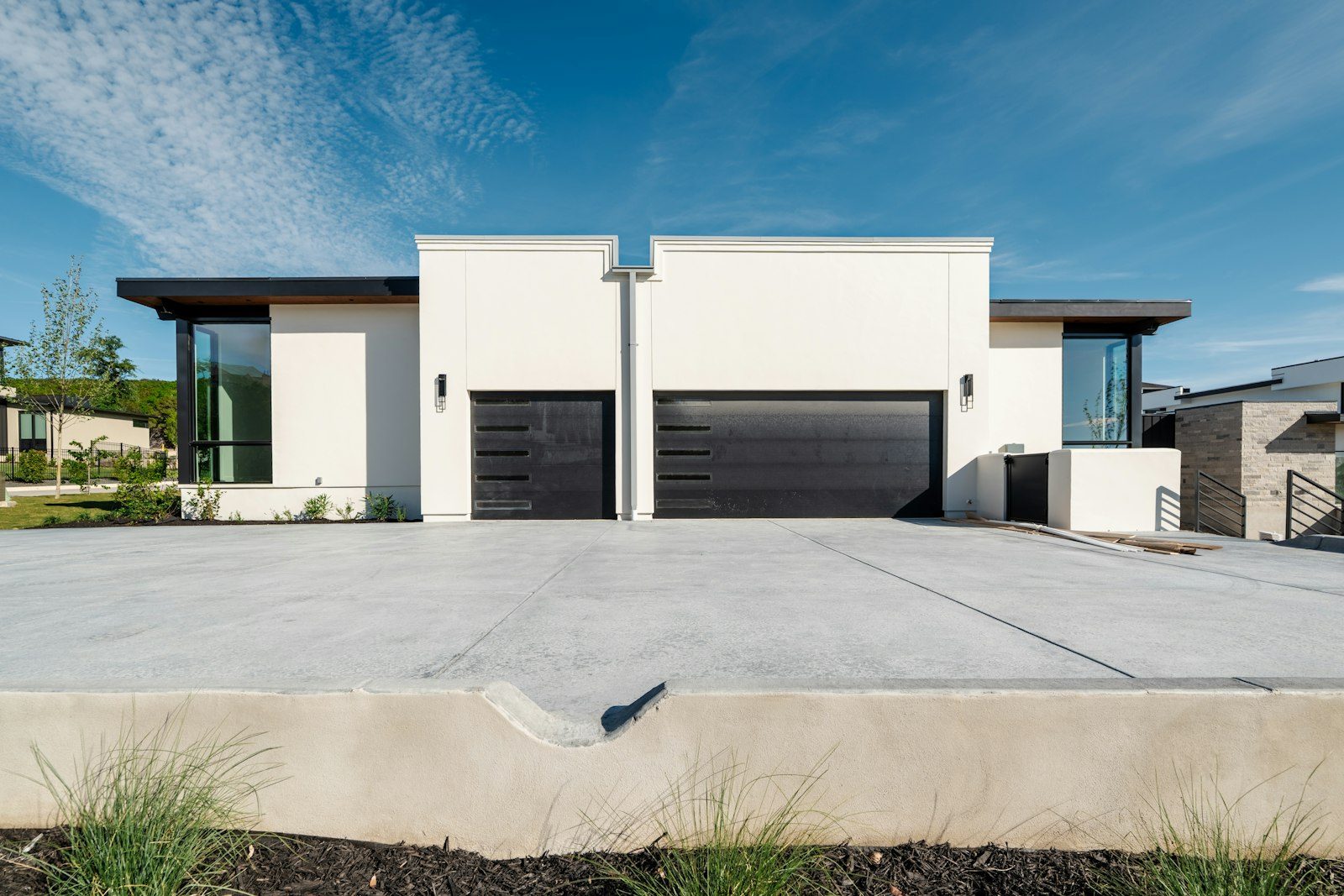
We talk people out of sealing about as often as we sell it, which is why the ones we do seal stay sealed.
Sealing is one of the few things in this trade where the wrong answer and the right answer both look fine for about eighteen months. Put the wrong product on a slab and it performs, right up until the first hard winter, and then you're not maintaining concrete anymore, you're removing a failed coating. That's a considerably worse job than the one you were trying to avoid.
So we treat it as a decision rather than a service. There are slabs in Lakewood that badly need a sealer and aren't getting one. There are others where somebody is about to buy a product that makes their driveway slicker and their spring uglier. Which one you have takes about ten minutes to work out, standing on the concrete.
A slab we poured last month doesn't get sealed, no matter how much you want it protected. Fresh concrete is still giving off moisture, and trapping that under a film gets you a cloudy, blotchy driveway. We wait, usually the better part of a month, longer if the weather has been wet. A slab coming out in two years doesn't get sealed either, because that money belongs in the replacement fund.
Where we push the other direction is decorative work. Colored, stamped, and washed surfaces carry their finish in the top sliver of the slab, and the sealer is the sacrificial layer keeping UV and chloride off it. Skip that and the color goes flat in a handful of seasons. Same for anything on the north side that stays wet, anything taking heavy meltwater off a roof, and any slab where you can already see sand at the surface. Those need help before winter, not after.
Penetrating sealers soak in and react down inside the pores. Silanes and siloxanes, mostly. When they're done there's nothing on the surface, the concrete looks unchanged, traction is unchanged, and water beads instead of soaking in. Nothing can peel because nothing sits on top. They're what we put on plain broom driveways, walks, and garage floors, anywhere winter chemistry is a fact of life. They also can't do a thing for color, because they're invisible.
Film-forming sealers are the other family. Acrylics, urethanes, and the like. They lay a layer across the top that deepens color and adds gloss, and they give stamped and stained work the look people paid for. They also trap whatever is underneath, blush white if moisture gets behind them, and go slick when wet unless we blend in a traction additive. On decorative concrete they aren't optional. On a plain driveway they're usually a mistake.
| Part of the job | With a pail from the store | What we bring to it |
|---|---|---|
| Knowing what is already on the slab | A guess, and the wrong guess means the new product will not bond | A solvent test on a hidden spot before anything is ordered |
| Getting the old film off | Rented equipment and a long, discouraging weekend | Chemical stripping or mechanical removal, with the debris hauled out |
| Checking moisture | Skipped almost every time | Plastic sheet test, plus a look at what the weather has done all week |
| Picking the product | Whatever the shelf has, in whatever gloss looked good | Chosen for the finish, the exposure, and how the surface gets used |
| Putting it down | Too heavy, because more feels safer | Measured coverage, thin coats, back-rolled, traction additive where people walk |
| The weather window | Whenever the weekend is free | Slab temperature, dew point, and the next twenty-four hours all checked |
We test it, tell you what it is, and tell you whether it needs anything this year. Free estimates, licensed and insured. Call (303) 569-4046.
The best sealing weather here is warm dry days with mild nights, which points at late spring and early fall. Fall has the stronger argument: you're putting protection down right before the season that does the damage, and the slab has had all summer to dry. Spring works too, though we're careful after a wet winter, since concrete holds water longer than it looks like it should.
Where you are in town shifts the priorities. Green Mountain properties on slope send runoff across their own flatwork and their drives take real abuse from winter traction sand. Bear Creek and Applewood have shaded walks that stay damp for days, which argues for penetrating products and against films. Belmar has older concrete where a sealer honestly extends the life of a slab near the end of it. Solterra is mostly about protecting a good surface before it starts losing paste, which is the cheapest sealing you will ever buy.
Still unsure about something?
Call the crew at (303) 569-4046 and we will talk it through.
Get a free, no-obligation estimate from a crew that knows Colorado soil, Colorado weather, and how to finish concrete that lasts.
Accessibility
Adjust the site to fit how you read and browse. Your choices are saved on this device.