
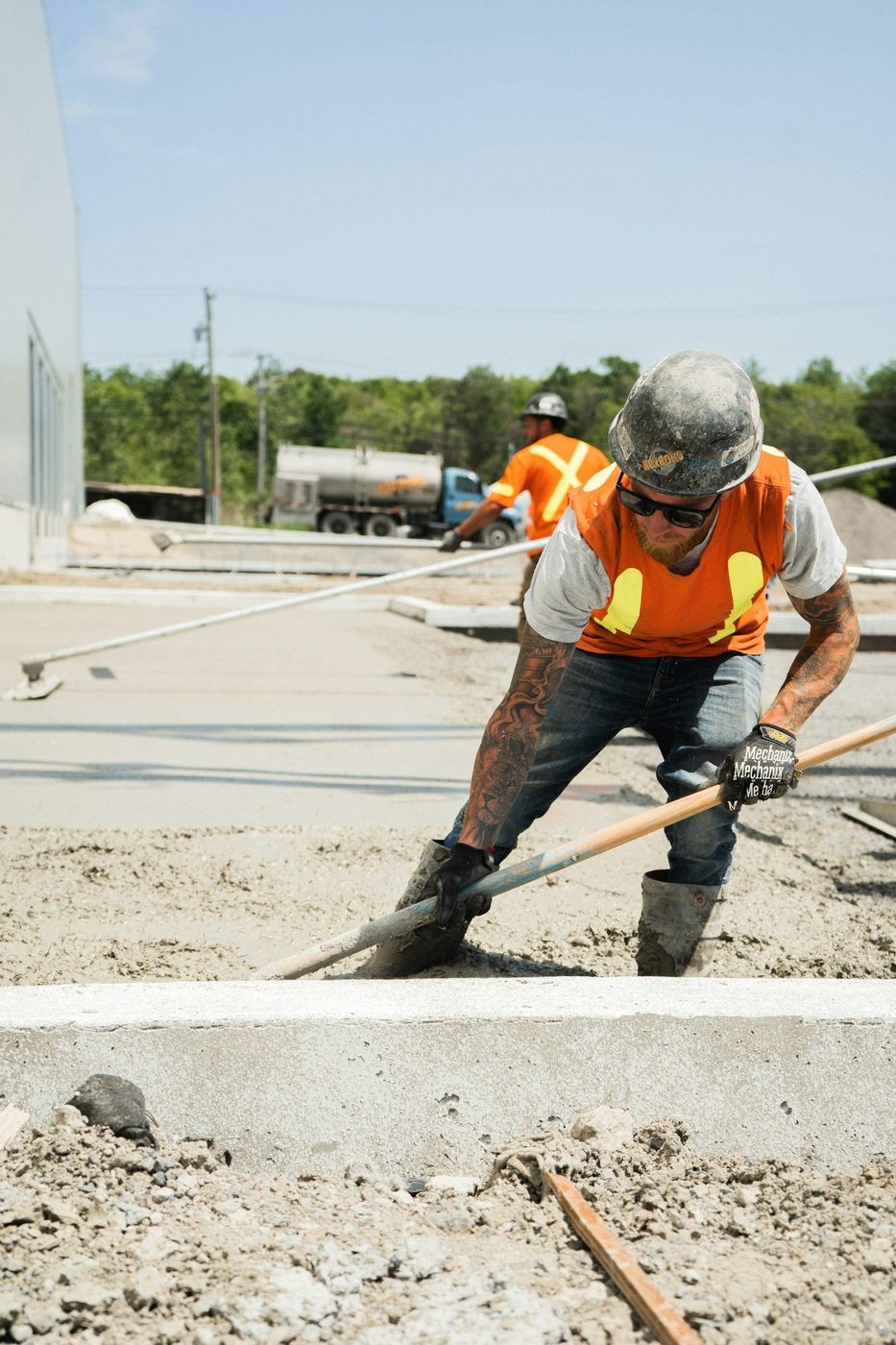
Community sidewalk, curb, and ramp programs bid by the foot instead of one panel at a time.
A community concrete program is a budgeting problem before it's a construction problem. The reserve study says one number. The walking survey says something else. And the trip hazard outside one of the buildings doesn't care about either, because a resident has already reported it twice.
Bulk concrete is how associations climb out of that loop. Rather than collecting three bids every time a panel lifts, the board prices the whole community at once: every hazard, every failed run of curb, every ramp sitting out of tolerance, quoted by the foot and scheduled across a season or two. Cost per unit drops sharply when a crew stays put, and the board finally holds a document showing what got fixed, what comes next, and what that will take.
Every time a crew mobilizes, somebody pays for the trip. Trucks, equipment, traffic control, the saw, the notice cycle, and the half day it takes to get set up. On a single panel replacement, that overhead is most of the invoice. Spread the same overhead across four thousand feet of walk and it nearly disappears into the unit price.
Then it compounds. One concrete order rather than twelve small ones. One traffic control plan. One round of door hangers. A crew that already knows where the water shutoffs are, which buildings have tight access, and where the irrigation lines run. By the second week that same crew is placing more square footage per day than it did on day one, and you see it in the price per foot.
Value is the other half of the sentence. A program lets a board fix causes instead of symptoms. When four walks are failing because a downspout has emptied onto them for a decade, we correct the drainage while we're standing there, which is a minor line item inside a program and a whole separate trip charge outside of one.
| Approach | When it fits | The tradeoff |
|---|---|---|
| One bid for the whole community | Reserves are funded and the failures are widespread | Biggest single check, lowest price per foot, one disruption window |
| Phased by section over two or three seasons | Annual funding with damage spread unevenly | A little more per foot, far easier on the budget, predictable notice cycles |
| Hazard-only program | Liability is the pressing worry and reserves are thin | Cheapest today, priciest across a decade. You will revisit the same walks. |
| Grind where grinding works | Lifted panels that are otherwise sound concrete | Quick and inexpensive, but it only buys time when roots or base caused the lift |
| Emergency one-off calls | A hazard reported between programs | Highest cost per foot there is. Every visit pays for the trip all over again. |
We'll walk the community, photograph every hazard, and hand your board a ranked list with unit pricing you can drop straight into the reserve conversation.
Logistics matter as much as concrete when the job site is a neighborhood. Trash day, school buses, mail delivery, and the plain fact that every household expects to park in its own driveway. So we sequence blocks so only a handful of homes are affected at a time, set walkboards wherever somebody has to reach a door, and give the board a schedule detailed enough to answer resident emails without picking up the phone.
Season sets the outer edges. Just under six thousand feet, our working window runs roughly April into October, and anything placed in September needs a clean stretch of weather before the first hard freeze. We plan programs so the most exposed work, curb and ramps, lands mid-season rather than at the very end of it.
The oldest walk networks sit in Northridge and Westridge, and those sections usually anchor a first phase. Eastridge and Southridge lean toward targeted panel work and ramp corrections. BackCountry and The Hearth are newer, so their programs are mostly drainage fixes and a few settled sections rather than wholesale replacement.
Boards that get the most for their money are the ones who let us chase the water while we're already there. Swapping a panel takes an hour. Working out why that panel keeps failing takes ten minutes, and it's the difference between a repair and a program that actually finishes.The crew lead's read on it
Still unsure about something?
Call the crew at (303) 569-4046 and we will talk it through.

Get a free, no-obligation estimate from a crew that knows Colorado soil, Colorado weather, and how to finish concrete that lasts.
Accessibility
Adjust the site to fit how you read and browse. Your choices are saved on this device.