
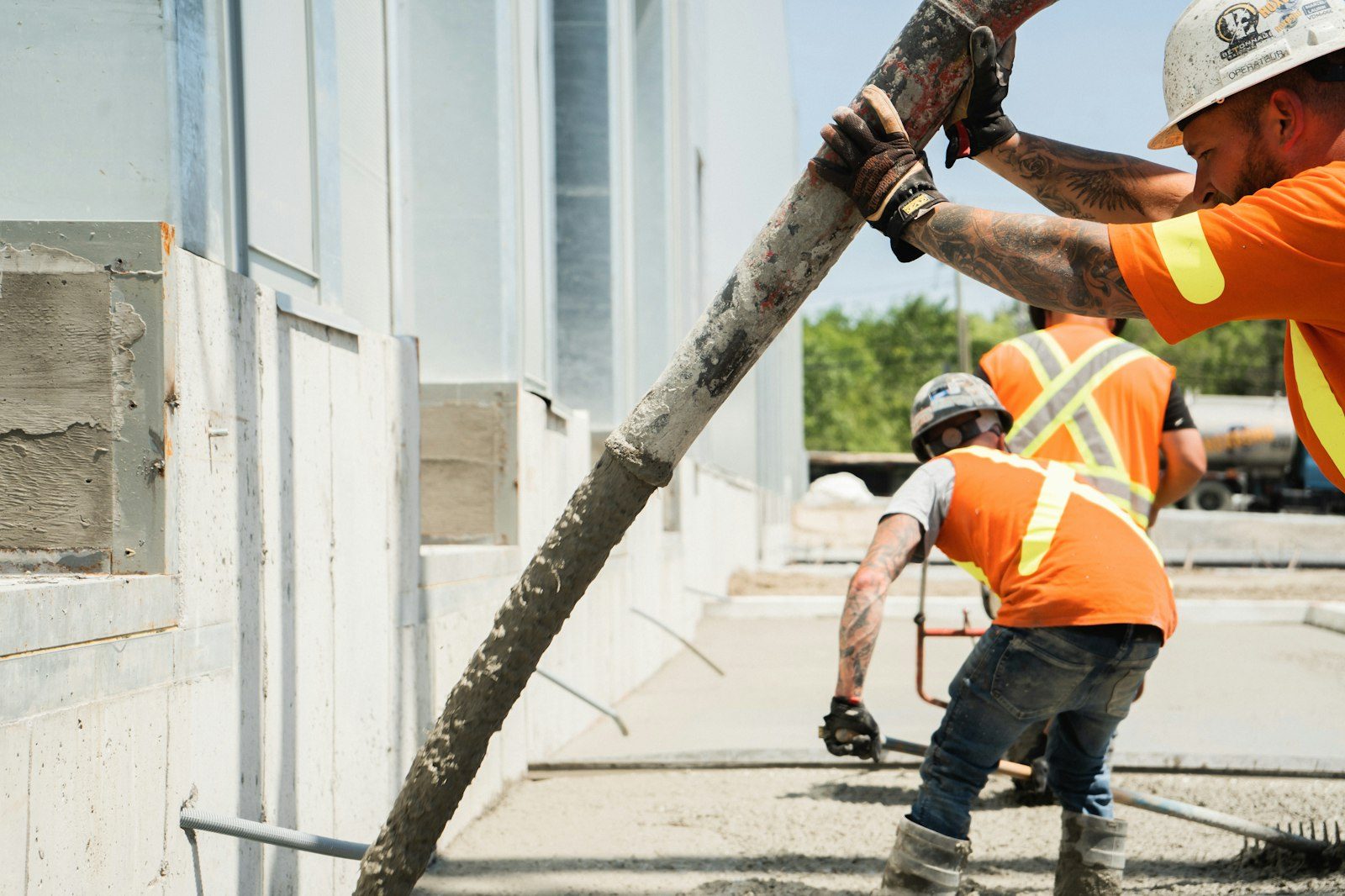
Flowline grade, ramp corners, and the broken pans that prove water is headed the wrong direction.
Stand at the entrance of any older commercial drive and look down the gutter line. You can read the whole property from there. Water still sitting in a pan two days after a storm means the flowline lost its grade. A curb face crumbling away in bites means salt and frost got behind the surface. Black scuff marks and a cracked lip in one spot mean the radius is too tight for the trucks that use it.
Curb and gutter is the drainage system nobody thinks about until it quits, and when it quits the damage shows up somewhere else. A rutted aisle. A soft spot under the sidewalk. Ice sheeting across the same crosswalk every January. We rebuild curb and gutter around Highlands Ranch for boards, management companies, and general contractors, and the first thing we figure out is where your water is actually going.
| What you see | What is happening | What the fix takes |
|---|---|---|
| Water standing in the pan days after rain | The flowline settled below grade, or never had enough fall | Remove and replace the run at proper slope. Patching the low spot accomplishes nothing. |
| Curb face flaking off in sheets | Chloride and frost working on a surface that was over-troweled | Saw the section out and re-form it. Skin repairs on a curb face never hold. |
| Cracked lip with black scuff marks | Trucks clipping a radius built too tight for them | Rebuild the corner wider or add a mountable transition where they keep cutting. |
| Pan separating from the pavement | Base washed out along the joint between gutter and lot | Excavate, rebuild the base, and tie the new pan into the pavement correctly. |
| Ice across the same crosswalk every winter | Runoff crossing the walk instead of reaching an inlet | Regrade the flowline, sometimes add an inlet. That one is liability, not cosmetics. |
| Curb reveal swallowed by the asphalt | Overlays stacked up over the years until the curb lost its height | Reveal has to come back or the gutter is decorative and the water goes wherever it likes. |
A gutter is a shallow channel with one responsibility: carry water to an inlet without letting it stall. Miss the fall by a quarter inch across twenty feet and you've built a birdbath that freezes solid every night from November into February. So we shoot grades before demolition rather than after, and we pull our string to the flowline instead of the top of the old curb, because the old top of curb is usually the thing that went wrong.
Steel in this work is lighter than people expect. The pan takes bar where it ties into pavement and anywhere it crosses a utility trench, while the curb itself depends far more on continuous placement and correct joint spacing than on reinforcement. Joints every ten to fifteen feet, tooled or sawed depending on profile. Expansion material wherever the run meets an inlet, a structure, or a walk that can move on its own.
Tie-ins matter as much as the new concrete. Fresh curb butted to an old pan at a mismatched grade leaves a lip, and a lip is exactly where the plow catches, the water stalls, and the failure starts over.
Standing water shows the problem better than any plan set. We'll mark the runs that need replacing and the ones that only need a section.
Most parking and interior roadway here is association maintained or privately owned, so our curb calls come from a board, a management company, or a GC closing out a tenant build. Interior drive curb serving Northridge and Westridge has absorbed thirty-plus winters of plow blades and ice melt, and the faces show every one of them. Requests out of Eastridge and Southridge lean toward spot sections and corner corrections. Near BackCountry and The Hearth the problem is usually grade that was wrong on day one rather than wear.
Weather sets the calendar. Curb takes freeze-thaw harder than flatwork does, because the face stands vertical, sits exposed on two sides, and lives exactly where plowed snow gets piled with all its chloride. Everything outdoors goes in as air-entrained mix, and we ask properties to keep ice melt off new runs through the first winter completely. May through October is our clean window, and a September placement gets hard well before the plows come out.
You can find a bad flowline without opening a plan set. Come back the morning after a storm and look for where the water is still sitting. That puddle freezes every night all winter, lifts the pan a hair each time, and by spring it has taken another piece of the edge with it.The crew lead's read on it
Still unsure about something?
Call the crew at (303) 569-4046 and we will talk it through.

Get a free, no-obligation estimate from a crew that knows Colorado soil, Colorado weather, and how to finish concrete that lasts.
Accessibility
Adjust the site to fit how you read and browse. Your choices are saved on this device.