
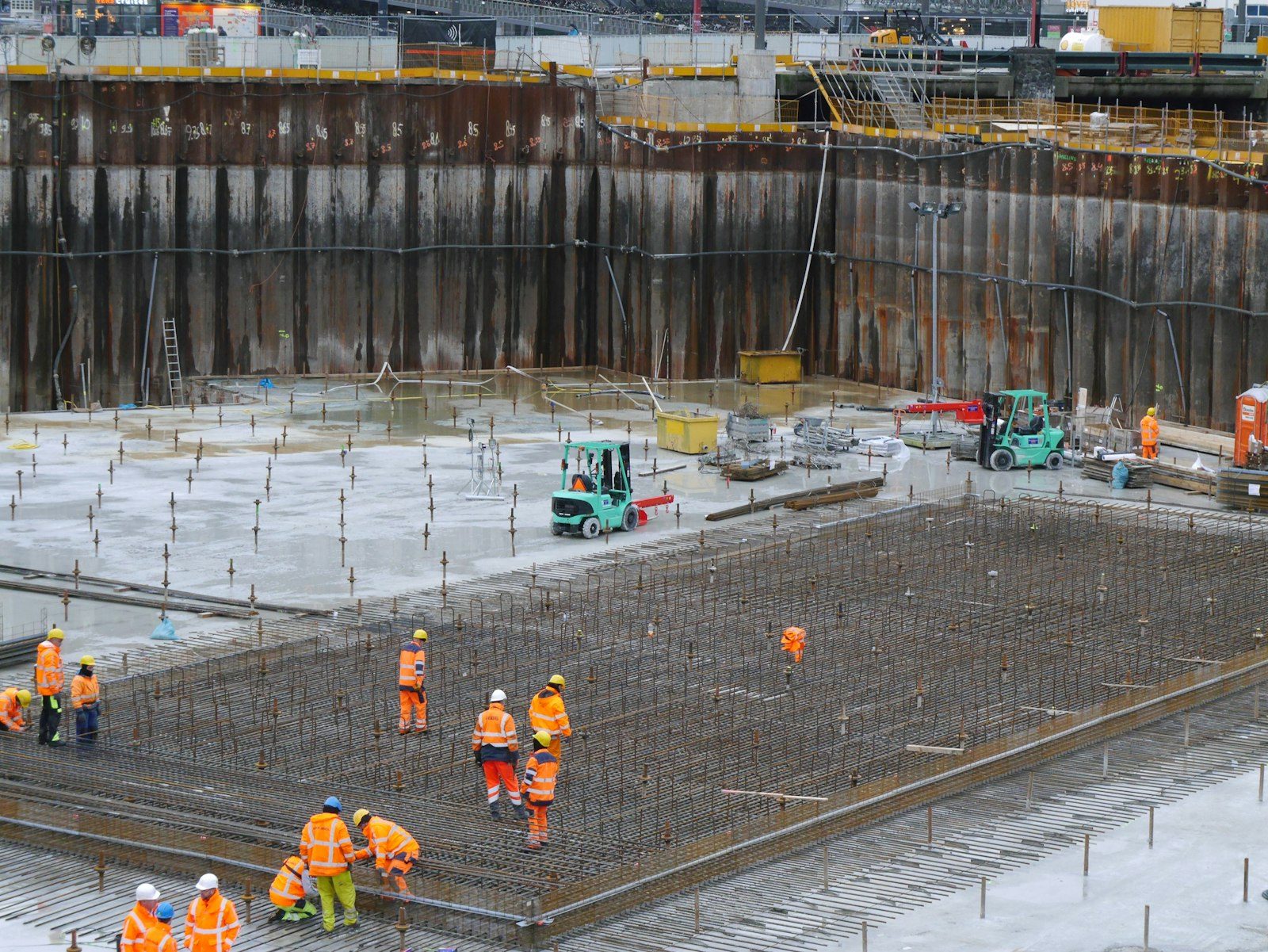
The slope passes on day one. What sits under the ramp decides whether it still passes in year five.
Every accessible ramp gets checked with a digital level the week it goes in. Almost none of them get checked again. That's the trap, because a ramp doesn't drift out of compliance at the surface. It drifts because the dirt under one corner quit, the landing tipped a degree and a half, and the cross slope that read 1.6 percent at handover now reads 3.4.
So we build these from the bottom up. Sub-grade proof-rolled, soft material dug out, base placed in lifts and compacted, water routed past the toe instead of into it. Geometry comes after that. Do it in the other order and you've bought a good-looking ramp with an expiration date on it.
Soil in this part of Douglas County moves with moisture, and a ramp is the least forgiving thing we put on it. A driveway can drop half an inch and nobody notices. A landing that drops half an inch across five feet is out of tolerance, and worse, it's now a spot where somebody in a chair can tip.
Sub-grade gets treated like structure here. We proof-roll it, watch for anything that pumps under the wheel, and dig out material that flexes rather than burying it under gravel and hoping. Soft clay leaves the property. Base goes down in lifts, gets compacted at the right moisture so it actually locks together, and gets checked before the next lift lands. Where a ramp meets irrigated landscape, which around here is nearly every one of them, we move the drip line off the edge and send the water somewhere else. A saturated shoulder is how ramps tilt.
Drainage past the toe deserves the same attention. Runoff crossing the bottom of a ramp is collecting at the flattest ground on the property by definition, and standing water in January finishes the job all by itself.
We'll bring a level, take readings at every landing and flare, and tell you whether it needs a grind or a rebuild. No charge for the answer.
| Element | The limit | How ramps fail it |
|---|---|---|
| Running slope | No steeper than 1:12, roughly 8.3 percent | Someone matched existing grade instead of building a run long enough to work. |
| Cross slope | No steeper than 1:48, roughly 2 percent | Drainage got priority over the rule, or the base settled unevenly afterward. |
| Clear width | 36 inches minimum between edges or rails | Handrail brackets, bollards, and planters stealing the space after handover. |
| Rise per run | 30 inches maximum before a landing is required | A single long run poured to skip the landing the code called for. |
| Landings | At least 60 inches long, level both directions, top and bottom | Landings sloped to shed water, which is precisely what the rule forbids. |
| Detectable warnings | Full-width panel where the ramp meets a vehicle way | Panels left out, set back too far, or glued on later and lifting at the corners. |
Ramps absorb more weather per square foot than anything else on a commercial site. First surface shoveled, first one salted, last one to dry, and sitting at the low end of the grade where water gathers. At 5,920 feet a January morning can start near 12 degrees and reach the fifties by two, so the top half inch of that concrete freezes and thaws more times each winter than most owners would guess.
Which is why the mix isn't negotiable: 4,000 PSI, air entrained, finished with a broom texture that grips without the dense troweled skin that scales first. And why we're blunt about ice melt. Magnesium chloride on a first-winter ramp pits the surface, and a pitted ramp is a slip complaint with a date on it.
The pattern across the Ranch is consistent. Entrances built in the Northridge and Westridge era predate current requirements, so replacing a walk there usually pulls a ramp rebuild along with it. Eastridge and Southridge properties land in between. Newer sites near BackCountry and The Hearth are compliant on paper and mostly need a settled landing brought back to level. May through September is our preferred build window, since base work needs unfrozen ground and these small pours give up heat quickly in shoulder season.
The tell is always at the bottom. We break out an old ramp and the base under the lower landing comes up gray and soft, right where somebody added a drip line three years after the concrete went down. Fix the water or you'll be back doing this again.What our crew lead tells homeowners
Still unsure about something?
Call the crew at (303) 569-4046 and we will talk it through.

Get a free, no-obligation estimate from a crew that knows Colorado soil, Colorado weather, and how to finish concrete that lasts.
Accessibility
Adjust the site to fit how you read and browse. Your choices are saved on this device.