
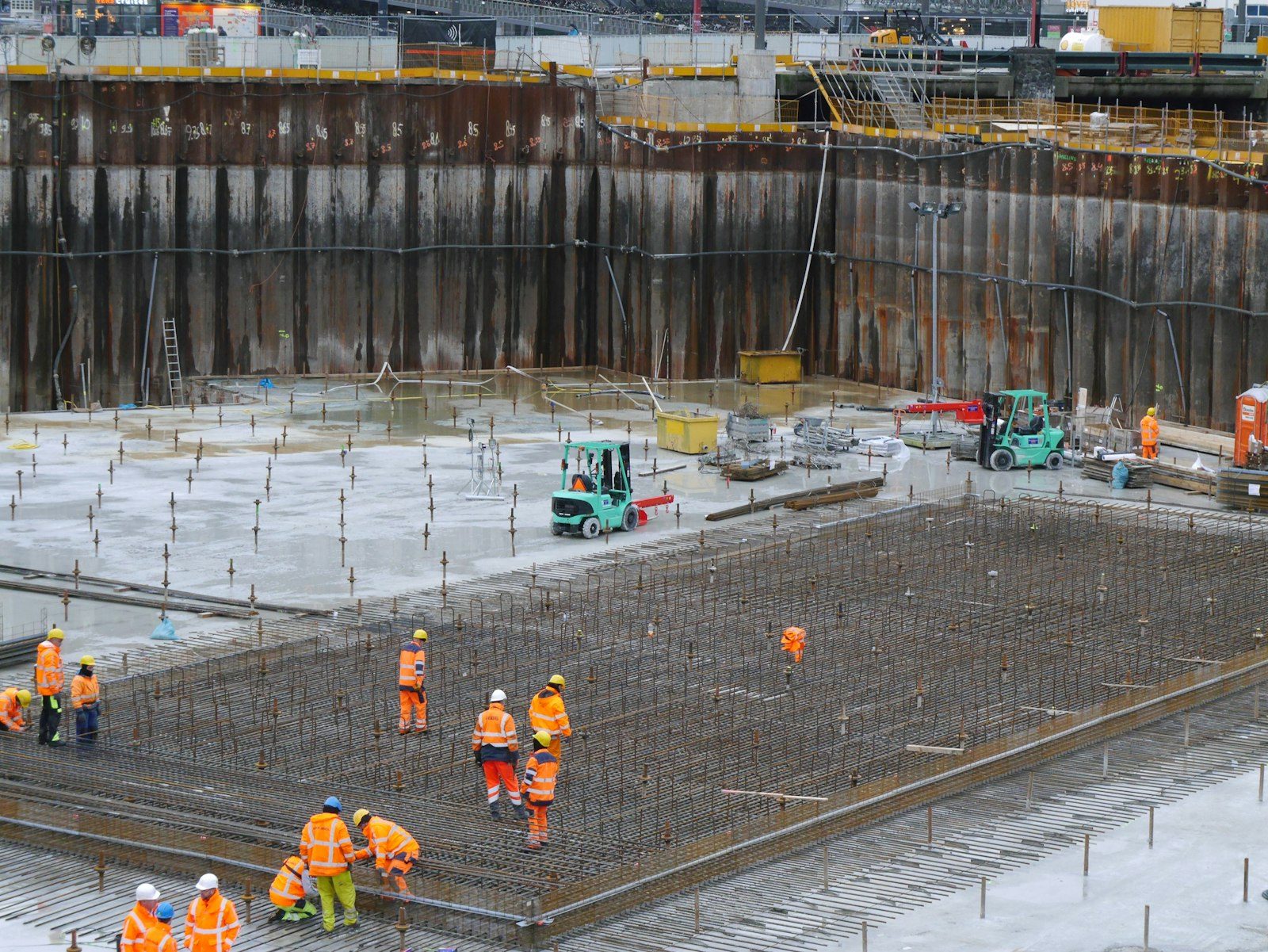
The old slab comes out, the bad base goes with it, and the new drive gets built from the dirt up.
The part of a driveway that decides its lifespan is the part nobody ever looks at. Under most failing slabs in Highlands Ranch there's no gravel at all. Just concrete resting on Douglas County clay, and that clay swells with every wet spring and shrinks through every dry August. The crack you're staring at started eight inches down, years ago.
Replacement is the one chance to fix the real problem. We break out the old drive, haul it away, and rebuild the ground underneath before a single yard of new concrete arrives. That's the whole point of starting over: you don't inherit the shortcuts the original builder took in 1994. From Northridge to The Hearth, that's how we run every tear-out.
Break out enough old driveways and the pattern gets predictable. The breaker drops, the slab lifts, and there it is: bare clay, maybe a skim of sand, sometimes a utility trench that was backfilled loose and has been sinking ever since the house was plumbed. Once in a while we find roots from a tree that came down a decade ago, still rotting under the panel that never stopped settling.
None of that is visible from the surface. And none of it can be corrected from the surface either, which is why patch jobs on a failed drive keep failing. The tear-out is the diagnosis. The regrade is the cure. Skip either one and the new slab is just a fresh coat of paint on the same sick ground.
| Found under the old drive | What it caused up top | The fix before we pour |
|---|---|---|
| Bare clay, no base at all | Panels that heave and cracks that open and close with the seasons | Excavate deeper, then build up road base and compact it in lifts |
| Loose utility trench backfill | One long crack tracking the sewer or gas line | Recompact the trench path before any base goes down |
| Buried roots and organics | A low corner that keeps sinking no matter what | Dig out the soft pocket and refill it with structural material |
| Water running under the slab | Early scaling and edges that crumbled first | Regrade so runoff moves across the surface instead of beneath it |
| Slab pitched at the garage | Melt and storm water aimed at the house | Reset the grades to fall away from the foundation from day one |
Call (303) 569-4046. We'll walk the drive, read the cracks, and tell you what the tear-out will probably find.
Replacement season runs long on the Front Range. Anything from mid-spring to late fall works, and October has a quiet advantage: demo happens in cool weather, the pour cures before deep winter, and you're not fighting the summer rush for a slot on the calendar.
Winter replacements are real too, not a sales line. The concrete side is manageable with heated water in the mix, accelerators that skip the chlorides, and blankets over the fresh slab. The limiting factor is the ground itself. Frost in the base kills a pour, so we watch soil temperatures and take the mild windows January hands us. If your slab has heaved badly enough to scrape the car, waiting until April isn't your only option.
The slab never lies once it's out of the ground. You can see exactly where water was living, where the fill went soft, where the first crew quit compacting. We fix what we can see. That's the whole advantage a replacement has over one more patch.From the crew lead on these jobs
Still unsure about something?
Call the crew at (303) 569-4046 and we will talk it through.

Get a free, no-obligation estimate from a crew that knows Colorado soil, Colorado weather, and how to finish concrete that lasts.
Accessibility
Adjust the site to fit how you read and browse. Your choices are saved on this device.