
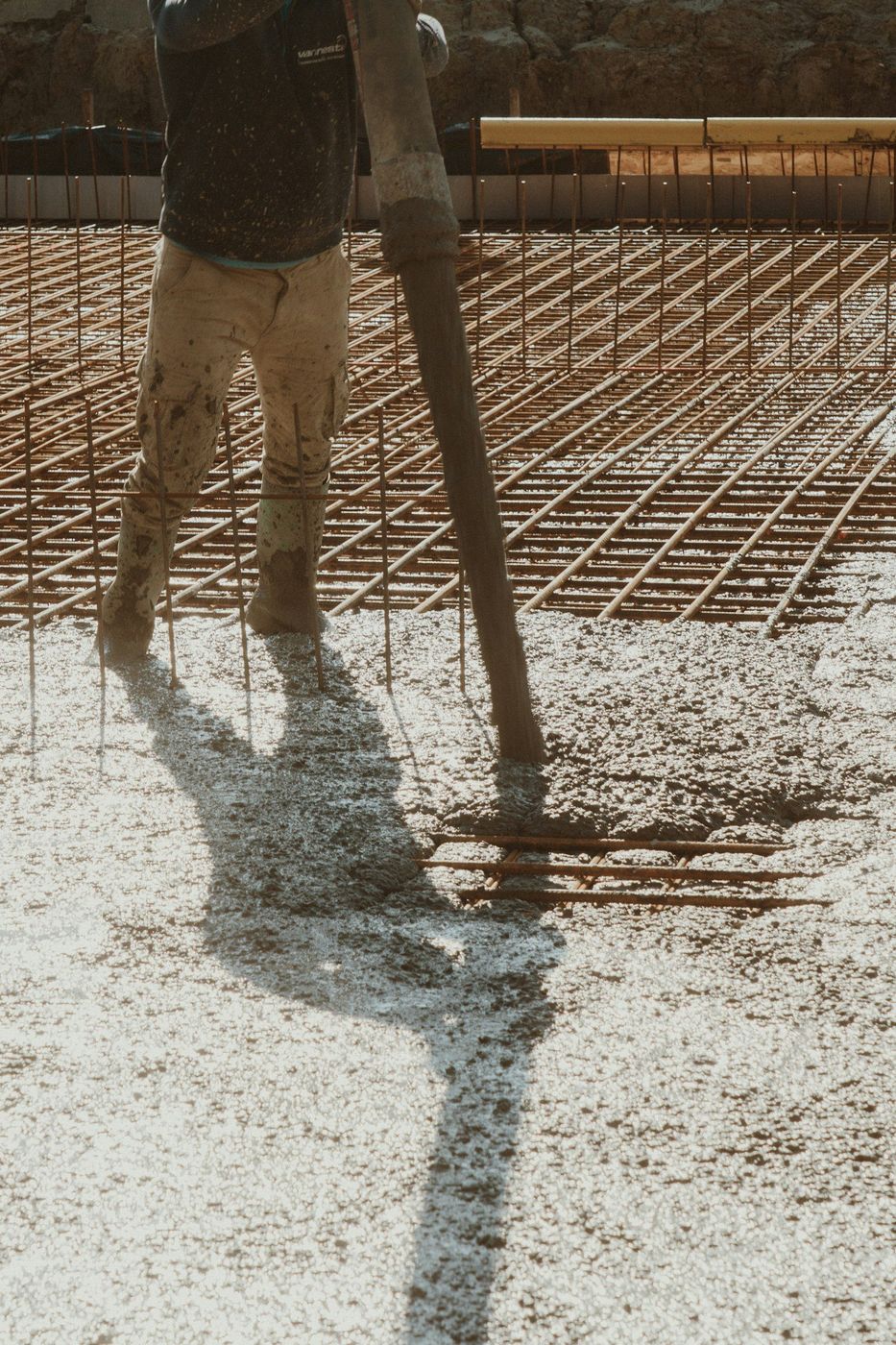
The one slab on your property that takes plow spray, ice melt, and every dog in the neighborhood.
Late February is when sidewalks confess. Snowpack finally pulls back off the panels and what's underneath is ugly: pale scaly patches where the top skin flaked away, a joint that has opened up an inch, a corner sitting a full step below its neighbor. None of that damage happened in February. It built up all winter, one thaw at a time, and the melt only made it visible.
Sidewalks get treated worse than anything else on the lot. They catch spray thrown off the street, they get salted by whoever walks a dog past your house, and they're the surface everyone expects you to keep clear at six in the morning. We repair them, replace them, and lift the ones that are only out of level. And we build them to slopes somebody is going to put a level on.
Freeze-thaw does the damage, and it works from the inside out. Water soaks into the top eighth of an inch, freezes overnight, expands, and shoves a thin layer of paste loose. Repeat that forty times between November and March and the surface starts leaving in flakes. Chloride ice melt speeds it up, because salt pulls more water into the concrete and makes it cycle at temperatures where it would otherwise sit still.
Which panels go first is predictable. The one at the bottom of a driveway apron, where melt runs down and stands. The one under a downspout nobody ever extended. The one your house shades from October to March. And in Eastridge and Northridge, the panels sitting over trees that were saplings when the neighborhood went in, where a root has been swelling underneath for three decades and has finally won the fight.
| Stretch of the year | What it does to the concrete | What we would do |
|---|---|---|
| Deep winter | Repeat freeze cycles on a saturated surface, plus whatever product gets thrown at it | Shovel early, spread sand, keep chlorides off anything poured in the last year |
| Spring melt | Water standing at low panels, heave lifting corners, damage finally showing itself | Walk the whole run and photograph what shifted, then book repairs ahead of the summer rush |
| Summer | Heat is easy on cured concrete; storms find every drainage flaw you own | Correct grades and downspout runs now, while you can watch where water really goes |
| Early fall | The friendliest pouring conditions of the year, mild days and cool nights | Swap out failed panels so new concrete matures well ahead of the first hard freeze |
| Late fall | Ground temperatures drop and the window shuts fast | Get repairs in the ground, or plan a protected cold-weather pour |
A public walk has numbers attached to it, and they aren't suggestions. Cross slope holds at two percent or under, because anything steeper turns hostile for a wheelchair and gets flagged at inspection. The running slope tracks the street grade inside set limits. Where a walk meets a curb ramp, the landing has to sit close to dead flat in both directions and the detectable warning panel has to be placed at the right offset from the face of curb. We build to those figures because someone with a digital level is going to check them.
Work in the public right-of-way generally means a permit and an inspection, sometimes one before and one after. We pull the paperwork, book the inspector, and hold the job until it clears. If the walk you're calling about sits inside a metro district or an association's common area instead, say so at the estimate, because the approval path is different and it moves the schedule more than the concrete ever does.
One more note on scope. We saw-cut on existing joint lines rather than breaking panels wherever the concrete feels like breaking, so the finished repair reads as a whole panel instead of a scar. It adds a little cutting time. It's also the difference between a walk that looks fixed and one that looks wounded.
Text a photo with a shoe in the frame for scale. We'll tell you whether it wants lifting, grinding, or replacing before anybody drives out.
Still unsure about something?
Call the crew at (303) 569-4046 and we will talk it through.
Get a free, no-obligation estimate from a crew that knows Colorado soil, Colorado weather, and how to finish concrete that lasts.
Accessibility
Adjust the site to fit how you read and browse. Your choices are saved on this device.