
The path came with the house. Whether it still suits the house is a separate question.
A front walk usually comes with the house, and it usually matches the decade the house went up. Around Old Town the paths are narrow ribbons poured in short sections, some scored, most of them thin, a few tipped off flat by decades of ground movement and tree growth. Drive south past Harmony and the walks get wider and straighter, laid by production crews on lots graded by machine.
Both kinds wear out. They just wear out differently, and what fixes one is wrong for the other. We pour front walks, side yard paths, and back gate runs across Fort Collins, and the first thing we do is work out which generation of concrete we're standing on. That answers most of the rest.
Older Fort Collins walks were poured for a different idea of how wide a path needs to be. Plenty of them are barely wider than the front door. Short sections, thin concrete, and whatever soil happened to be there acting as the base. Now add mature trees that have spent decades sending roots toward the dampest ground on the lot, which is very often the strip right under a slab. You get the pattern we know by heart: two or three sections lifted, a lip everybody steps over without thinking, and a crack running off the corner where the path turns toward the porch.
South of town the story flips. Walks in Fossil Creek, Rigden Farm, The Landing, and Registry Ridge went in with the houses, square and tidy, on ground trenched for irrigation right before the concrete showed up. That trenching is the tell. Where a sprinkler line crosses under a path and the backfill over it never got packed, the section on top drops within a few seasons while the rest stays put.
| What you have | What's under it | Where it ends up |
|---|---|---|
| Original walk at an older Old Town house | Thin concrete on native soil, roots under the lifted panels | Replace the run at full thickness, shifting the line where the tree allows |
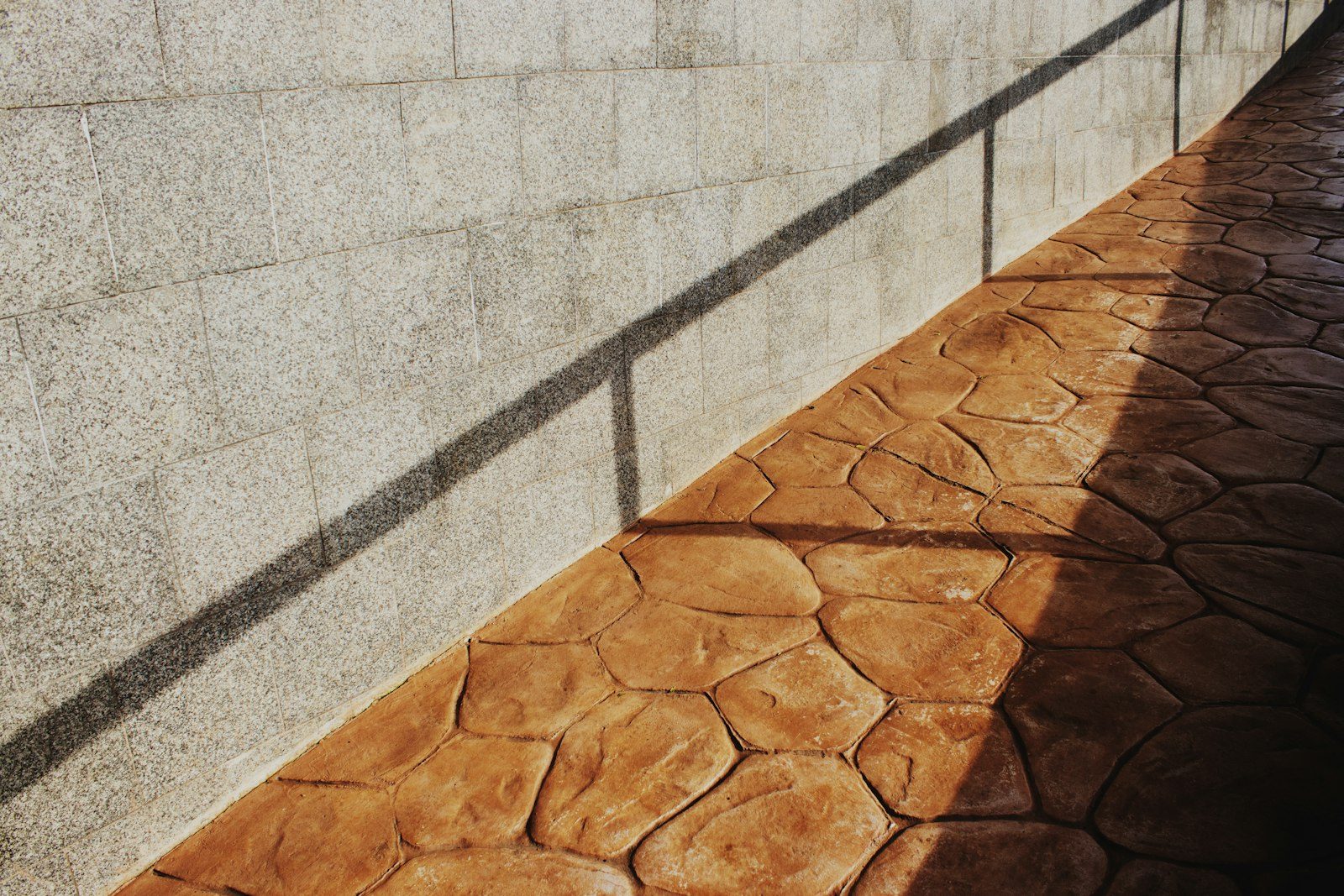
| Flagstone or brick set in mortar | A crumbling mortar bed that soaks up water every spring | Strip it, build real base, pour concrete scored to keep the look |
| Builder walk on a newer south-side lot | Sound concrete over uneven fill, the drop centered on a utility trench | Cut out the low sections and rebuild the base across the trench |
| A path widened or patched by a past owner | Two slab thicknesses butted together with no joint between them | Take both out. Patched-on concrete never acts as one piece |
Send a photo down the length of the walk and one straight at the worst joint. You'll get our read on it before anybody drives out.
This is the question we field most often out front. The drive looks fine, so what's wrong with the walk? Width and mass. A driveway is a big connected field of concrete with its own weight pinning it down. A path is a ribbon. Cold reaches it from both edges and underneath, the lawn and beds keep the soil beside it wet through the shoulder seasons, and there isn't enough slab there to argue with an ice lens building under one end.
We sit just over 5,000 feet at the north end of the range, and the freeze cycles run harder here than down in the metro. So we use air-entrained mix outdoors, we put compacted road base under a ribbon that plenty of outfits would set straight on dirt, and we cut joints tighter than a patio would ever need. Narrow work wants more joints, not fewer. On a curve we aim the cuts at the center of the arc so the pattern reads as a decision instead of an accident.
Pouring season runs late April into October, and the back half is the sweet spot. Mild afternoons, cool nights, weeks of runway before the ground locks up. We do cold-weather walks too, with heated mix water, a chloride-free accelerator, and blankets down the run. What we won't do is dig or pour into frozen ground. If the route to your door has turned into a hazard in January, call anyway. Sometimes the answer is a temporary patch and an early spring slot.
Still unsure about something?
Call the crew at (303) 569-4046 and we will talk it through.

Get a free, no-obligation estimate from a crew that knows Colorado soil, Colorado weather, and how to finish concrete that lasts.
Accessibility
Adjust the site to fit how you read and browse. Your choices are saved on this device.