
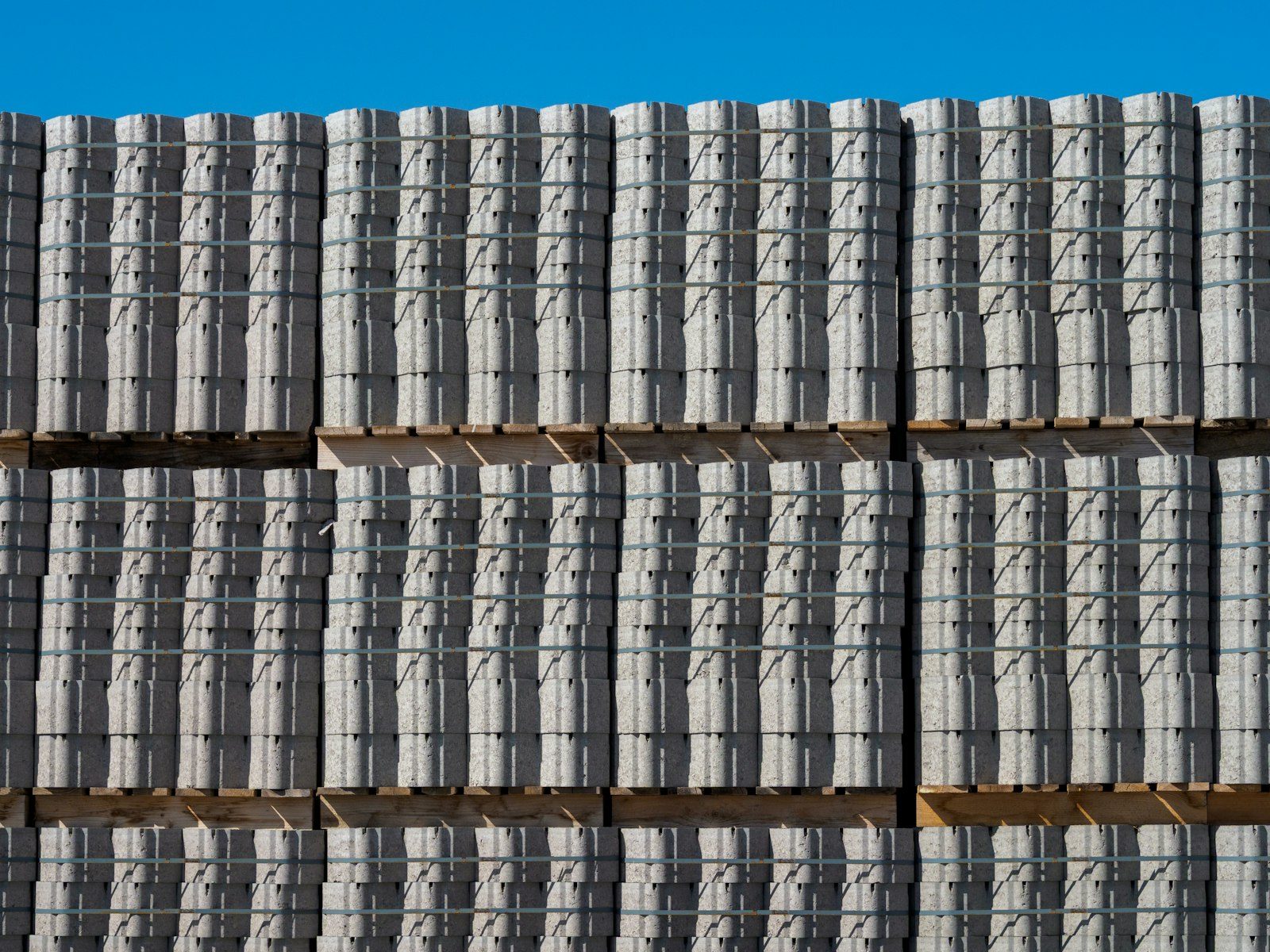
Nobody photographs the trash enclosure, and it is still the slab that decides how often you write a concrete check.
Here's a question worth asking your maintenance file. How many times has the trash enclosure been repaired since the property opened? On plenty of sites the answer is three or four, and nobody stopped to ask why the same ten feet of concrete keeps coming apart while the parking field around it does fine.
It isn't bad luck and it isn't the supplier. An enclosure pad takes the most concentrated abuse on a commercial property and it's almost always specified as ordinary flatwork. We replace them across Fort Collins: tight shared enclosures behind older buildings near Old Town, retail centers along Harmony, association service areas out in Registry Ridge. Below is where the money goes and what you get back.
People assume a thicker pad costs proportionally more. It doesn't. Concrete yardage is one of the smaller lines on the page, and going from car-grade to truck-grade on a pad this size adds material that barely registers against everything else happening that week.
What swings the total is everything around the concrete. Demolition, which takes far longer when the old pad had steel in it. Excavation depth and whether soft material has to leave the property. The apron in front, the piece most bids quietly shorten. Steel: bar on chairs at close spacing instead of a sheet of mesh tossed down. Bollards and post footings. And service logistics, because the container has to go somewhere for a week.
So when two proposals land far apart on a pad, look at the apron length, the steel, and the excavation. Almost the entire spread lives in those three.
| Element | The version priced to win a bid | The version built for the truck |
|---|---|---|
| Slab thickness | Matched to the parking lot around it | Sized for a loaded front-load truck standing still |
| Reinforcement | Wire mesh, laid on the ground before the pour | Bar on chairs at tight spacing, held at mid-depth |
| Apron in front of the enclosure | Ends at the gate posts | Runs out far enough that the front axle never leaves concrete |
| Base under the slab | Scrape and pour on whatever is there | Excavated to competent material, aggregate compacted in lifts |
| Bollards and gate posts | Set into the pad after it cures | Footings poured separately and isolated from the slab |
| What you get | A pad you replace again | A pad that stops showing up in the maintenance budget |
Count what an underbuilt pad really costs. The slab itself, more than once. Container relocation each time. Days when tenants have nowhere to throw anything. Calls from the hauler about an approach their driver won't pull onto. None of that appears on a proposal, and all of it lands on someone's desk.
Winter compounds it up here. The enclosure is where snow gets pushed, where meltwater collects, and where nobody sweeps until spring. Water sits on a flat pad, freezes overnight, and works on every crack the fork truck opened in July. Freeze cycles this far north come more often than they do down the interstate, so a pad that would limp along elsewhere comes apart here in a few seasons. Air entrainment near six percent is not optional on this slab.
Timing is the one easy part. A pad is a single short pour, so it slots into a schedule almost anywhere from spring through early fall, and late spring is our favorite because the slab gets a full warm season to harden first. Cold weather work is possible on warmed water with a chloride-free accelerator and insulation over the top. We still won't place over frozen ground, and we won't let a truck back on early because the container is due.
Send a photo of the broken area and tell us what kind of truck services it. We'll tell you what got underbuilt and what it takes to end the cycle.
Still unsure about something?
Call the crew at (303) 569-4046 and we will talk it through.

Get a free, no-obligation estimate from a crew that knows Colorado soil, Colorado weather, and how to finish concrete that lasts.
Accessibility
Adjust the site to fit how you read and browse. Your choices are saved on this device.