
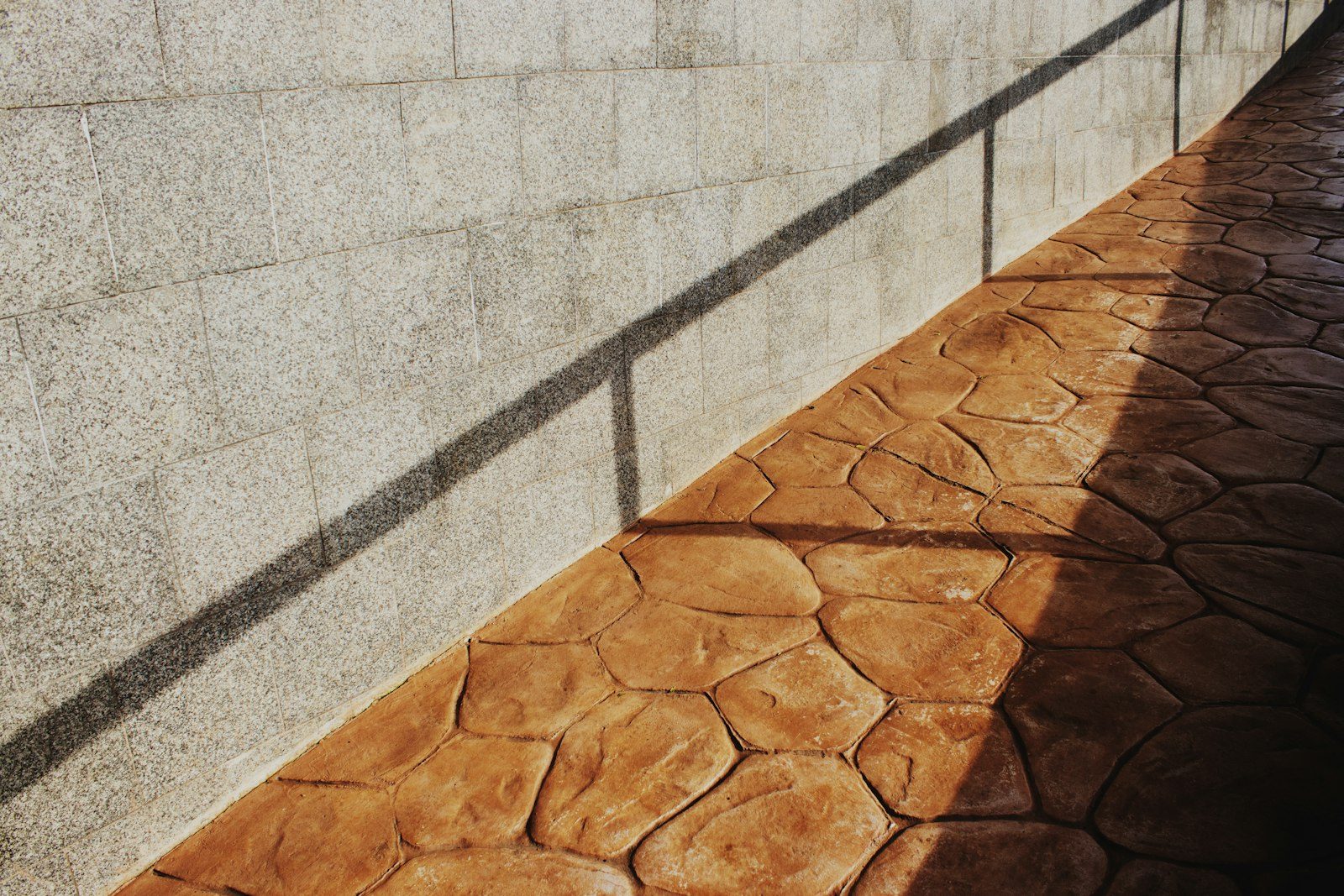
A front walk is a small pour with a short fuse. Every stage gets one shot and no second pass.
Quarter to seven in the morning and there's a crew in your front yard with no concrete anywhere in sight. That throws people. The truck isn't due for another two hours, and those two hours are the ones that decide how your walk turns out.
Front walks are small pours that move fast. A driveway gives a crew room and time; a ribbon three or four feet wide has edges on every side, stiffens quickly, and offers exactly one shot at each step. We pour plenty of them around Englewood, swapping out heaved strips in Northwest Englewood and running new paths across the deeper front yards in Broadway Estates and Cherry Hills Vista. So here is the day, start to finish.
The truck backs in and the whole placement is often over inside half an hour. Concrete comes down the chute in sections, gets raked roughly to height, and then the screed rides the form boards to pull it flat. On a walk we work in short pulls, because a long screed on a narrow form just bounces.
What people notice is how ugly it looks at that moment. Ridged, gray, wet, nothing like a finished walk. That's normal. The bull float knocks those ridges down and presses coarse stone down out of the way, and then the crew steps back and does nothing for a while. Waiting is the skill. Concrete tells you when it's ready and the penalty for arguing is permanent.
| Window | What the surface looks like | What the crew is doing | The cost of missing it |
|---|---|---|---|
| Just placed | Wet, ridged, sitting proud of the forms in spots | Striking off to grade, then bull floating the ridges out | Float too soon and water gets sealed in. Wait too long and the ridges stay |
| Bleed water rising | A thin sheen standing across the top | Nothing at all. We stand there and watch it | Touch it now and that water gets troweled in. That walk sheds dust for years |
| Sheen gone, surface stiffening | Dull, still soft under a thumb | Running the edger, cutting the hand joints, first pass of texture | Late and the edges chip forever. Early and the broom drags mud around |
| Firm enough to hold a mark | Footprints barely register | Final broom pull, saw cuts, then cover and cure | Saw too late and the slab has already cracked somewhere you didn't choose |
We'll walk the run with you, mark the width on the lawn, and price it before you commit. (303) 569-4046.
Two decisions get made with a tape and a level before any of the above happens, and both show up every single day you use the walk. Width first. A three-foot path works for one person carrying nothing. Add a bag of groceries in each arm, or a second person, or a stroller, and three feet has you walking single file through your own front yard. We push people toward four wherever the yard allows it, and toward wider still at the door where people stand.
Then fall. A walk needs a slight tip across its width so water runs off one side instead of standing in the middle, and it wants to tip away from the house. Get this wrong on a narrow ribbon and you build an ice tray. Older Englewood walks that heave every winter are almost always walks that hold water, and water in the ground under a narrow strip is what lifts it.
Joints get cut close together on a walk, much closer than on a drive, and we lay them out so they land square to the direction of travel and hit any change in shape. Season: April through October is straightforward, early fall is the best of it, and a short run is easy to blanket if you need it done cold. Frozen ground is where we stop.
Still unsure about something?
Call the crew at (303) 569-4046 and we will talk it through.
Get a free, no-obligation estimate from a crew that knows Colorado soil, Colorado weather, and how to finish concrete that lasts.
Accessibility
Adjust the site to fit how you read and browse. Your choices are saved on this device.