
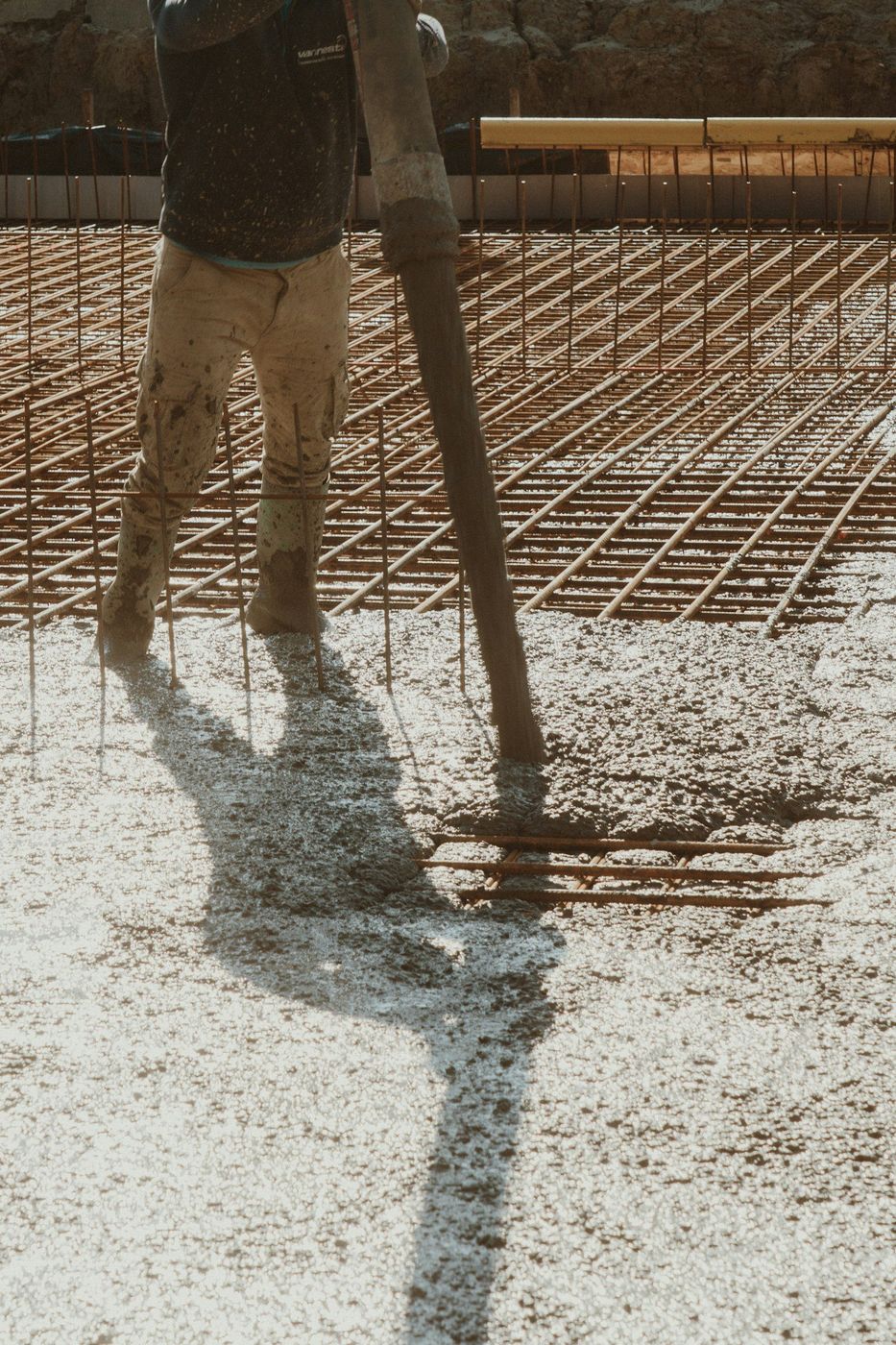
The storm never ruins a sidewalk. The ordinary week after the storm does.
Snow isn't what kills a public walk. Snow is fine. What does the damage is the plain week that follows, and it runs like this. Eight inches overnight. The plow comes by before dawn and throws a berm of slush and street salt onto the panels closest to the curb. The sun clears the south-facing stretch by noon. Meltwater sheets across the concrete all afternoon, and at dusk every bit of it locks back up.
Repeat that four or five times between November and March. You can read the result from the sidewalk itself. Frontage in Northwest Englewood that was poured properly comes through fine. Panels built on a thin base, or with a mix that never had air worked into it, start giving up their top layer. That is most of the frontage we end up replacing over in Broadway Estates and Cherry Hills Vista.
Concrete handles cold. It handles wet. What grinds it down is water sitting in the surface pores when the temperature crosses freezing, expanding a little each time. Once is nothing. A hundred separate times in a season and the top of the slab flakes away.
At better than a mile up, the sun melts a south-facing walk in February while the air stays below freezing all day. That combination is worse for concrete than a steady deep cold would be, because it manufactures cycles. The panel in the shade of your house sees fewer swings and usually looks better ten years on than the one out in the open.
The defense is entrained air: deliberate microscopic bubbles in the mix that give freezing water room to expand. Every exterior slab we pour has it. A walk without it can look perfect year one and shed grit by year four.
| Product | How it works | What it does to the concrete | Our take |
|---|---|---|---|
| Rock salt | Melts down to about the low twenties, then gives up | Not much chemical attack. It forces extra freeze cycles into the surface by keeping brine liquid | Least harmful of the chlorides, and still wrong on a slab under a year old |
| Magnesium chloride | Works in real cold and stays wet a long time | Goes after the cement paste itself. This is the one that leaves walks looking chewed | Keep it off entirely. It's behind most of the eaten surfaces we get called to replace |
| Calcium chloride | Fast, effective, works when the others quit | Pulls moisture in and holds the slab wet through more cycles than it would otherwise see | Sparingly, on mature concrete only, and rinse the walk down in spring |
| Sand or crushed grit | Doesn't melt anything. Pure traction underfoot | Nothing at all. It sits there and then you sweep it | What we'd put on a new walk for its whole first winter |
We'll look at the frontage, tell you what has to go and what can wait, and quote it. (303) 569-4046.
Your patio answers to you. The walk across your frontage sits in the public right-of-way, and while keeping it in decent shape generally lands on the owner, the city has a say in what gets built there. We sort that out with you before scheduling, because a panel poured without the right sign-off can get called back out.
Accessibility drives the geometry. Public walks answer to standards for clear width, for how far the surface may tip either direction, and for how much lip a joint can carry. A new panel comes back meeting those even when its neighbor plainly doesn't. That's the rule the work gets measured against, and it's why we shoot grades out front that would be overkill anywhere else on your lot.
People think we're being slow when we spend an hour on grades for two panels. Then they watch somebody push a stroller over it and it makes sense.Straight from the crew
Late spring through October is the season. If last winter chewed your panels, aim for a pour early enough that the new concrete has real strength before the next one shows up. June work gains all summer. A pour in the last week of October meets its first freeze young. Survivable, not ideal.
Summer means dawn starts, because rain landing on a panel while a finisher is still on it ruins the surface permanently. Cold-weather panel work runs on heated water, a non-chloride accelerator, and blankets. Frozen subgrade is where we stop and reschedule.
Still unsure about something?
Call the crew at (303) 569-4046 and we will talk it through.
Get a free, no-obligation estimate from a crew that knows Colorado soil, Colorado weather, and how to finish concrete that lasts.
Accessibility
Adjust the site to fit how you read and browse. Your choices are saved on this device.