
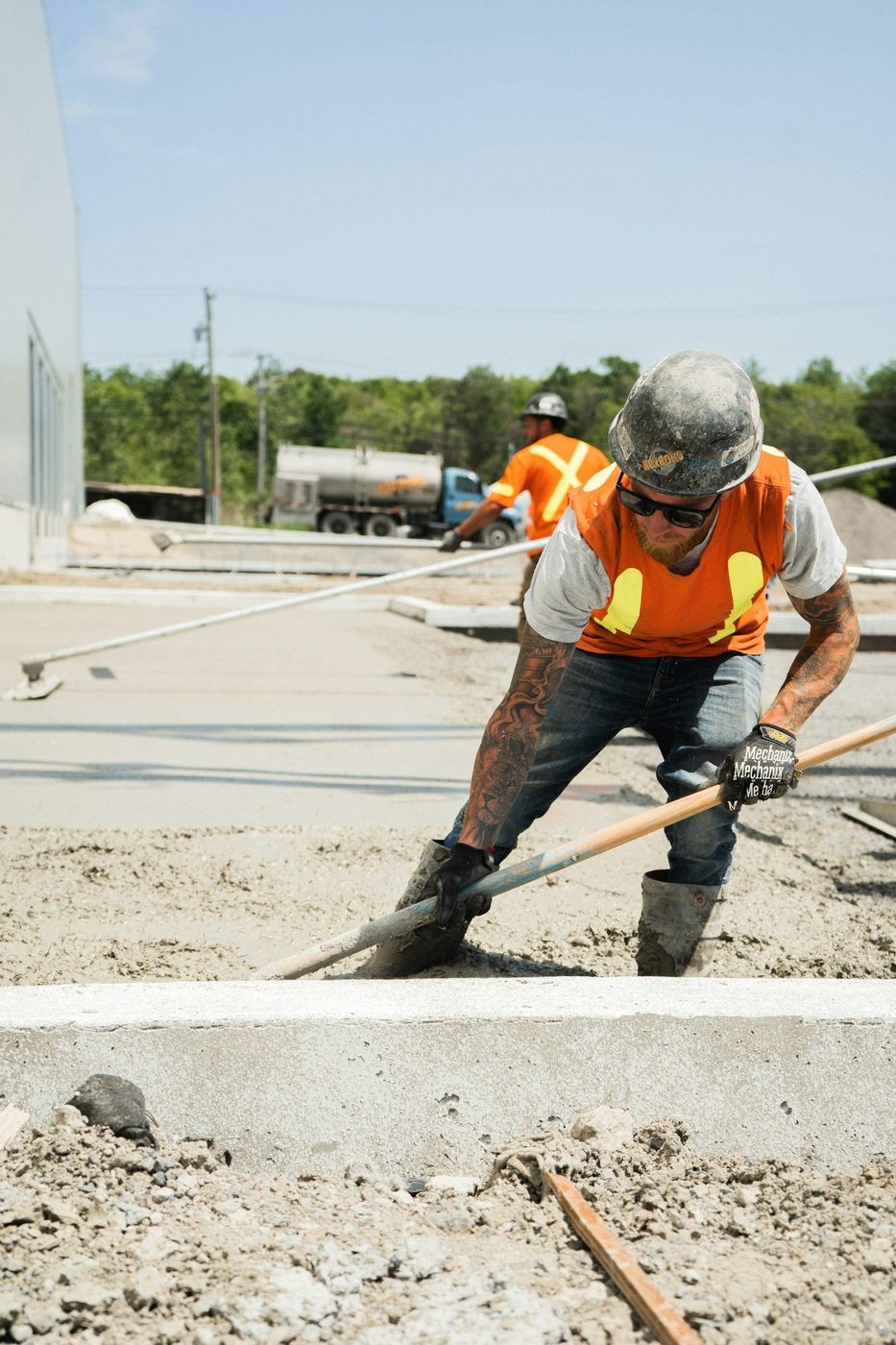
Every finish complaint we get called about traces back to a ninety minute window somebody else was in charge of.
You can see it from the car. A driveway that's gone chalky white and powders under a shoe. Broom lines that run straight for six feet, wander, then quit halfway across a panel. A slick glassy patch by the garage door where somebody kept troweling long after they should have stopped. None of that is weathering. All of it happened on one afternoon while the concrete was still soft, and the slab has been advertising it ever since.
We get called after the fact more often than before. Somebody bought a house in Broadway Estates, the front walk looks tired, and they want to know whether it's a cleaning problem or a concrete problem. Usually it's neither. It's a finishing problem, and the answer depends on how deep the damage runs, which is a five minute test with a screwdriver and a hose.
Walk a block in Northwest Englewood and the older slabs sort themselves. Some of them are sixty years old with a texture you can still feel, because whoever placed them waited for the bleed water and worked the surface at the right moment. Others are the same age and have no texture left at all, just a smooth pale plane that gets slick when it rains.
The tell is what's underfoot after a dry week. Rub your shoe across it. Gray powder means the top layer is weak paste, which means water got worked into the surface during finishing. Sometimes rain. More often a crew wetting the slab to make troweling easier, the single most damaging shortcut in this trade. That skim of watered-down cement never gains strength, and it leaves a little more every winter.
Cherry Hills Vista is newer, so the complaints there are about texture choice instead of defects: a driveway finished too smooth for a north-facing slope, or a broom finish so coarse it holds dirt and won't sweep clean.
| What you see from the street | What happened while it was plastic | Realistic fix |
|---|---|---|
| Chalky powder that comes off on your shoe | Surface was troweled or watered while bleed water was still sitting on it, leaving weak paste on top | Grind or resurface. Sealing over dust just glues the dust down |
| Broom lines that wander and stop mid-panel | The crew ran out of working time and finished in a hurry | Cosmetic only. A bonded topping is the one way to get straight lines back |
| Thin plates flaking off after a hard winter | No air entrainment in the mix, or deicer used during the first year | Resurface if the loss is shallow. Deep flaking means replacement |
| A slick, glassy spot near the garage | Over-troweled. Steel closed the surface and the texture is simply gone | Acid etch and reseal buys traction back. A broom finish can't be added later |
| Dark blotches that never seem to dry | Sealed too early, so moisture is trapped under the film | Strip the sealer, let the slab dry out fully, seal again on a dry day |
| Pinholes and small craters across a smooth area | Air worked into the surface during floating, common on a hot windy day | Skim coat, or leave them. Small ones disappear once a sealer goes on |
We can usually tell from a picture whether you're looking at a surface problem or a slab problem. No charge either way. Call (303) 569-4046.
People assume rain is the villain. Rain is obvious and we plan around it. The condition that quietly wrecks more finishes on the Front Range is dry wind under a hot sun, because it pulls water out of the surface faster than bleed water can come up. The slab crusts on top while the concrete underneath is still soft, and anything the crew does at that point tears the skin. That's where plastic shrinkage cracking comes from too, those short random lines that show up in the first hours.
So on a windy day we set breaks, spray an evaporation retarder, and pick a texture that suits the conditions rather than the brochure. Heavy trowel work wants a calm morning. A broom finish forgives far more. Cold runs the other direction: everything slows, bleed water takes forever, and a crew that gets impatient in October makes July's mistakes for the opposite reason.
Best stretches here are May into June and September into early October. Summer pours start at daybreak. Winter work happens with heated water, non-chloride accelerator, and blankets down the same day, though the finish options narrow, and we won't place on frozen ground at any price.
Still unsure about something?
Call the crew at (303) 569-4046 and we will talk it through.

Get a free, no-obligation estimate from a crew that knows Colorado soil, Colorado weather, and how to finish concrete that lasts.
Accessibility
Adjust the site to fit how you read and browse. Your choices are saved on this device.