
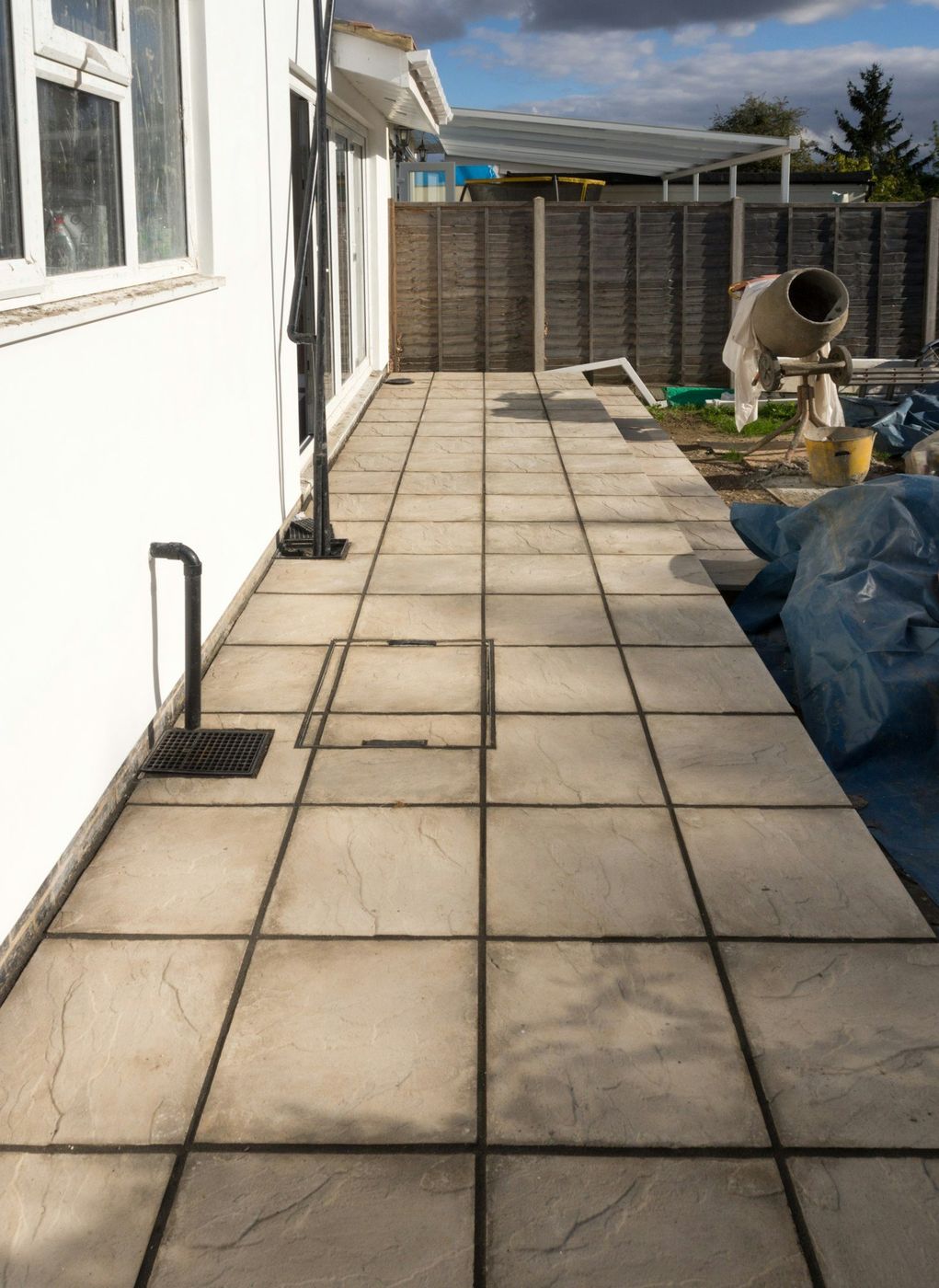
Washed stone was the going finish on a lot of these blocks once. We still pour it, and we pour it with a base the originals never got.
You can date an Englewood house by its flatwork almost as reliably as by its windows. The little postwar ranches got plain gray. The sixties and seventies additions got washed stone, because that was the finish everybody wanted and every crew in Arapahoe County knew how to do. Sixty years later a lot of it is still down, which tells you something about the finish, and a lot of it is shedding pea gravel into the lawn, which tells you something about how it was built.
Those two facts are not in conflict. A washed surface is genuinely durable, more so than a broom finish, because the wear happens on stone instead of paste. What fails underneath it is the same thing that fails under everything here: no base, no steel, and a slab poured straight on dirt. We pour the finish those old walks had. We just put something real under it.
Northwest Englewood is where we do the most matching work. Narrow single-width drives, detached garages off an alley, and front walks that were poured in short panels. Homeowners there usually want a section replaced without the new work screaming at the old, so stone selection stops being decorative and becomes a matching exercise. We pull a sample off the existing slab, take it to the supplier, and get as close as the current rock inventory allows.
Broadway Estates leans toward full replacements. Wider drives, bigger slabs, and once you're tearing out a whole apron there's no reason to match anything.
Cherry Hills Vista is our new-work side. Bigger lots, more backyard, and washed stone showing up around patios and the walks that connect them. On a large patio we'll often run washed stone as a field with a hand-troweled border, which gives the eye a place to rest and gives you a smooth strip for furniture legs.
Everything about this finish hangs on one judgment call: when to start washing. Too early and you rinse stone loose and end up with bald spots. Too late and the paste has locked up and you're fighting it with a pressure washer, which cuts unevenly and leaves streaks. The window itself is not a fixed number of minutes. It's whatever the day gives us.
Dry Front Range air shortens it. Wind shortens it more, and wind is the variable people never think about. A steady breeze across a fresh slab pulls surface water faster than sun does, and on a windy afternoon the window can close in half the time we planned for. So we set windbreaks, we stage hoses before we need them, and on hot days we spray a surface retarder that holds the top paste open and hands us back control.
Season-wise, May through early October is the honest run, and fall is the sweet spot: mild days, cool nights, a slower window, and time to cure before hard freezes. Winter placement is possible with heated water, accelerator, and blankets, but the wash step makes it a poor bet, since you're dumping cold water on a slab you're working to keep warm.
| Depth of reveal | What it looks like | Where it belongs |
|---|---|---|
| Light wash | Sand grains and the smallest stone tops. Reads as a fine texture from ten feet away | Front entries and walks that want grip without feeling coarse underfoot |
| Medium wash | Stone faces open with a generous grout line. The look most people are picturing | Driveways, patios, and hot tub surrounds. Our default |
| Deep wash | Stone standing proud, paste cut back past the shoulders of the rock | Steep aprons and ramps. Excellent traction, hard to sweep, rough on bare feet |
| Sandblasted after cure | Even and controlled, and it can be done long after the wash window is gone | Repairs, matching an existing surface, and rescuing a slab that set too fast |
| Seeded stone | Specialty rock broadcast on top and troweled in before washing | Feature areas where the gravel in the ready-mix isn't the look you want |
Stone blends change over the years, so matching takes a sample and a conversation. Both are free. Call (303) 569-4046.
Still unsure about something?
Call the crew at (303) 569-4046 and we will talk it through.
Get a free, no-obligation estimate from a crew that knows Colorado soil, Colorado weather, and how to finish concrete that lasts.
Accessibility
Adjust the site to fit how you read and browse. Your choices are saved on this device.