
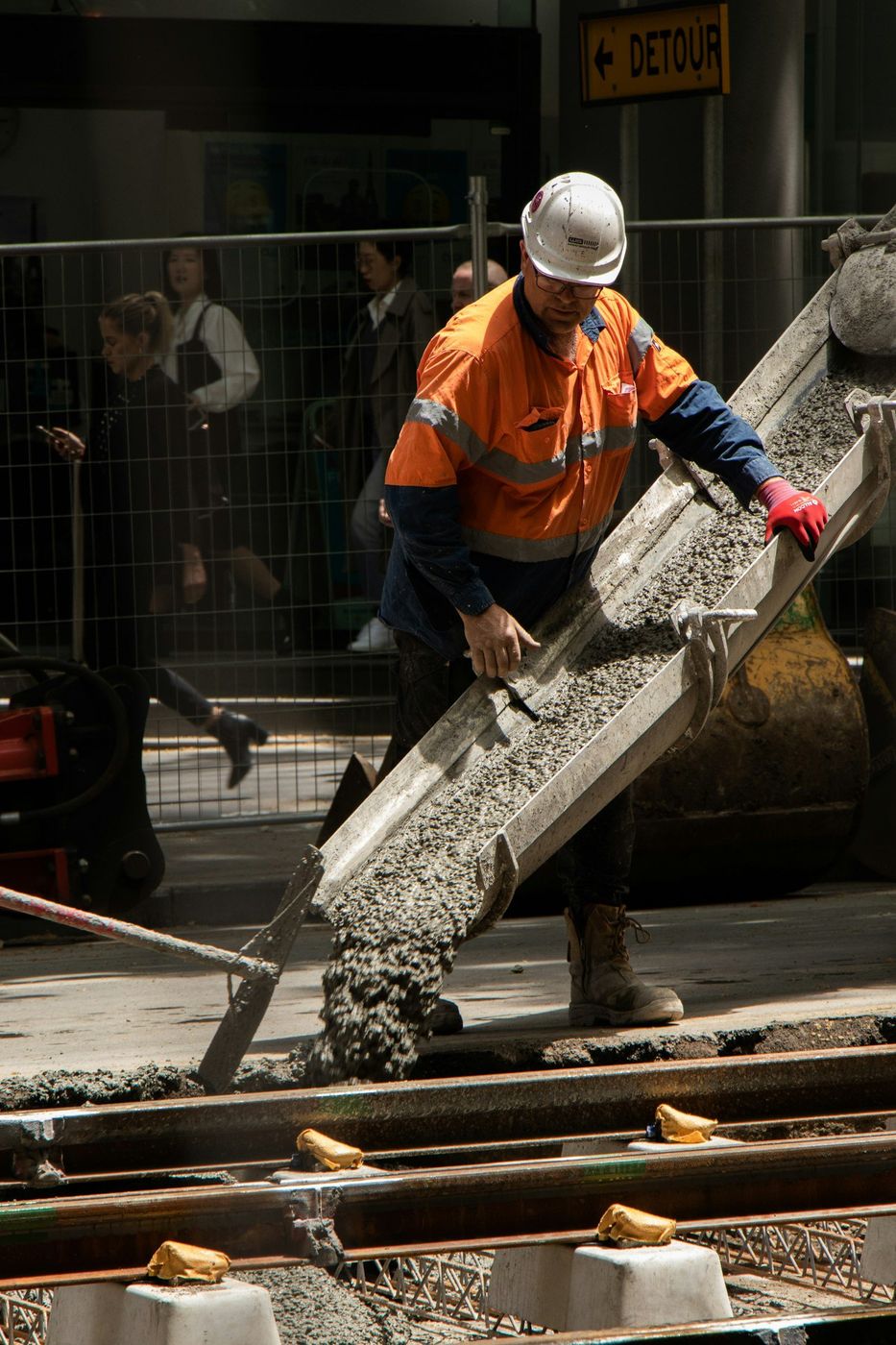
It's the strip of concrete your whole household touches without ever once thinking about it.
Think about everything that happens along that band of concrete between your siding and your dirt. The hose bib comes through it. So does the dryer vent, the radon pipe, the condensate line, and whatever the last electrician drilled. You shovel snow against it in January. You pile mulch on it in May. The trash cans live on it, the crawl space hatch opens into it, and the deck is bolted to the framing sitting right on top of it.
Nobody thinks of a stem wall as something you use. But it touches your household more than most of the house does, and in Park Hill and University Hills we spend a lot of time repairing walls that were fine until daily life got layered onto them. We pour new ones too, for additions, garages, and infill builds. Either way, what happens at that band decides whether the crawl space is dry.
A stem wall lives half in the weather and half in the ground, and the worst spot is where those two meet. That's where deicer splash lands, where snow gets piled and melts slowly against the face for a week, where mulch holds moisture against concrete never meant to be buried that high. Every one of those is a habit, not a defect. Habits are what wear these walls out.
Below the line, the story is what somebody shoved back into the trench. Native clay dumped straight back holds water like a basin and hands it to your wall at leisure. Free draining material against the concrete gives that water a route down to a drain instead of a place to sit. You can't see which one you have. You find out during a wet spring, with a flashlight.
| The habit | What it does to the concrete | What we'd rather see |
|---|---|---|
| Shoveling snow into a pile against the wall | Weeks of slow melt soaking the face and freezing back into the pores | Throw it out into the yard, not up against the house |
| Deicer on the walk right beside the wall | Salt splash that flakes the surface off in layers | Sand or grit next to the house, and rinse the splash zone in spring |
| Mulch or soil piled over the top of the wall | Moisture held against material above the waterproofing line | Keep the top of the concrete visible, several inches of it |
| A planter or raised bed against the face | Daily irrigation delivered straight to the buried wall | Move it off the wall and give the water somewhere else to go |
| Condensate or a sump line dumping at the base | A permanently wet spot in the exact soil you want dry | Pipe it out past the backfill zone and downhill |
| Drilling new penetrations without sealing them | A direct path for water and pests through a waterproofed wall | Core, sleeve, and seal from the outside where possible |
Most of our repair work on older Denver stem walls happens with the house still standing on it, which changes the sequence. We open a section at a time, shore the framing above, take out what's failed, form and pour with steel doweled into what stays, then let it gain strength before moving down the wall. Slow by design.
While the trench is open we do the work that never gets a second chance. Damproofing on the buried face, drainage board where the water volume calls for it, a perforated drain in washed rock wrapped in fabric, and free draining material against the wall instead of the clay that came out. Then final grade cut to fall away. That only happens while the dirt is off.
We'll look at the wall, the grade, and the drainage as one system and tell you which of the three is causing your problem. Free visit. (303) 569-4046.
Spring is when the crawl space tells the truth. Snowmelt plus a wet April is the annual stress test, and if the drain is plugged or the grade tips the wrong way you'll smell it before you see it. Go look with a light in April. Schedule the repair for later, because saturated soil makes a miserable excavation.
Pour season is long. Stem walls go in nearly year round, with heated mix water, non chloride accelerator, and blankets when it's cold, and we never place on frozen bearing. What we watch harder than the concrete is backfill. Frozen clay doesn't compact, it bridges, and in April it thaws into voids that show up as a sunken walkway. When the ground is frozen we wait or import material that behaves.
Nine out of ten wet crawl spaces I get called into, the concrete is fine. Somebody just spent twenty years pointing water at it and nobody connected the two.Our crew lead, after the walkthrough
Still unsure about something?
Call the crew at (303) 569-4046 and we will talk it through.

Get a free, no-obligation estimate from a crew that knows Colorado soil, Colorado weather, and how to finish concrete that lasts.
Accessibility
Adjust the site to fit how you read and browse. Your choices are saved on this device.