
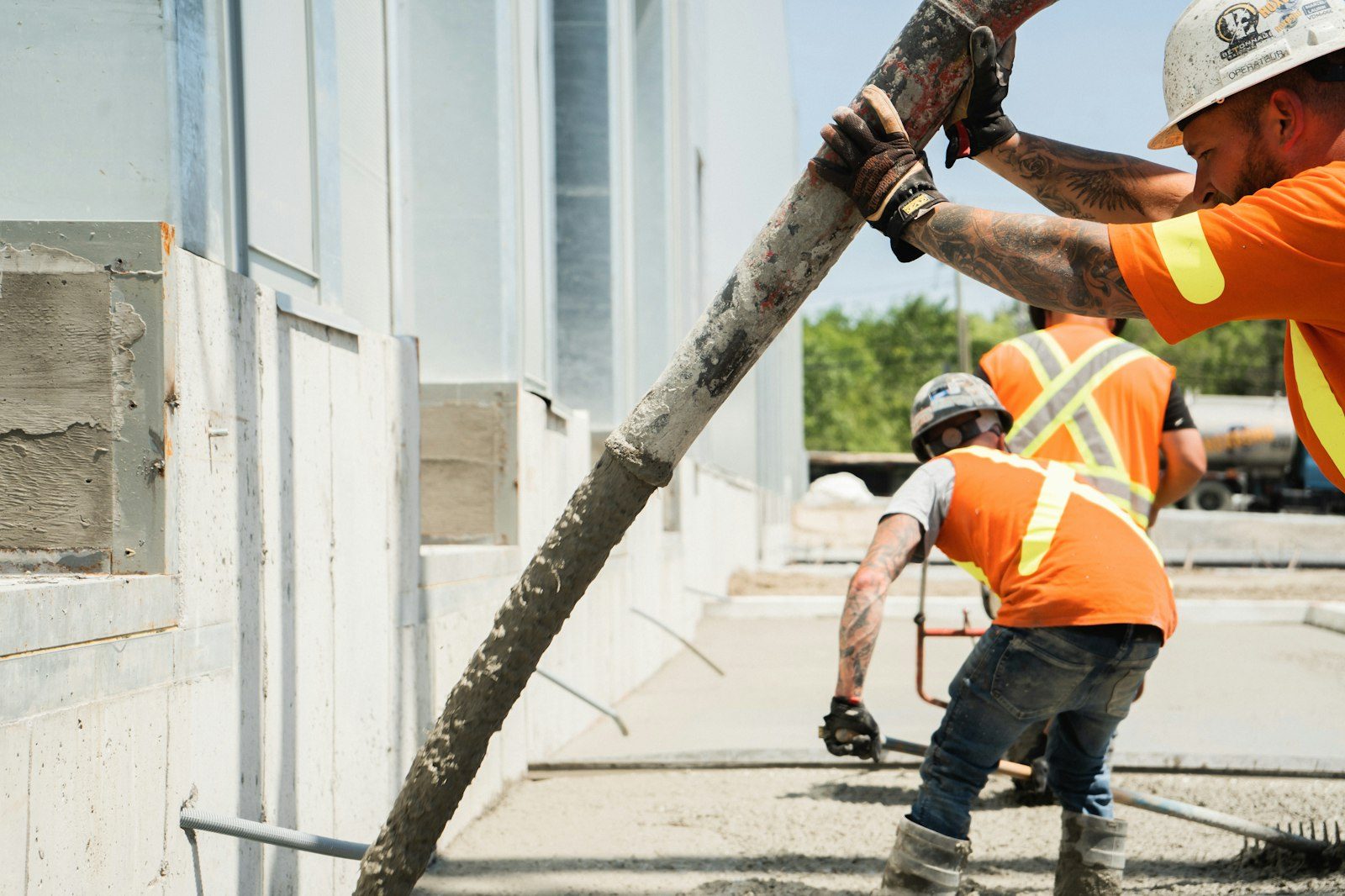
Every era of Denver house left something different in the ground, and we build for the one you actually have.
Denver didn't get built all at once, and you can read that history in the concrete. A Washington Park bungalow may be riding on a hand laid stone perimeter somebody set about a century ago. A Park Hill four square might have thin poured walls with no steel in them anywhere. Berkeley has both, plus a scrape off going up next door on a lot the same fifty feet wide.
We pour new foundations across all of it. Replacements under standing houses, addition footings that have to behave like the hundred year old work they bolt to, and full basements for infill builds where the excavator barely fits between fences. Our structural engineer is on our payroll, so whoever sets footing width and steel schedule is the outfit that has to build it.
The oldest houses in the city sit on mass, not on engineering. Stone or brick perimeter walls, no reinforcing, a shallow footing, and drainage that consists of hope. Between the wars, poured walls showed up. Better in principle, still unreinforced, still with no drain at the footing. Postwar ranches brought block stem walls over narrow footings. Then a long stretch of nothing, and now infill: engineered walls, drain tile, damproofing, radon sleeve, a stamped set for the whole package.
That spread matters because most of our work in the old neighborhoods isn't a tidy new build on empty dirt. It's surgery. Shoring a standing house while we replace a wall in bays. Park Hill and Washington Park send that job constantly. Central Park sends the clean version, with drawings.
| Vintage | What's usually holding it up | What we end up doing |
|---|---|---|
| Turn of the century bungalow | Hand laid stone or brick perimeter, no steel, shallow bearing | Underpin in sections, or rebuild the wall in bays while the house stays shored |
| Between the wars two story | Thin poured wall, unreinforced, no drain at the footing | New reinforced wall and a real drain once the trench is open anyway |
| Postwar ranch | Block stem wall on a narrow footing, crawl space behind | Repair or replace the block, then fix the moisture that chewed it up |
| Nineties through the two thousands | Poured and reinforced, damproofed, drain tile in place | Usually sound. The calls come from additions and from grade somebody changed |
| Current infill build | Engineered walls, void form where the soils report asks for it | Full new pour off a stamped set, on a lot with nowhere to put the dirt |
Send the plans, or just the address. Our engineer will tell you what the foundation has to do before you get locked into a design. (303) 569-4046.
Access decides more about an infill foundation than anything printed on the drawing. On a standard old Denver lot the machine has one way in, the spoil pile has nowhere to sit, and the property line sits close enough that the neighbor's garage joins the discussion. So we plan the dig as a logistics problem first. Where trucks stage. Where dirt goes. Which day the block gets tight.
Shoring is the line item nobody budgets and half these jobs need. Cutting to full basement depth beside a standing structure means that sidewall has to be held, by benching it back where there's room or shoring it where there isn't. You'll hear that from us in week one, in writing.
Foundation work runs later into the year than flatwork does. A wall down in a trench is protected on both faces, and the mass carries its own heat while it sets. We place walls into November and December most years with heated mix water, non chloride accelerator, and blankets over the forms.
What stops us is frozen bearing. A footing set on frost is set on something that won't be there in March. And Denver's real trouble isn't deep cold anyway. It's the swing. Forty five and sunny at two, nineteen before dawn, over and over. That cycle punishes fresh concrete and it punishes an open excavation. Break ground in spring if you can. If you can't, say so early and the cold weather plan goes in the bid.
Still unsure about something?
Call the crew at (303) 569-4046 and we will talk it through.

Get a free, no-obligation estimate from a crew that knows Colorado soil, Colorado weather, and how to finish concrete that lasts.
Accessibility
Adjust the site to fit how you read and browse. Your choices are saved on this device.