
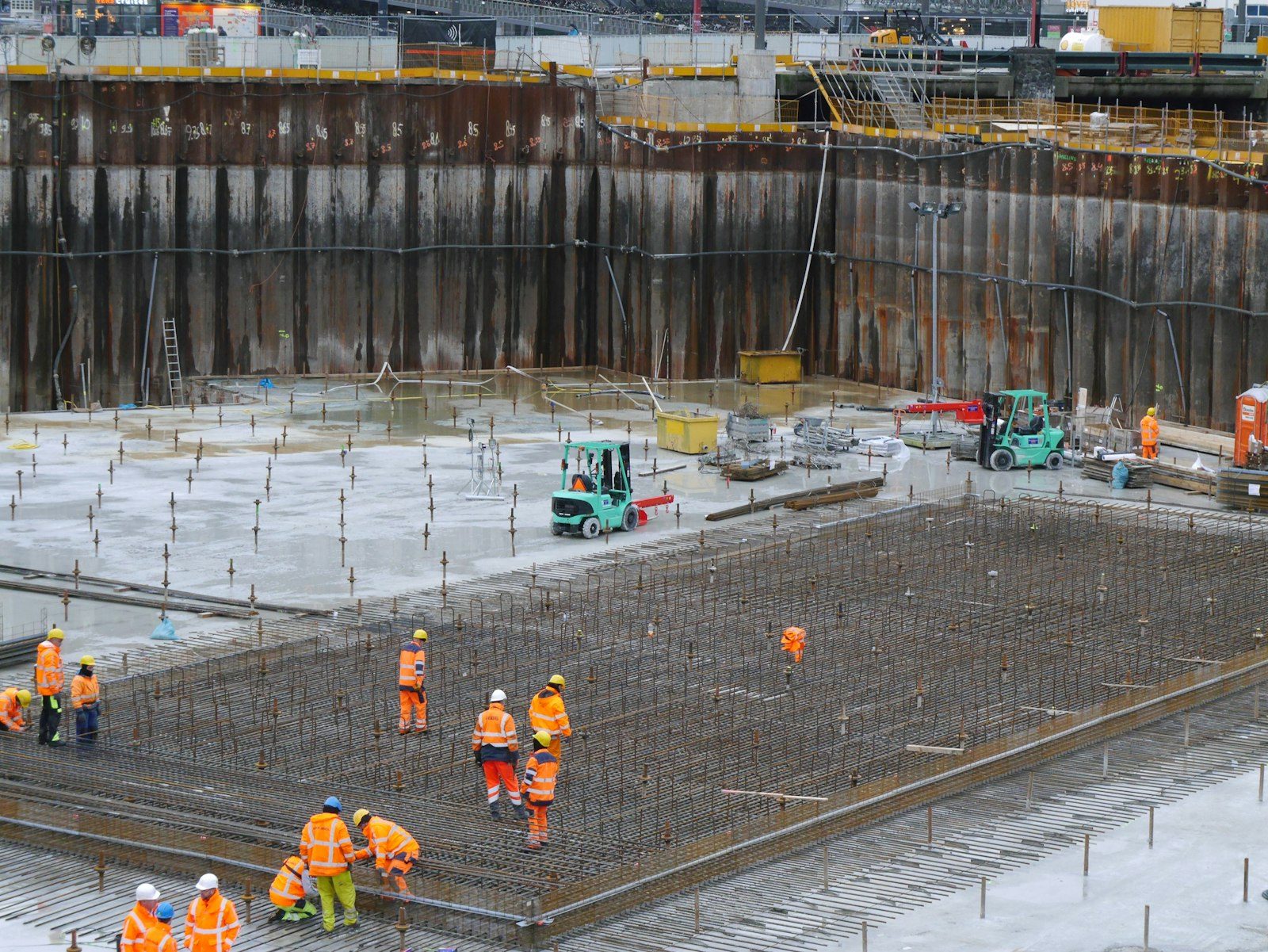
You aren't buying concrete down there. You're buying the depth it took to reach something worth standing on.
Two bids for the same porch footings can be far apart and both can be honest. One priced a hole to a number on a plan. The other priced a hole to whatever depth it takes to land on soil that will hold. Those are different products with the same name, and the second one is the only one that ends the problem.
We do bearing work across Denver: new footings under additions in Berkeley, pier repairs under sagging porches in University Hills, pads and caps for covered patios and shop structures up in the Highlands. This page is about where the money in that work actually sits, because homeowners deserve to know which line items are real and which ones are somebody guessing.
Every bearing dig has two floors it has to get past. One is frost. Concrete resting above the freeze line gets picked up by ice in the soil and set back down slightly wrong, winter after winter, until the thing on top of it is visibly out of line. The other is competent material, which is whatever layer will carry the load without squashing or swelling. Sometimes those two depths are close together. Sometimes we clear frost easily and keep going, because what came out of the hole at four feet was not something anybody should build on.
That's why we won't quote a hole by the each without seeing the site. We can tell you the design depth and what the neighborhood has handed us before. What we won't do is stop at the tape measure when the bucket brings up material that says otherwise.
Concrete is rarely the expensive part. Labor, machine time, and haul off are. A pier that takes twenty minutes to drill on an open lot takes an afternoon when it has to be hand dug between a gas line and a mature tree, and every yard of spoil that comes out of a small backyard has to travel out through a gate in a wheelbarrow. Access is the single biggest swing on residential bearing work in this city, and older blocks with no alley access are where it swings hardest.
Spacing is the other lever, and it's the one worth understanding before you shop bids. Piers get spaced by the load the beam above delivers and by what the soil takes per pier. Widening the spacing to save two holes means every remaining pier carries more, so you get bigger diameter, deeper bells, or both. Sometimes that trade pencils. Usually it doesn't, and a bid with suspiciously few supports is a different design nobody explained to you.
| Driver | Why it moves the number | How much control you have |
|---|---|---|
| Depth to competent bearing | Every extra foot is time, spoil, and concrete on every single hole | None. The soil decides and the engineer confirms |
| Pier count and diameter | Set by the load above and what each pier can safely carry | Some, if the structure above can be redesigned before it's built |
| Access to the work | Machine dig versus hand dig versus wheelbarrow haul is a huge labor spread | A little. Removing a fence panel or clearing a side yard genuinely helps |
| Spoil disposal | It has to leave, and in a city that means trucks, time, and tipping | Some. A place on site to spread clean spoil can trim it |
| Caving or wet holes | Holes that won't stand open need casing, pumping, or a same day pour | None, but a fall dig after the wet season lowers the odds |
| Cold weather protection | Thawing ground, warm mix, blankets, and slower production all add up | A lot. Scheduling in a workable month is the cheapest decision available |
Send us both. We'll show you where they differ on depth, diameter, and spacing so you're comparing the same thing. No charge, no obligation. (303) 569-4046.
Bearing work is the least satisfying money a homeowner spends. Nothing looks better afterward. The porch just stops moving. That's exactly why it gets underbought and revisited: somebody caulks the crack, shims the post, and pays three times over five years for a problem that was always underground.
Here's how we frame it. A correct pier is a one time purchase for the life of the structure above it. A shallow one is a subscription. When we look at a sunken stoop in University Hills or a porch column leaning in Berkeley, the first question we answer is whether the structure on top is still worth supporting. If the framing is shot, we'll say so instead of taking money to hold up something that's finished.
Still unsure about something?
Call the crew at (303) 569-4046 and we will talk it through.
Get a free, no-obligation estimate from a crew that knows Colorado soil, Colorado weather, and how to finish concrete that lasts.
Accessibility
Adjust the site to fit how you read and browse. Your choices are saved on this device.