
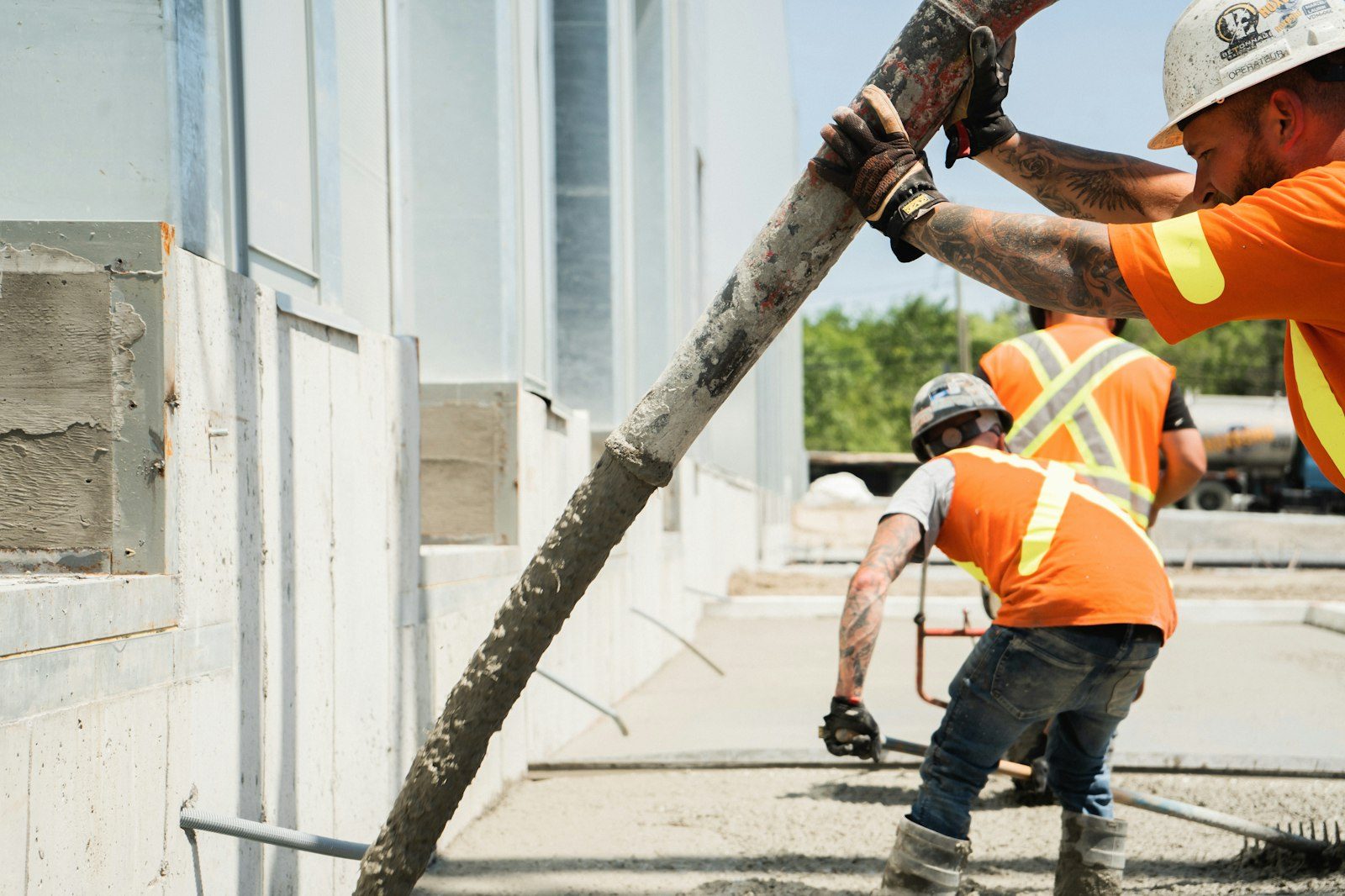
The wall is the simple part. Everything interesting is happening in the dirt on either side of it.
Open the hatch on an older Centennial ranch and there's a good chance the crawl space floor is still dirt. Somebody rolled poly across it once, the corners have curled, and a pale crust runs along the base of the wall where moisture has come and gone for years. None of that is rare. All of it reports on conditions outside that concrete.
Stem wall work is soil and water work with some concrete attached. The wall itself is straightforward. What decides how it lives is the material under the footing, whatever got shoved back into the trench outside, and whether water arriving at the wall has anywhere to go other than through it.
A stem wall footing wants to sit on undisturbed soil or on fill that was placed and compacted on purpose. That part is easy to get right. What goes wrong later happens outside, when an excavator pushes native clay against the wall in one afternoon and calls it backfill. That material never gets the compaction the plan assumed, so it settles for years and forms a trough right where you least want one.
The other failure mode is subtler. Somebody puts clean rock against the wall, packs clay over the top of it, and never gives the rock an outlet. Now the trench is a bathtub with a porous liner, collecting everything the roof and the lawn send it and holding it against your concrete. Rock without a drain is storage. Rock with a drain and an outlet is drainage. That difference is most of this trade.
Before anybody digs we go find the source, because the fix changes completely depending on the answer. Roof water is the usual culprit and the cheapest to solve. A downspout emptying two feet from the wall dumps a huge volume into one small patch of soil several times a year, and extending it is an afternoon of work that beats most of what we could sell you.
After that comes irrigation. Beds that get watered daily along the south wall, heads that drifted out of aim years ago, a lawn program running through a wet May. Then window wells with no drain, and grade that fell back toward the house as the old trench settled. Around Willow Creek and Southglenn, where yards have been reworked two or three times, the finish grade rarely resembles what the builder left. So we shoot elevations instead of eyeballing.
| Approach | When it's the right call | What you give up |
|---|---|---|
| Surface correction only | Water is arriving from gutters, grade, or sprinklers and nowhere else | Very little. A day of regrading and downspout work is often the whole cure |
| Exterior footing drain to daylight | The lot falls away somewhere you can legitimately outlet | The landscaping in that strip. Trenching along the wall is destructive by nature |
| Exterior drain to a sump | The outside face needs protection but nothing downhill to release into | Same excavation, plus a pit, a pump, and a discharge line to maintain |
| Interior drain under the crawl floor | Mature landscape, tight side yards, or access that rules out digging outside | The buried face stays unprotected. You are managing water, not stopping it |
| Encapsulation over a sealed floor | Drainage is sound and what's left is vapor rather than liquid | Nothing, as long as it happens after the water work and never instead of it |
Call (303) 569-4046 before the trench closes. That open window is the cheapest hour anybody will ever spend on this wall.
Interior crawl space work is a winter job and we like it that way. It's out of the weather and our schedule has room. Sealing a floor, running an interior drain, setting a sump, and fixing the vapor situation go as well in January as in July.
Trenching outside is the opposite. That work wants dry ground, so late summer through fall is when we push it. Trench walls hold their shape, backfill compacts the way it's supposed to, and there's still time to shape the finish grade before the first snow. We will pour a new stem wall in cold weather with heated water and blankets, no problem. What we won't do is backfill with frozen clods, because frozen dirt is full of voids that appear the week it thaws.
Still unsure about something?
Call the crew at (303) 569-4046 and we will talk it through.

Get a free, no-obligation estimate from a crew that knows Colorado soil, Colorado weather, and how to finish concrete that lasts.
Accessibility
Adjust the site to fit how you read and browse. Your choices are saved on this device.