
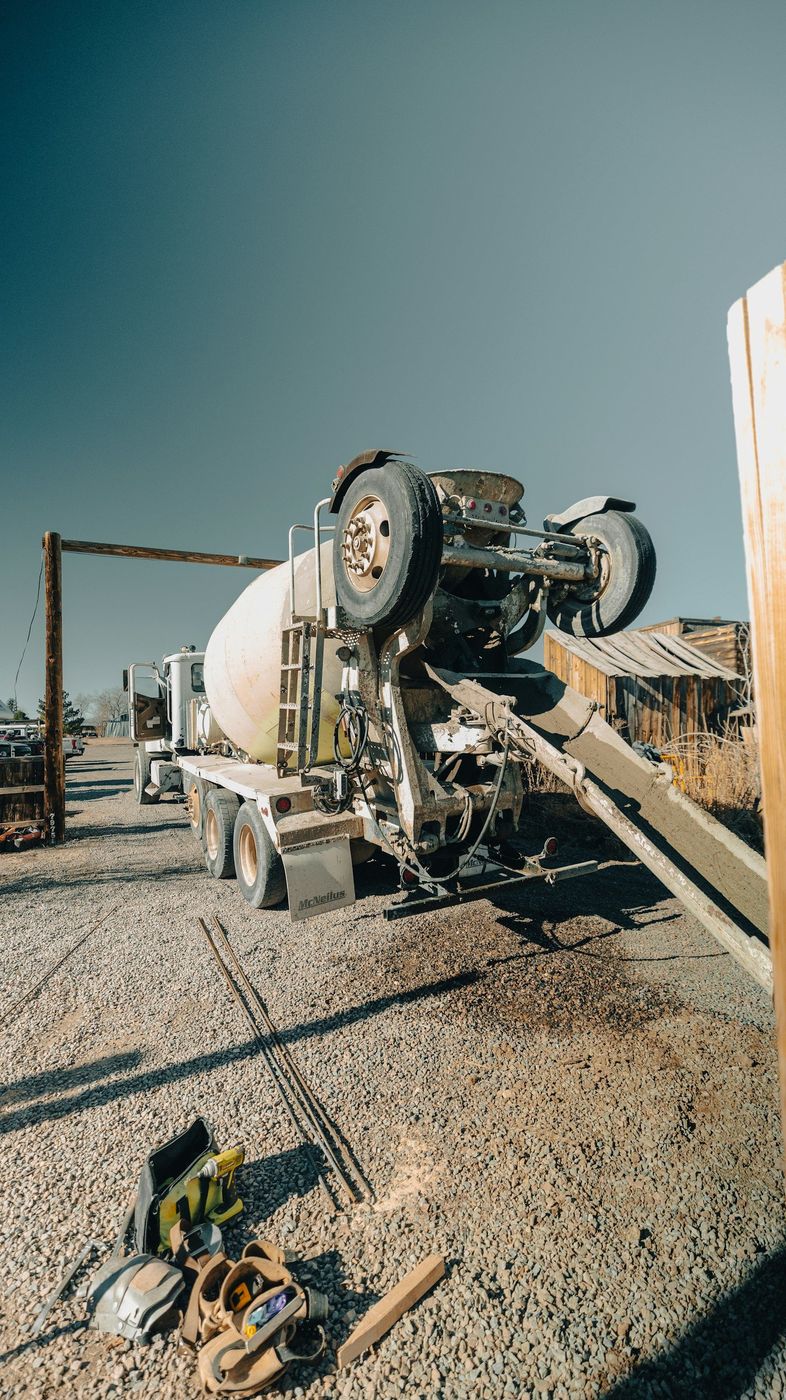
The people who judge your floor are pushing carts across it, not reading the structural drawings.
A commercial floor gets voted on every day by people who never think about concrete. The tech rolling a cart between exam rooms. A driver setting a pallet down just inside the back door. Whoever mops at closing and needs the water to actually reach the drain. None of them will say the word foundation out loud, and every one of them notices inside a week when the slopes, the joints, or the anchor layout came out wrong.
That's the lens we use on commercial work in Centennial. Most buildings here are on their second or third tenant, so the concrete has to survive somebody else's floor plan as well as yours. We build around how the space gets used, then check that against the code minimum. The two almost never argue.
Tell us what the space does and the slab designs itself. A dental or medical suite means chair anchors, plumbing coming up through concrete in exact spots, and a floor flat enough that a rolling stool doesn't drift. A restaurant means the whole back of house pitched toward floor sinks, plus a trench drain that has to be set dead true before anybody pours around it. An auto bay means point loads under lift posts and a footing that reaches real bearing, not a four inch floor with hope in it.
The commercial edges around Southglenn and out toward Piney Creek are full of older shells getting reworked for uses nobody planned for. So we ask early: what rolls across this, what bolts to it, what gets washed down, and who services equipment standing on it. Those four answers set thickness, steel, joints, slope, and finish before we talk schedule.
| Where in the building | What happens there daily | What we build for |
|---|---|---|
| Entry and vestibule | Foot traffic, wheelchairs, snow tracked in | Cross slope inside accessible limits, no lip at the threshold, grip when wet |
| Back of house | Wash-down, spills, cart wheels | Pitched to floor sinks, joints filled flexible, a sealed surface |
| Service corridor | Small hard wheels crossing joints all day | Filled joints with sound edges, flatness held so nothing slams |
| Delivery door and apron | Truck wheels, dock plates, concentrated loads | Thicker slab and heavier steel from the door out through the apron |
| Mechanical yard | Condenser swaps, generator service, inspections | Separate pads, conduit stubbed correctly, room to turn a wrench |
| Future demising line | Somebody splitting the space in five years | A thickened strip where a wall could land, and a joint plan that fits it |
Send us the structural set and the tenant's equipment list. Call (303) 569-4046 and we'll tell you what we'd change before it goes out.
Anchor bolts are the sharpest example. The steel fabricator built those columns to a drawing, and bolts that land a half inch off turn into a field fix with an engineer's letter attached. So we set bolts in templates, survey them before the pour and again after, and we'd rather hold a truck twenty minutes than chase a base plate later.
Same thinking on everything else living inside the concrete: embed plates at the dock, sleeves for utilities, conduit stub-ups, dowels at construction joints, and the deeper footing under a lift or a mezzanine post. Core drilling exists and we use it. But a hole through finished concrete cuts steel you paid for, and each one is a place water and grit start working.
Occupied buildings run the schedule, not us. We phase work so one door stays usable, pour sections at night or over a weekend when the operation can't take the hit, and barricade fresh concrete in a way that keeps the public off it without shutting the place down. Curing time is the part nobody can compress: foot traffic after a day or two, vehicles at a week, and heavy racking loads once the engineer signs off on cylinder breaks.
Winter is workable. Heated water, accelerators, blankets, and enclosures let us pour through the cold months at 5,833 feet, and interior slabs get easier once the building has temporary heat. Exterior flatwork is where we get picky, because a surface that freezes before it sets scales the next spring. And no deicer on new outdoor concrete the first winter. Sand it, plow it, wait.
Still unsure about something?
Call the crew at (303) 569-4046 and we will talk it through.
Get a free, no-obligation estimate from a crew that knows Colorado soil, Colorado weather, and how to finish concrete that lasts.
Accessibility
Adjust the site to fit how you read and browse. Your choices are saved on this device.