
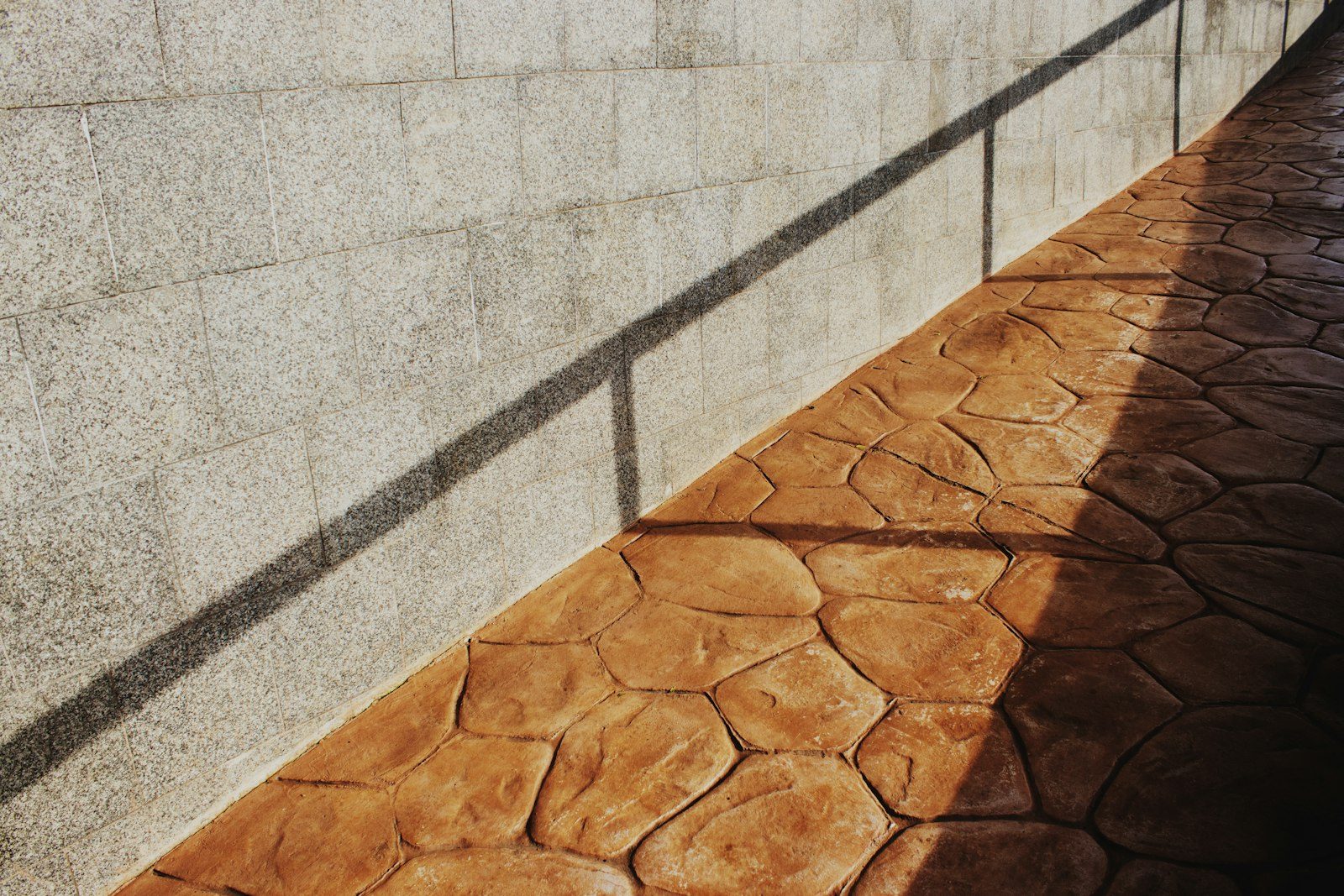
Plenty of the washed stone we work on around here came with the house.
Most people in Centennial don't go shopping for exposed aggregate. They inherit it. Walk the older blocks around Southglenn or Walnut Hills and you'll find washed-stone walks, porches, and drive aprons that came with the house, and the calls we get are rarely about picking a look from scratch. They're about what to do with the stone that's already out there.
That changes the job. Matching an existing surface is a different craft than pouring a fresh one, and it starts with reading what's down: how big the rock is, how deep somebody washed it, what color the paste around it has drifted to after all those winters. Sometimes we match it. Sometimes we say plainly that a clean break at a joint will look better than a near miss.
Old aggregate fails from the top down, in a pattern you can read from standing height. Loose pebbles sweeping off a walk every spring means the paste holding the shoulders of each stone has let go, usually from winter chemicals, sometimes from a wash that went too deep on a pour day decades back. A dark slick strip up the middle of a drive apron is the opposite problem: traffic polished the stone faces flat and packed the texture with rubber and road grit.
Neither one is cause for panic. What they do is tell us how much of the old surface is worth keeping. If a walk is shedding stone across its whole face, replacing the panel beats patching it. If one square by the step gave out and everything around it is tight, we work on that square and leave the rest alone.
| What we compare | Why it fights us | What we can actually do |
|---|---|---|
| Stone size and blend | Pit runs change, and the exact gravel in a slab poured decades ago may not exist now | Get size right first, color second. A size mismatch is what people notice from ten feet away |
| Depth of exposure | Old work got washed to whatever the crew liked that morning, and it varies inside one job | Wash a test panel and hold it against the old surface before the main pour goes in |
| Paste color | Cement gray drifts lighter with weather, so anything fresh starts out too dark next to it | Wait it out or tint slightly. New concrete moves toward the old within a season or two |
| Surface wear | Winters round the stone faces off, and nothing new looks that soft | Accept the gap, or replace enough area that the eye quits comparing |
| Sealer history | A previously sealed surface reads darker and glossier than raw new stone | Seal both on the same day and the two get much closer together |
An exposed finish is a wash, not a texture we press into the surface. The slab gets placed and floated like anything else, then we wait while the top stiffens, then we take the cement paste off so the rock underneath comes up. The whole finish lives inside a window that opens exactly once. Go early and you flood stone right out of the surface. Go late and the paste has locked in, and now it's a grinder problem instead of a hose problem.
Heat and dry air pull that window forward and shorten it, which is why summer pours here start at daylight. On the hard days we brush a surface retarder across the fresh slab, keeping the top paste soft while everything beneath it sets, so the wash happens on our clock rather than the weather's.
Text one over or let us come look. Either way you get a straight answer on whether a match is realistic. Free estimates. Call (303) 569-4046.
On a north-side walk that sits in shade from November to March, washed stone gives boots something to grab that a hard-troweled surface never will. Around a Piney Creek patio where the yard is half mud every spring, the texture swallows tracked-in mess instead of displaying every print. That's why the finish keeps getting picked in Homestead and Foxridge long after the original builders left.
The catch is winter chemistry. A washed surface has far more area exposed than any broom finish, and deicers go after the paste between the stones first. Sand, a plastic shovel, and a blower set high enough to skim rather than scrape. We pour this work from late April into October, and we don't wash a slab with a hard freeze coming that night.
Still unsure about something?
Call the crew at (303) 569-4046 and we will talk it through.

Get a free, no-obligation estimate from a crew that knows Colorado soil, Colorado weather, and how to finish concrete that lasts.
Accessibility
Adjust the site to fit how you read and browse. Your choices are saved on this device.