

(303) 569-4046 Serving Denver & the Front Range Licensed, Bonded & Insured
Go Denver Concrete
Polished Concrete in Castle Rock, Colorado
Castle Rock, Colorado

Polished Concrete Floors in Castle Rock

The floor is already there. We grind it, harden it, and bring up a shine that can't peel.

Most people calling us about a basement floor are really deciding between three things: epoxy, some kind of plank or tile, or polishing the slab that's already down there. It's worth knowing where each one wins. Epoxy is a layer glued to concrete, and layers eventually let go, especially over a slab that breathes moisture. Plank floats on top and eats headroom you don't have in a finished basement. Polishing removes material instead of adding it, so there's nothing to delaminate later.

We polish basements, garages, workshops, and small commercial floors across Castle Rock, from finished lower levels in The Meadows to bare shop slabs off Plum Creek. The pitch is simple. You already own the floor. For less than what a good tile job costs you can turn it into the finish surface and be done thinking about it.

What polishing actually does to a slab

This is machine work, not a product you roll on. Big planetary grinders carry diamond segments, and we run the floor in stages, each stage finer than the last. Early passes cut. They flatten the surface, take out trowel marks and paint, and decide how much stone shows. Later passes refine. The concrete gets tighter and starts to reflect.

The step that makes it durable happens in the middle. We flood the floor with a lithium silicate densifier, which reacts with lime in the concrete and fills the pore structure with hard mineral. That's what stops a polished slab from dusting under foot traffic and what lets the fine grits build gloss instead of just smearing paste around. Skip the densifier and you get a floor that looks good in photos and hazes over within a year.

6-8diamond grit stages on a typical residential floor
1coat of lithium densifier, flooded and worked in
0coatings on top, which is the entire point
4-6 moshow often a densified floor wants a burnish, not a recoat

How much stone do you want looking back at you

Before we start grinding we settle one question: exposure. Cut shallow and you keep the cement paste, so the floor reads soft and cloudy with very little aggregate visible. Cut deeper and you open salt-and-pepper, a fine even speckle of sand. Go further and you expose the big rock, which looks like polished terrazzo and shows every place a plumber ever cut a trench.

That last one is where honesty matters. Full aggregate exposure needs a slab that was poured flat and never patched, and most residential floors in Douglas County are neither. Garages slope to the door. Basement slabs have utility trenches. So on a house we usually recommend cream or salt-and-pepper, and we save the deep cut for shop floors and new pours where we controlled the placement ourselves.

Where we stop the grit sequence

Gloss level, what it takes, and who should pick it
Finish levelWhere the diamonds stopBest suited to
Ground and sealedCut passes only, then a penetrating sealerGarages and utility rooms. Flat, clean, low sheen, cheapest of the three.
Honed satinThrough the 400 rangeBasements and living space. Light bounces without glare, and scuffs hide well.
High polish800 and beyond, with a burnish passShowrooms, entries, anywhere you want a reflection. Shows dust the same day.
Curious what your slab would look like polished?

We'll grind a two-foot test square in a closet or a corner so you can see the real aggregate before you commit.

People worry about the mess. Fair. But these grinders run on vacuum shrouds and we tape off the stairwell, so what leaves the room is mostly noise. The floors that surprise homeowners are the ugly ones. Stained, painted, patched garage slabs in Metzler Ranch come out looking like they were poured for this.The crew lead's read on it

What we handle on a polish job

  • Moisture test on the slab before anything else, because a wet floor changes the plan
  • Clearing and taping off the space, with plastic on doorways and stair openings
  • Removing old glue, paint, carpet tack strips, and any coating still stuck down
  • Repairing cracks and popouts with color-matched patch so they read as part of the floor
  • Staged diamond grinding to the exposure and gloss you picked, dust collected as we go
  • Lithium densifier flooded across the whole slab and worked into the surface
  • Final polish and a stain guard on kitchens, entries, and anywhere food or oil lands
Castle Rock Polished Concrete

Polished Concrete in Castle Rock

Still unsure about something?

Call the crew at (303) 569-4046 and we will talk it through.
We'd rather not, and here's why. A high-polish surface outdoors at this altitude is a slip hazard the first morning it frosts, and the freeze-thaw swings we get in Castle Rock work on a hard-troweled exterior face until it starts flaking. Outdoor slabs want texture and a penetrating sealer. If you want decorative outside, we'll point you at exposed aggregate or a scored finish instead.

Probably not. Oil stains usually grind out because the diamonds are removing actual material, not scrubbing. Cracks get routed and filled with a hard patch that we tint toward the slab color, and once the floor is polished they read as character lines. What does end a job is a slab that's broken into moving pieces or one sitting on a failed base. We check that first.

Less than you're imagining. Our grinders run shrouded with a vacuum pulling at the head, we hang plastic at every opening, and we run an air scrubber in the room. You'll still want to cover anything that has to stay in the space. Nobody has to move out, though basements get loud during the cut passes.

Square footage helps but it's not the driver. What drives it is how many cut passes the slab needs before it's ready, whether there's glue or paint to remove, how much patching the surface takes, and how high you want the gloss. A clean flat slab that only needs finishing passes is fast. A painted, trenched, wavy one is a different job. We look and then we quote, free.

Dust mop it and damp mop with a neutral cleaner. No vinegar and no acidic bathroom products, because acid etches polished concrete and takes the reflection with it. The Castle Rock detail is winter grit. Sand and road cinders tracked in from boots act like sandpaper underfoot, so a mat at the door and a regular sweep do more for the floor than any product.

Yes, and it usually outlasts a coating in that setting. A densified polished slab has no film to chip off when a pallet corner drops on it, and tire marks buff out. The variable is joint condition. On a working floor we fill the control joints with a semi-rigid filler so wheel loads don't spall the edges, and we plan the grind in sections so you can keep operating.

Interior polishing runs all twelve months, which makes it a good winter project while we can't pour outside. That's typically our shortest lead time of the year. Plan on two to four days on site for a house-sized floor, plus a day up front if we're pulling old flooring. Give us a call and we'll tell you what the board looks like.
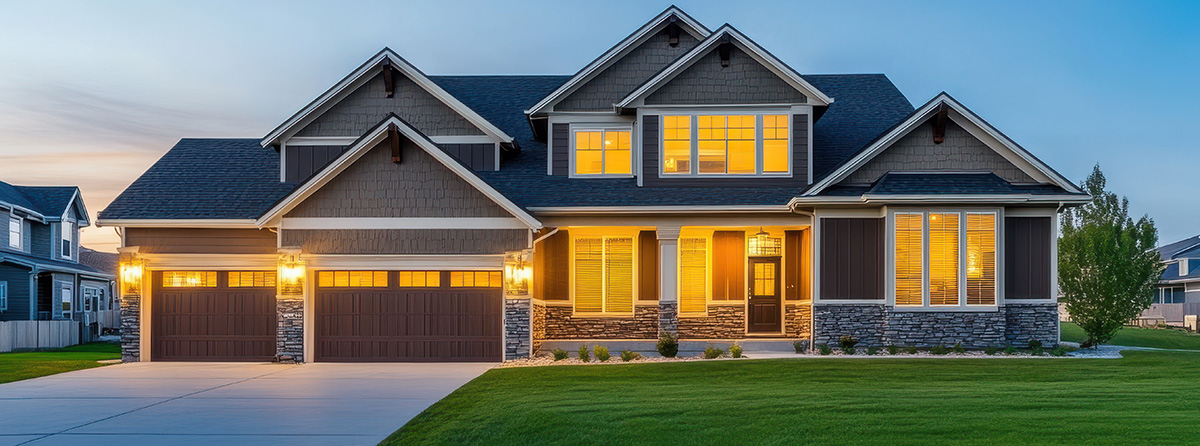
Finished concrete project at a Colorado home

Need Polished Concrete in Castle Rock?

Get a free, no-obligation estimate from a crew that knows Colorado soil, Colorado weather, and how to finish concrete that lasts.