
A filled spa is a point load, not a patio load, and we pour for the filled number.
The question we get asked isn't whether we can pour a spa pad. It's whether you need one. Plenty of people in Crystal Valley and Metzler Ranch already have a patio out back and would rather set the tub on what's there than write another check. Fair enough. So let's make that decision properly, because the wrong call here doesn't show up for two years and then shows up as a twisted shell and a warranty claim the manufacturer declines.
Here's the framing that matters. Your patio was designed to hold people and furniture spread across a wide area. A spa concentrates several thousand pounds of water, cabinet, and occupants onto four small feet. Same slab, completely different problem.
| Support option | When it works | Where it goes wrong |
|---|---|---|
| Dedicated reinforced slab, six inches | Any spa, any yard, any size | Nothing, other than it costs more than doing it badly |
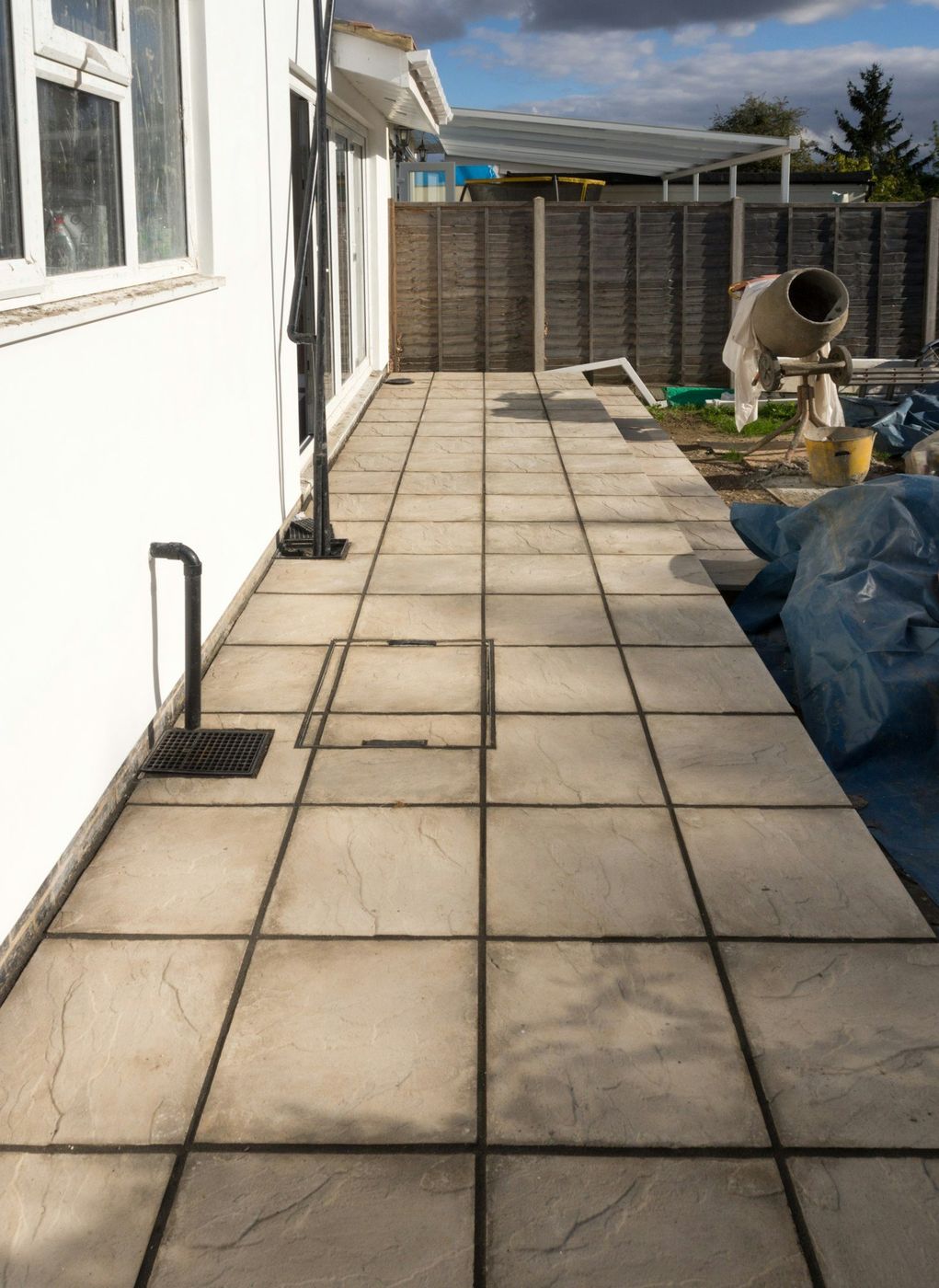
| Existing patio slab | Small two-person units over a base we can verify | Most builder patios run thin over shallow base and dish under the feet |
| Pavers on compacted base | Light spas, flat ground, dry site | Individual pavers settle at their own rates and your level tolerance is gone |
| Wood deck framing | Only where an engineer sizes the framing for filled weight | Framing built for people, loaded with water, is how decks fail |
| Gravel bed | Seasonal or temporary setups only | Freeze cycles redistribute the stone and the shell starts to rack |
Setting a spa on an existing patio is the shortcut everyone reaches for, and sometimes it's genuinely fine. Sometimes. We take a core or drill a test hole, measure actual thickness, and check what's under the edge. If we find four solid inches over compacted base with steel in it, a small unit can go on that slab and we'll tell you to save your money.
What we usually find instead is three and a half inches of plain concrete on native soil, poured by a production crew twelve years ago to finish a house. That slab holds a grill and a table forever. Put a loaded spa on it and the corners dish, the shell goes out of level, the door on the cabinet stops closing right, and the plumbing inside starts to take stress it was never meant to carry.
Take a position on this one: if the tub costs more than the pad, pour the pad. That's the whole test, and it settles almost every version of this conversation.
Send us the model footprint and your delivery date. We'll tell you honestly whether the timeline works or whether you need to push the delivery.
Where the pad goes matters as much as how it's built. At this altitude the sun is fierce in July and the wind off the ridge lines in January is worse, so we look for a spot with afternoon shade and some shelter, close enough to the house that the walk from the door in February isn't a punishment. We also give the pad a slight fall, roughly an eighth of an inch to the foot, running away from the foundation. Spas drain, splash, and get emptied. All of that water has to go somewhere other than your basement wall.
Electrical is the part homeowners forget until the pour is done. A spa needs a dedicated circuit, and running conduit under a finished slab means either a saw cut or a long trench around it. We sleeve the conduit before the pour, every time, along with any low-voltage line you might want later for lighting. Ten dollars of PVC on pour day saves a mess afterward.
On timing: April through October is the easy season and September pours are our favorite, since the pad is fully cured well before deicing season. Winter installs happen with heated mix water, non-chloride accelerators, and blankets, but the ground can't be frozen and the delivery has to wait out the full cure. If your spa lands in December, we'll build a schedule around it rather than rushing the concrete.
We get called out to level spas that were set on pavers about twice a summer. The tub isn't broken. The ground under one corner just quit. Once a shell has been sitting racked for a season, though, you're not always getting it all back.What the crew sees on site
Still unsure about something?
Call the crew at (303) 569-4046 and we will talk it through.

Get a free, no-obligation estimate from a crew that knows Colorado soil, Colorado weather, and how to finish concrete that lasts.
Accessibility
Adjust the site to fit how you read and browse. Your choices are saved on this device.