
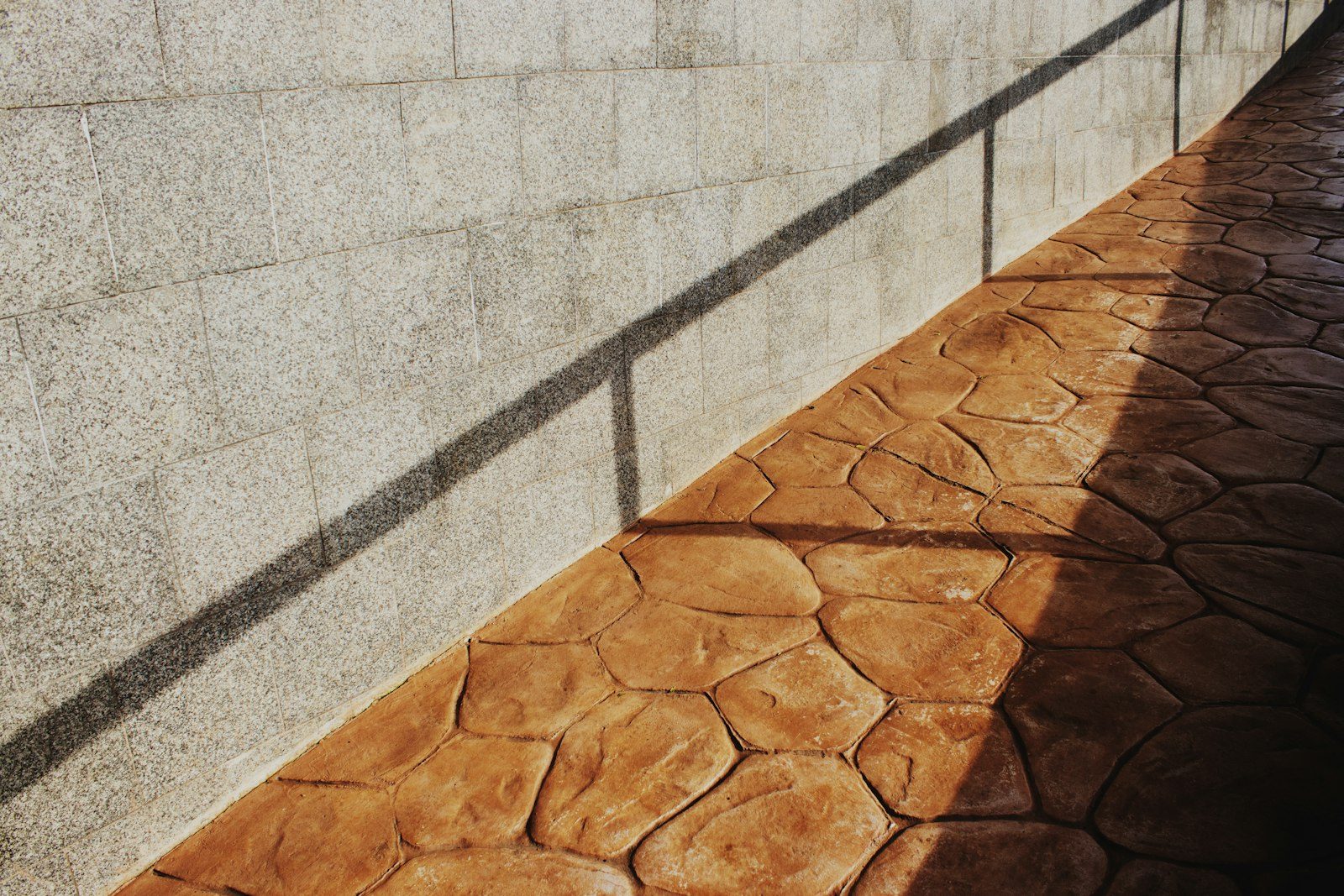
Community-wide walk and drive-approach work, priced by the panel, scheduled by the block, and explained to residents before the saw runs.
A board walks the community with a clipboard every spring, and by the third cul-de-sac the panels all start blurring together. Everything looks a little rough. Nothing looks urgent enough to argue for at the next meeting. Then somebody trips on a lifted joint near a mailbox cluster, and suddenly the concrete is the only item anybody wants to discuss.
We do bulk concrete for communities across Castle Rock, and the work looks different depending on when the neighborhood was built. Older sections like Founders Village and parts of Plum Creek have decades of movement in their walks and aging drive approaches. Newer development around The Meadows, Cobblestone Ranch, and Sapphire Pointe usually has thinner builder flatwork that has aged unevenly, sound in one loop and failing in the next.
Age tells us where to look, not what to do. In the older parts of town the walks were poured decades ago, often at four feet wide with joints that are now wide open, and the drive approaches at the street have taken thirty winters of plow blades and chloride. Those areas usually need real replacement rather than patching, and the good news is that the work is straightforward because the panel sizes are consistent.
Communities built during the last two decades, out toward Castlewood Ranch, Crystal Valley, Metzler Ranch, and Red Hawk, tend to have a scattered pattern of failure. A few panels lifted by a tree, a run of settlement along one side where a utility trench ran, and long stretches that are genuinely fine. Those associations get more value from a careful survey than from a blanket replacement, and we say so.
| Approach | How it works | Who it fits |
|---|---|---|
| Whole community at once | One mobilization, one season, everything replaced | Reserves are funded and the board wants it finished and matched |
| By filing or by loop | One section per year on a rotating schedule | Steady annual budgets and boards who prefer predictable spending |
| Worst-first by severity rating | Every defect scored, then the top tier addressed each year | Associations managing liability with limited funds |
| Hazards now, aesthetics later | Trip hazards ground or replaced immediately, cosmetic work deferred | Boards facing a claim or an insurance review this year |
| Bundle with paving or curb | Concrete sequenced alongside asphalt and curb work | Communities already planning a larger site project |
Pouring a hundred panels is a known quantity. Telling two hundred households they can't reach their garage for a few days is where projects go sideways. So we build the communication plan into the schedule. Door hangers go out ahead of each block with dates, what will be inaccessible, and where to park. Cones and signage mark the temporary walking route the night before.
Drive approaches are the sensitive ones. When we replace the apron at the street, that home is off the driveway until the concrete can take a car, so we group approaches by block, arrange guest parking with the board first, and stage the work so nobody is stranded longer than the schedule said. We put the reopen date on the door hanger in large type. People forgive an inconvenience they were warned about.
We'll walk the community, score the defects, and give you a mapped, priced list you can phase across as many years as you need.
Boards always ask me to point at the worst panel. That's the wrong question. The one that hurts somebody is rarely the ugliest one, it's the small lift at a joint on the route everybody takes to the mailboxes. Ugly and dangerous are two different lists, and they should get funded differently.Straight from the crew
Still unsure about something?
Call the crew at (303) 569-4046 and we will talk it through.
Get a free, no-obligation estimate from a crew that knows Colorado soil, Colorado weather, and how to finish concrete that lasts.
Accessibility
Adjust the site to fit how you read and browse. Your choices are saved on this device.