
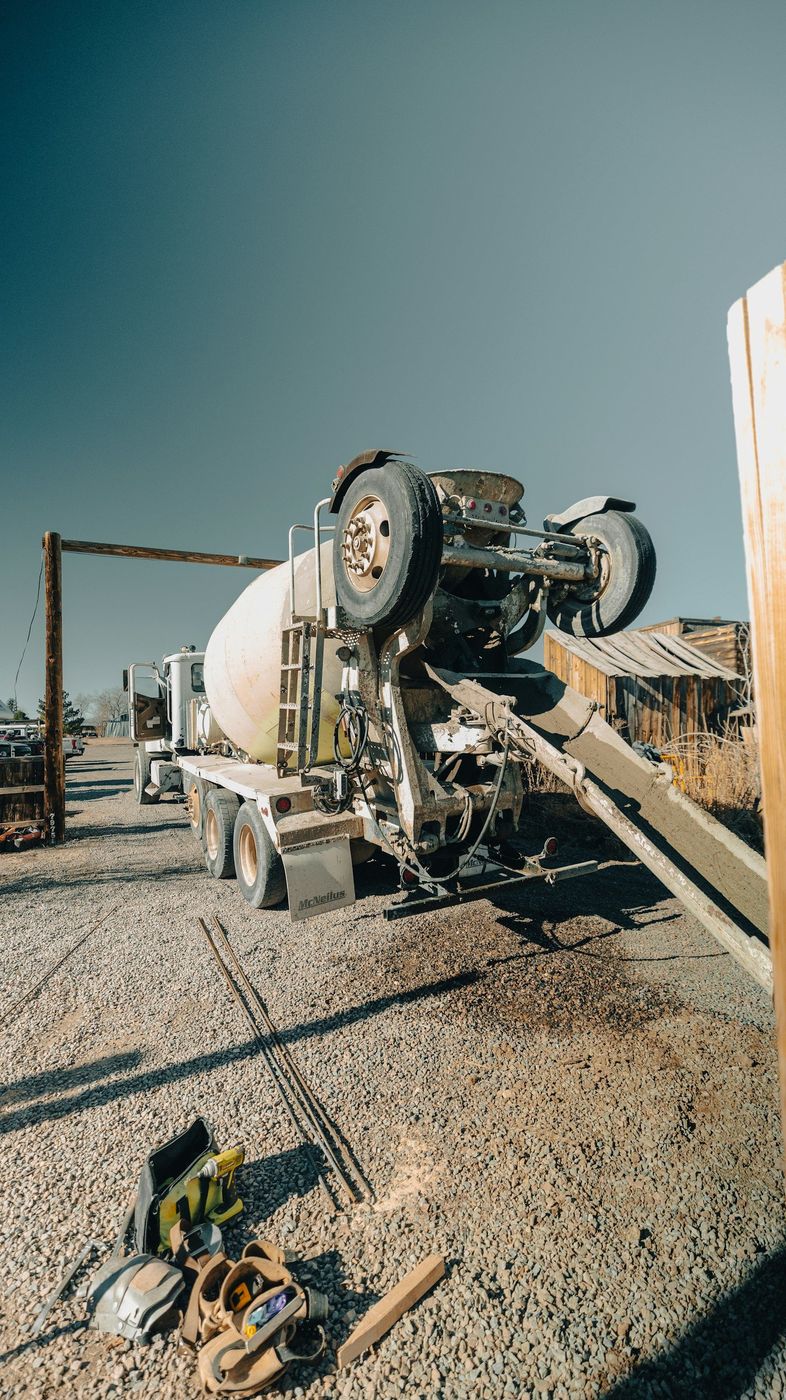
The lot is the first thing a tenant walks on and the last line anyone wants in a capital budget. We build it to outlast both.
Two numbers land on your desk. Asphalt comes in low and concrete comes in high, and the spread is big enough that the conversation usually stops right there. It shouldn't. The question isn't which bid is smaller in March, it's which surface you're still paying attention to in year fifteen, because one of them wants a seal coat every three years and an overlay before it turns twenty.
We build concrete lots across Castle Rock, from small pads behind buildings in Founders Village to full drive aisles at newer centers serving The Meadows. Sometimes we tell owners to keep the asphalt they have. But when the trucks are heavy, the trash route is fixed, or the site drains badly, concrete wins the argument on its own.
| What you're comparing | Concrete | Asphalt |
|---|---|---|
| Day-one cost | Higher, sometimes considerably | Lower, which is why it wins most first bids |
| Recurring maintenance | Joint sealant, occasional panel work | Crack seal, seal coat on a cycle, eventual mill and overlay |
| Standing trucks and dumpster forks | Handles point loads without rutting | Ruts and shoves in July heat under a parked trailer |
| Summer sun at this altitude | Stays dimensionally stable, reflects heat | Softens, oxidizes, and fades faster up high |
| Repairs | Cut and replace a panel, matched at the joints | Patches are quick but rarely invisible |
| When we say pick the other one | Small resurface on a sound lot with light cars | Rarely, once semis or roll-offs are in the picture |
It's almost never the middle of the parking field. Failures start where loads concentrate and where water sits. The trash truck route, the entrance throat where every vehicle turns, the ribbon along the curb where snowmelt runs, the low corner nobody graded quite right. Those areas take real thickness and real base. The rest of the lot can be lighter, and pricing it that way is how a concrete number gets reasonable.
Water is the quiet one. Meltwater that pools on a lot at this elevation refreezes overnight, works into any open joint, and pushes. We set grades to move water to inlets with continuous fall, no birdbaths, and we keep the flowline out of the wheel paths where possible. Get drainage right and half the maintenance conversation disappears.
Send us the site plan and a few photos of the worst quadrant. We'll tell you honestly whether the lot is ready for the bigger move.
We've never had an owner tell us to close the whole lot and take our time. So the plan comes first. We divide the field into pours, keep a drive route live through every stage, and stage material where it isn't blocking a dock or an exit. Barricades and directional signage go up before the saw runs, not after somebody complains.
Timing matters too. Prime season on the Front Range runs from late spring through October, and if we got to pick one month it would be September: warm afternoons, cool evenings, plenty of curing time in front of the first deep freeze. Summer pours mean early starts and one eye on the afternoon storms building over the foothills. Winter work happens with warm mix water, an accelerator that carries no chloride, and blankets, though the windows are shorter and we won't place over frozen ground.
A lot isn't finished when the concrete is. Accessible stalls and their access aisles have to sit close to the entrance on gentle slope, the ramp connection has to work, and the striping layout needs to be settled before anybody paints. We coordinate that so the pattern fits the panels rather than fighting them; nothing looks worse than a stall line crossing a joint at an odd angle.
We also fill joints where the traffic warrants it, particularly on trash routes and dock approaches where the edges take repeated hits. Then we hand off a maintenance sheet: what to sweep, what to keep off the surface, when to look at joints again. It's one page. Owners actually read it.
Still unsure about something?
Call the crew at (303) 569-4046 and we will talk it through.
Get a free, no-obligation estimate from a crew that knows Colorado soil, Colorado weather, and how to finish concrete that lasts.
Accessibility
Adjust the site to fit how you read and browse. Your choices are saved on this device.