
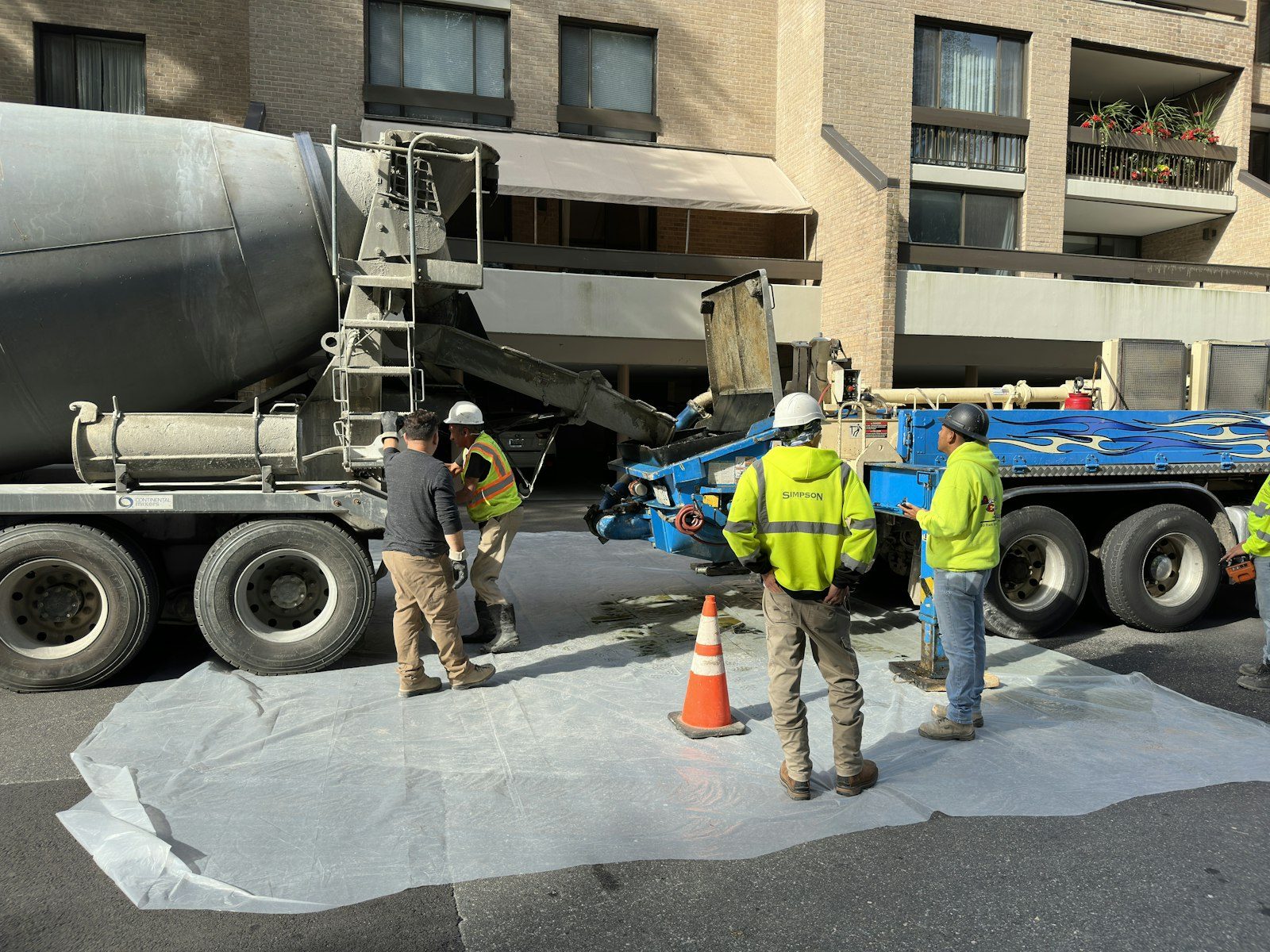
One bid, one crew, one summer of concrete instead of five years of patching.
Every board eventually faces the same fork. The reserve study says community concrete, the walk-through turned up eighty trip hazards and forty cracked panels, and now somebody has to decide: grind the worst offenders and buy three more years, or bid the whole run and get it behind you. Both are defensible. Only one of them is right for your community, and which one depends on numbers a board usually doesn't have yet.
We do bulk concrete for associations across Douglas County. Community sidewalks, driveway aprons, curb pans, mailbox and amenity pads, pool deck perimeters, and the connecting walks nobody thinks about until somebody catches a toe on one. Bulk work is a different animal from a single driveway. The concrete is routine. The scheduling, the resident communication, and the phasing across budget years are what actually make or break the project.
Start with a survey, not a bid. We walk the community with a measuring wheel and a straightedge and log every defect: location, size, vertical displacement, and what we think caused it. That inventory is what turns a vague line item into a decision the board can actually make, and it usually reorders everybody's priorities. The panel residents complain about loudest is rarely the one with the real liability attached.
Once there's an inventory, the choice gets clearer. If most of the defects are small vertical offsets on otherwise sound panels, targeted lifting or grinding is genuinely the smart money and full replacement would be waste. If panels are cracked into pieces, tipping, or holding water, they've lost their base and no surface treatment matters.
Age tells you a lot before we measure anything. Older stock in Castle Pines North, and over in The Village, has had decades of freeze-thaw and deicer working on it, so those runs usually need replacement rather than repair. Newer areas like Lagae Ranch, Daniels Gate, and BellaMesa more often show isolated failures at utility crossings and tree roots. That's exactly the profile where selective work wins.
| Fix | Right when | Wrong when |
|---|---|---|
| Grind the offset flush | Small vertical lip, panel is otherwise intact and stable | The panel is still moving, or the lip is large enough that grinding leaves a visible scar |
| Foam lift with polyurethane | Panel has settled evenly, needs a small lift, and access is tight | The slab is cracked into multiple pieces or the void is enormous |
| Mudjack with slurry | Larger voids under a sound panel where weight isn't a concern | Soft, saturated subgrade that can't carry the added slurry weight |
| Replace the panel | Cracked, rocking, spalled, or sitting on a base that has washed out | Neighbors on both sides are equally bad and you'd be leaving new between old |
| Replace the full run | More than roughly a third of the run is failing | Only a handful of scattered defects exist and the rest holds grade |
Most associations can't fund the whole inventory in one season. Fine. We group the work geographically instead of by severity, so each phase is a contiguous stretch one crew handles in a single mobilization. Chasing the worst individual panels scattered all over the community costs more in setup than in concrete.
Each phase gets a written scope with panel counts and locations, so the board approves a defined package and the reserve line points at something real. There's a limit to how far you should stretch it, though. A plan running past three or four years means the early phases need attention before the last one is done.
We'll walk the community and hand your board a written defect inventory. Free, and it's yours whether you hire us or not.
May through October is the working season along the Front Range, and big packages want the front half of it. Starting in late spring lets us run phases back to back and still finish with weeks of curing weather left. Wait until August and the tail end is racing the first freeze.
Weather hits the resident experience too. Summer afternoon storms can pull a crew off a pour with an hour's notice, so we build slack into the phase calendar and warn homeowners the dates may shift by a day. People handle a delay fine when they were told. They handle it badly when their driveway is blocked and nobody said a word.
Worth putting in the fall newsletter: no deicing chemicals on new concrete through its first winter. Sand only. Residents salt their own aprons out of habit, and magnesium chloride on a five-month-old panel does visible damage.
Still unsure about something?
Call the crew at (303) 569-4046 and we will talk it through.
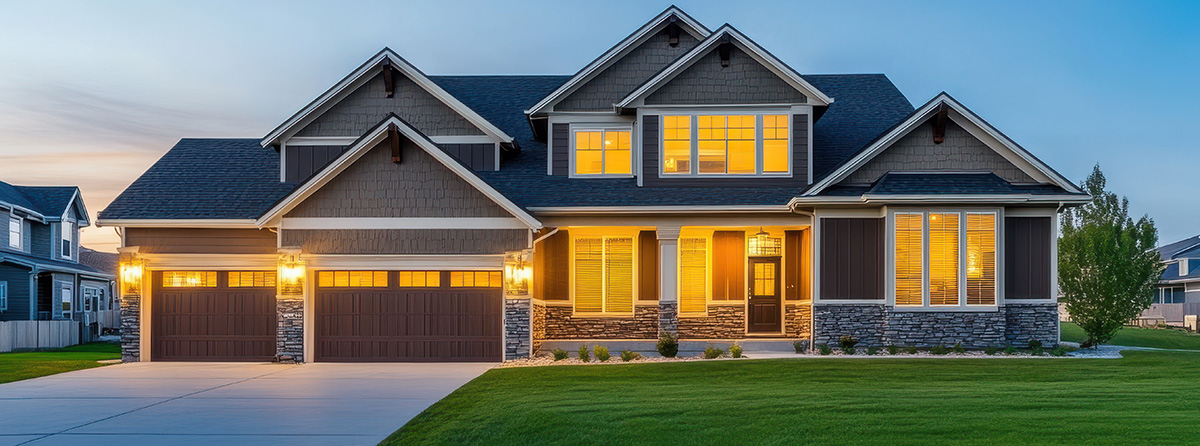
Get a free, no-obligation estimate from a crew that knows Colorado soil, Colorado weather, and how to finish concrete that lasts.
Accessibility
Adjust the site to fit how you read and browse. Your choices are saved on this device.