
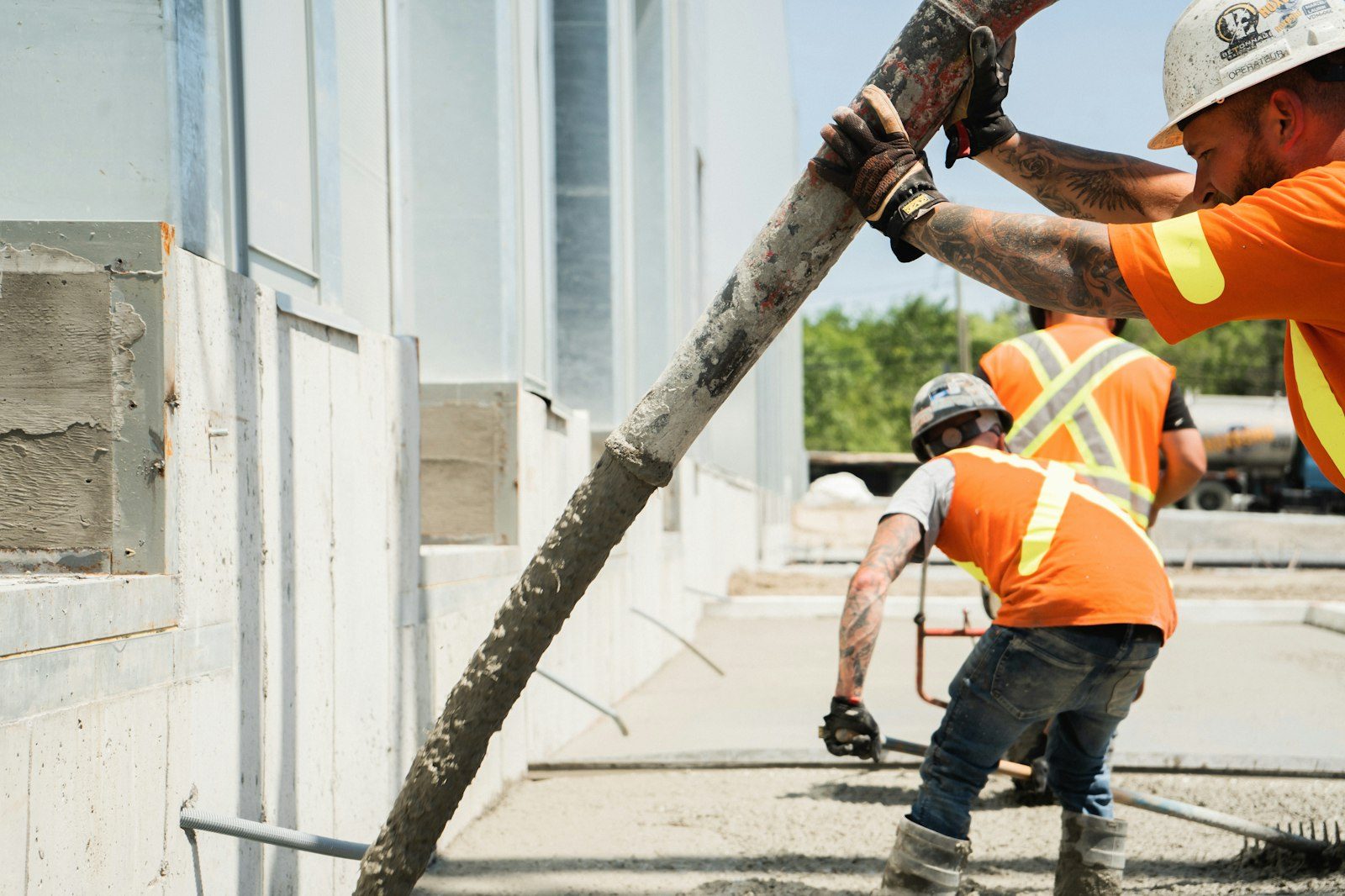
The part of the house you judge entirely by things you never look at.
Nobody walks a guest around the foundation. You live on top of it. What you notice is whether the lower level stays dry through a soaking May, whether the walkout door latches without a hip check, whether the finished room downstairs smells like a room. A foundation gets graded on symptoms you hope never show up.
So that's how we design them. We pour new foundations across Castle Pines with a structural engineer on our own payroll, which means footing width, wall thickness, and drain layout get set by somebody who signs drawings for a living instead of somebody eyeballing it off the last job. On wooded ground at 6,450 feet, that call is worth making twice.
Start at the walkout door. On a sloped lot the lower level opens right onto grade, and whether that door drags by July says everything about how the wall and footing beneath it were sized. Then the floor. A basement slab that stays flat and dry is the line between a finished lower level and a storage room with a dehumidifier humming all summer.
Then the garage. It takes the roughest treatment in the house: wet tires, deicer dragged in on the treads every February, two tons of vehicle parked on the same two squares of concrete for a decade. None of it feels structural while you're living it. All of it was decided months earlier, on paper.
| Foundation type | Where it fits here | What daily life feels like |
|---|---|---|
| Full basement | Flatter building pads in Castle Pines North and Lagae Ranch | Doubles the square footage you can finish. Egress windows and a sump pit come with it. |
| Walkout basement | The steep wooded lots this town is known for | Usually the best room in the house, so long as the grade below the door keeps moving water off. |
| Garden level | Partial slopes where a true walkout doesn't pencil | Real daylight through half-buried windows, less excavation, less spoil trucked down the hill. |
| Crawl space | Additions and outbuildings where headroom isn't worth the dig | Quick to build. You will care deeply about the vapor barrier under it. |
| Frost-protected shallow footing | Small heated structures on tight or rocky ground | Shallower dig, fussier insulation detailing, and our engineer reviews it before we commit. |
Trees, hills, and a hard rain make a system. Runoff on the wooded slopes above BellaMesa and Daniels Gate doesn't sheet off politely the way it does on a flat suburban block; it finds a channel, picks up speed, and arrives somewhere. Our job is to make sure that somewhere isn't your foundation wall.
That means the dig gets shaped before the forms go up. Perimeter drain in washed rock, wrapped in filter fabric, pitched to daylight where the slope allows and to a sump where it doesn't. Damp-proofing on the exterior face. Drainage board over it so backfill pressure never squeezes the coating off. Backfill that drains instead of holding a bathtub of water against the wall. Then final grade tipped away from the house at every point of the perimeter, including the corner nobody looks at.
Skip the boring parts and the clay soil around here will remind you, usually during a wet spring three years in.
Send over the site plan. Our engineer will tell you what that grade means for the foundation before you're locked into a design.
May through October is the easy stretch. Foundation work actually runs later into the year than flatwork does, because a wall in the ground is protected on both faces once backfill goes in and the mass holds heat while it cures. We pour foundations in November and December regularly, using heated mix water, non-chloride accelerators, and blankets over the forms.
What stops us is frozen ground. A footing bearing on frost is a footing bearing on nothing once the thaw arrives, so we heat, tarp, and wait rather than pour over it. Excavating a frozen hillside also costs you time you didn't budget. If your schedule is flexible, break ground in spring and let summer carry the vertical work. If it isn't, tell us early and we'll sequence around the cold.
The day we spend on drain rock and grade is the one nobody ever sees. It's also the whole ballgame. Every wet basement I've been called to started with somebody rushing it.The crew lead's read on it
Still unsure about something?
Call the crew at (303) 569-4046 and we will talk it through.

Get a free, no-obligation estimate from a crew that knows Colorado soil, Colorado weather, and how to finish concrete that lasts.
Accessibility
Adjust the site to fit how you read and browse. Your choices are saved on this device.