
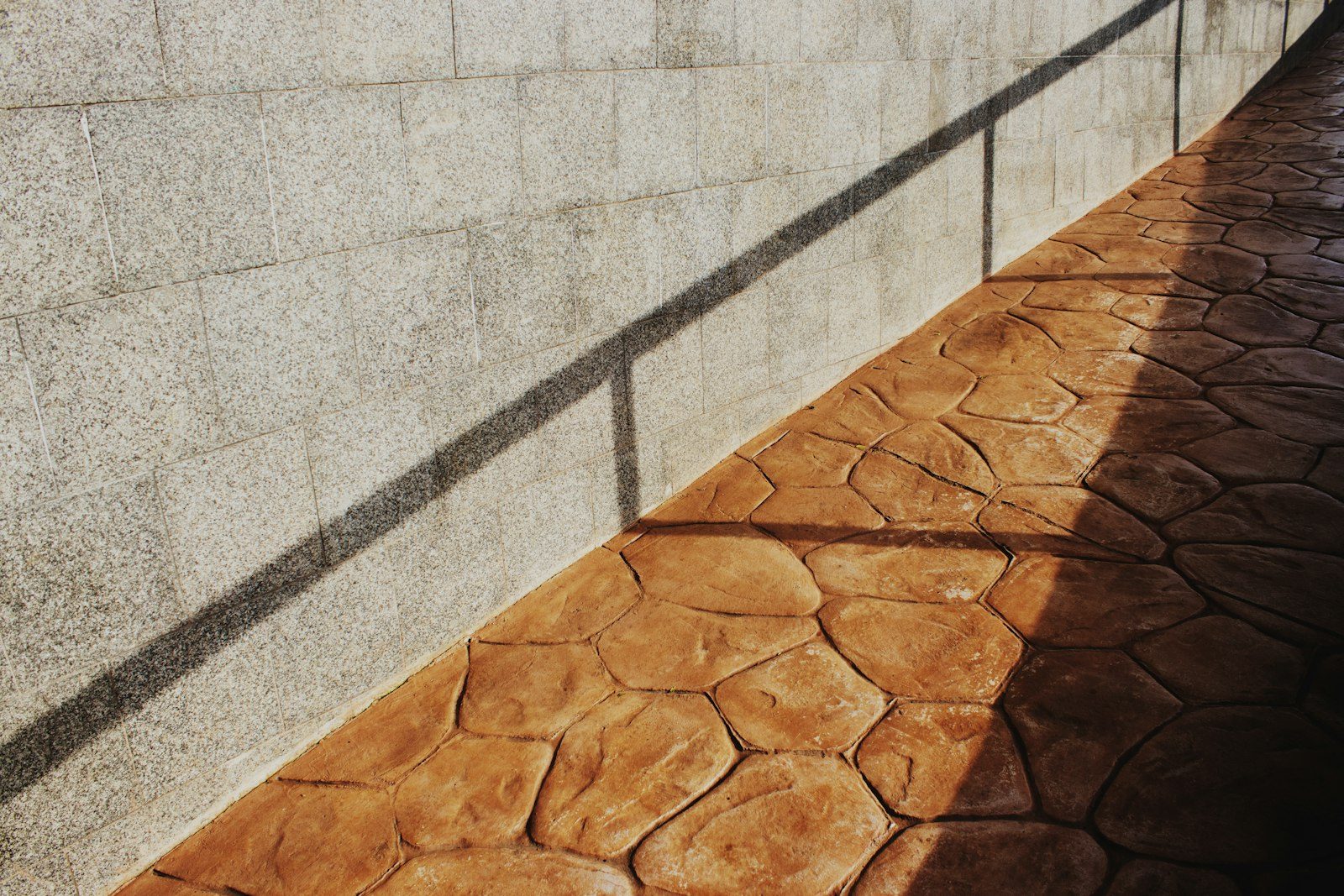
A front walk gets crossed a dozen times a day, in the dark, with both arms full. Build for that trip.
Nobody strolls down their own front walk admiring the finish. They cross it fast, in boots, groceries in one arm and a phone in the other hand, six or eight times a day. It gets noticed twice a year at most: once when a toe catches a lifted edge, and once when the same patch of ice turns up in the same spot it did last February. That's the standard we build to.
Aurora hands us a wide range of ground to work on, and a narrow ribbon of concrete is the least forgiving thing you can set on any of it. There's hardly any weight in a walk. It rides on whatever sits beneath it, so we check the dirt on your lot first, then overbuild the part you'll never see.
Count the trips. Mail, cans out on collection night, groceries in two loads, the dog at six in the morning, somebody's friend who parked on the street. A front walk in a family neighborhood sees more foot traffic in a month than the patio sees all summer, and most of those trips happen with hands full or eyes somewhere else.
So we design around the awkward ones. Four feet of width means two people go side by side rather than one dropping back into the wet grass. A landing deep enough to set a box down while you dig for keys. No lip where the walk meets the drive, because that's the exact spot every suitcase wheel finds. Small calls. They add up to a walk you like instead of one you put up with.
| Finish | Best fit | What you notice day to day |
|---|---|---|
| Light broom | Front entries in full sun | Smooth enough for a stroller wheel, still grippy in a rain |
| Medium broom pulled across the path | Runs that ice up or sit in shade | All the traction we can give before it turns rough on bare feet |
| Exposed aggregate | Side paths and garden runs | Grips well and hides dirt, though a shovel rides rougher across it |
| Broom field, tooled smooth border | Entries where looks matter | Reads finished from the street, still holds a wet shoe |
| Heavy rock-salt texture | We talk people out of it | Those pockets hold water, and held water is a freeze waiting to happen |
Most folks describe the route before the concrete. That's the right order, and the conversation is free.
Three feet is the narrowest we'll pour anything a household uses daily, and we'd rather talk you into four. That extra foot costs less than people guess, because the crew, the layout, and the mobilization are already paid for. Side runs to a gate can stay tighter if all they carry is a hose. If the cans travel that route weekly, give them room to roll straight.
Pitch decides the winter version of your walk. We tilt the surface a quarter inch for every foot of width, aimed at the lawn, so meltwater leaves on its own instead of sitting in a low spot until dark and refreezing. Flat walks grow ice in the same place every year. A narrow ribbon also carries almost no weight to hold it down, so any water that works in under an edge gets to push back when it freezes. We answer that by digging deeper than the slab needs and filling the difference with base that compacts and drains.
Every property has one stretch that stays frozen after everything else dries out. It's usually the north side of the house, and that's usually where the path to the gate runs. In Tollgate Crossing and Sterling Hills we get called for those side runs more than for front walks, because the builder ran concrete to the porch and left the trip out to the cans on bare dirt. Side paths get the rougher broom and the firmer pitch from us. A path you can't see the ice on deserves both.
Late April into mid October is easy work. September is our favorite stretch for walks, since cool nights hand the finishers more working time on the surface than any July afternoon will. Summer is routine, provided we start early and watch the storms that stack up over the mountains after lunch.
Winter walks do happen. Something this small can be blanketed properly, and we place with heated water and a chloride-free accelerator when the forecast opens a window. Frozen ground is where we stop. Skip the ice melt entirely that first season; sand costs the concrete nothing.
You can spot the walks poured for looks. They're the ones with a puddle still on them the morning after a storm. Water should leave a walk by itself. If somebody has to push it off with a squeegee, the pitch was wrong on day one.Our crew lead, after the walkthrough
Still unsure about something?
Call the crew at (303) 569-4046 and we will talk it through.

Get a free, no-obligation estimate from a crew that knows Colorado soil, Colorado weather, and how to finish concrete that lasts.
Accessibility
Adjust the site to fit how you read and browse. Your choices are saved on this device.