
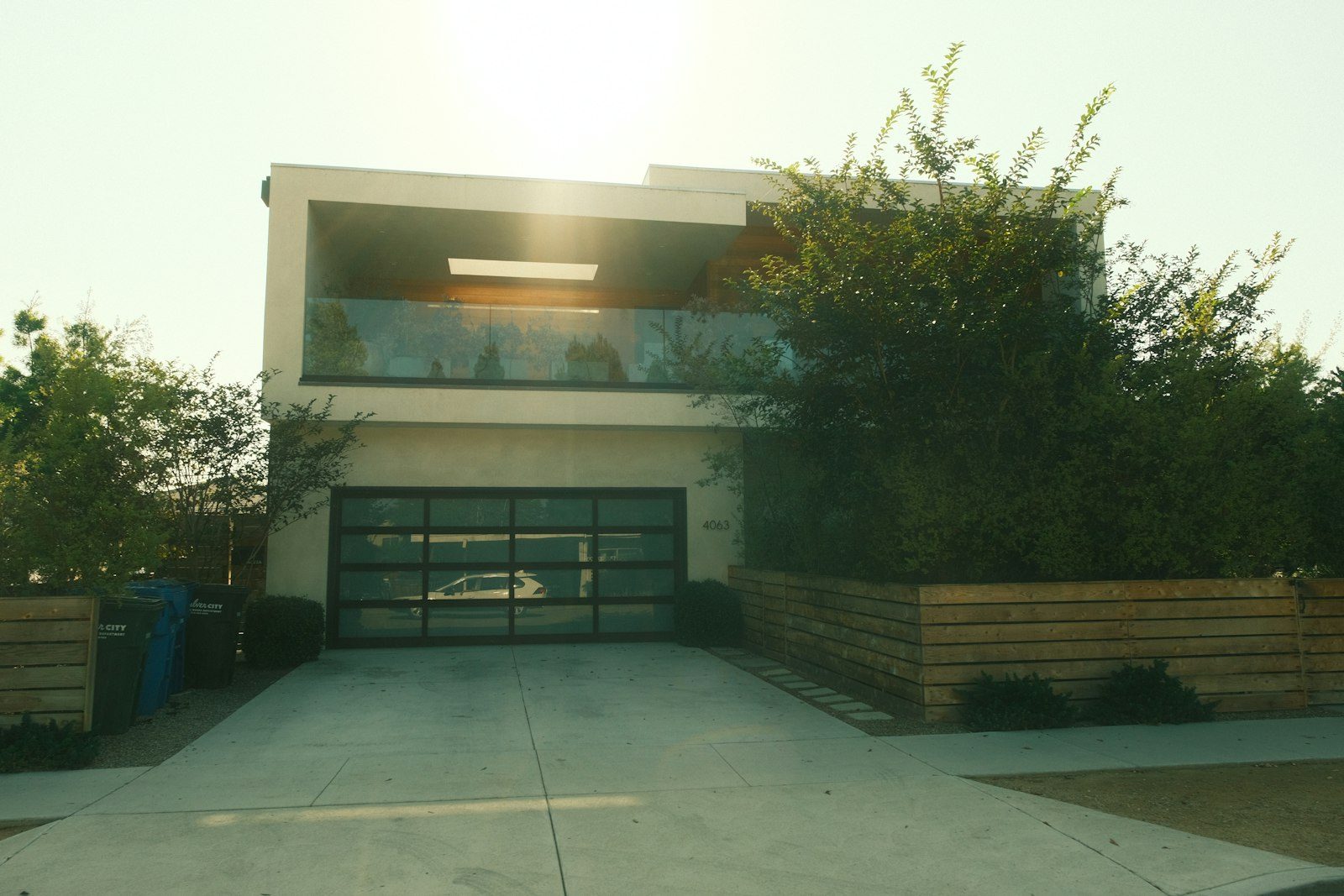
Base prep specced to the dirt on your lot, not to a citywide average.
Aurora covers a lot of ground, and the ground itself doesn't stay the same across it. The soil under a lot in Murphy Creek can behave nothing like the soil under a lot in Sterling Hills. Some of it drains. Some of it swells like a sponge every wet spring. That's why we don't spec a driveway off a city name. We dig a test hole, look at what comes out, and build the base for that dirt specifically.
Here's the thing about driveways: the concrete you see is the easy part to get right. What kills a slab is almost always underneath it. A base that was never compacted. Clay that was never dealt with. Steel that got skipped. We've made a habit of getting the buried parts right, because that's where the next twenty years get decided.
Depends on the block. Parts of the city sit on sandy soils that compact beautifully and drain on their own. Other parts sit on expansive clay, the stuff that swells when it soaks and shrinks hard in a dry August, dragging your slab along for the ride. And plenty of newer lots carry imported fill from mass grading, which is fine when it went in compacted in lifts and a slow disaster when it didn't.
So we check. Every site, every time. If the subgrade is stable, a standard compacted road base does the job. If we hit fat clay, we go thicker on the gravel, tighten the joint spacing, and give water somewhere to go besides under your slab. Ten extra minutes with a shovel before the bid saves you a heaved driveway in year three.
| Ground condition | Risk to the slab | How we build for it |
|---|---|---|
| Sandy, well-draining subgrade | Low movement, minor settling | Standard compacted base, normal joint layout |
| Expansive clay | Seasonal heave and drop | Thicker gravel section, #4 rebar throughout, tighter joint spacing |
| Loose fill on mass-graded lots | Slow settlement under the wheel paths | Re-compact in lifts, or over-excavate and rebuild the base |
| Poor surface drainage | Water cycling under the slab edges | Regrade to fall away from the drive, run downspouts past the edge |
We check the soil during the free estimate and quote the base your ground actually needs.
Mid-April through late October is the comfortable window at 5,471 feet. Fall pours might be our favorite: mild days, cool nights, and the slab reaches strength before the first deep freeze. Summer works too, but July afternoons build storms fast out here, so we pour early and keep plastic sheeting on the truck, because rain worked into a fresh surface during finishing leaves scaling you'll be staring at for years.
Winter doesn't stop us; it changes the recipe. Heated mix water, a non-chloride accelerator, insulated blankets on the slab, and patience with the forecast. The one hard line is frozen subgrade. We won't pour over frost, period. And whatever season your driveway goes in, keep every deicer off it until it's been through a full winter. Magnesium chloride is the fastest way to wreck a surface we just finished.
Two tear-outs in the same month, maybe four miles apart. One base was still solid after twenty years. The other was two inches of gravel over wet clay, and the slab above it never had a chance. Same city, completely different ground.What our crew lead tells homeowners
Still unsure about something?
Call the crew at (303) 569-4046 and we will talk it through.

Get a free, no-obligation estimate from a crew that knows Colorado soil, Colorado weather, and how to finish concrete that lasts.
Accessibility
Adjust the site to fit how you read and browse. Your choices are saved on this device.