
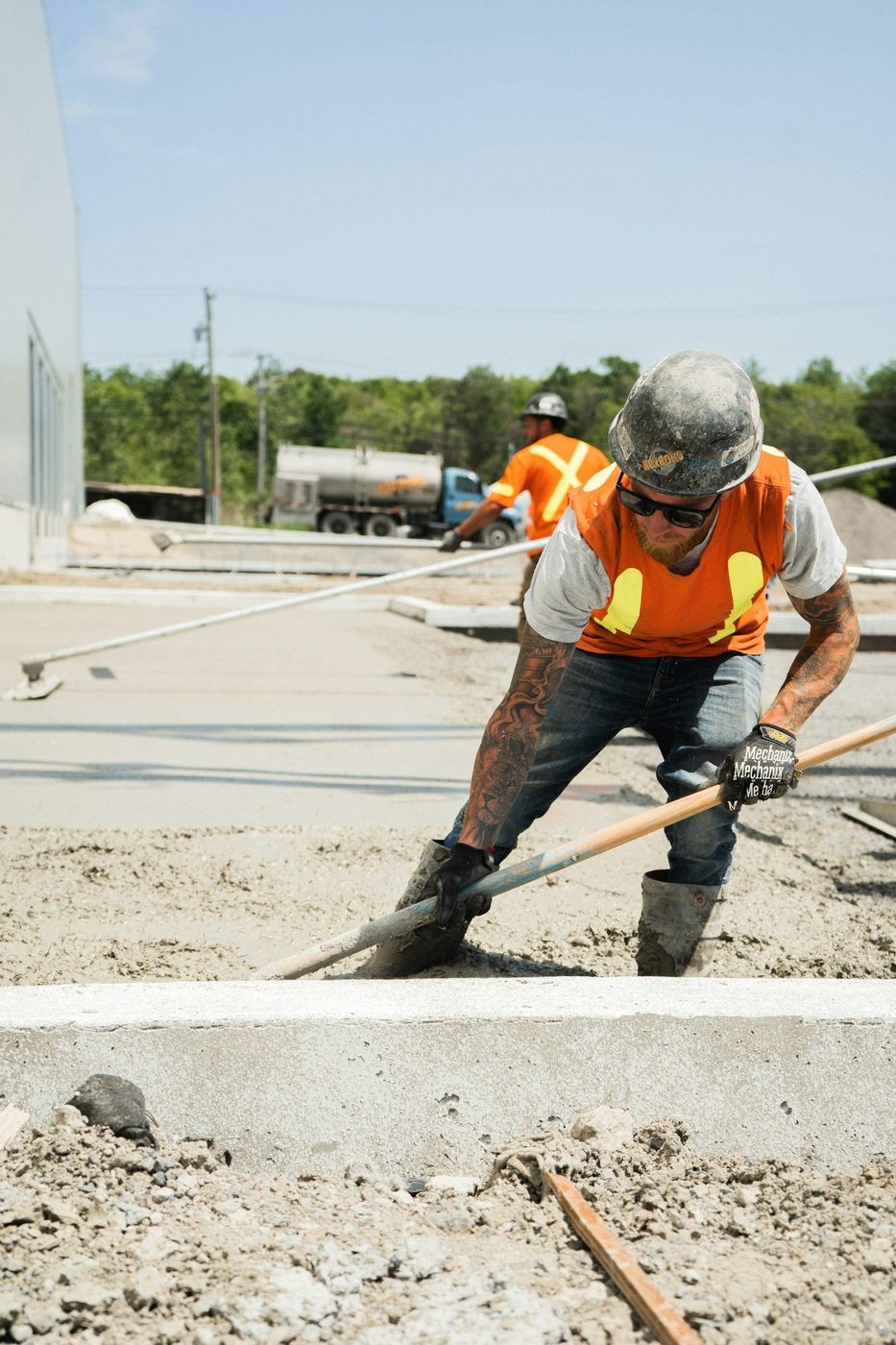
Late February is the week a community's concrete stops hiding what it has been doing all winter.
Third week of February, and the sun has been out four days running. South-facing walks in the community are dry by ten in the morning. The north side, shaded by a fence line or a row of buildings, is still frozen underneath with a slick film on top. That difference is the whole story of community concrete on the Front Range. Half the loop is thawing and settling back while the other half is still lifted, and the joints between them grind against each other twice a day.
That is the week a board should walk the property with a clipboard. Trip hazards are at their worst, lifted panels are obvious, and low spots are holding meltwater where anybody can see them. Come back in July and the same walk looks acceptable, which is exactly how a reserve line gets underfunded three years running.
A panel does not lift because it is old. It lifts because moisture got under one end, froze, and pushed. Then it settles most of the way back and the joint no longer matches. Repeat that from November to March, and repeat it again next winter, and a joint that started flush is now a quarter inch out of line with a shoe catching it every morning.
Where this concentrates is predictable. Downspout discharge points. The strip behind a curb where plows pile snow. Walks along fence lines and building shadows that never see enough sun to dry out. Tree wells, where roots and irrigation work on the same panel from two directions. And drive approaches, which take vehicle weight on top of everything else.
Associations across the southeast side of the city deal with the same list, whether the property is a newer amenity-heavy community out around Southshore, Saddle Rock, or Tallyn's Reach, or an established one nearer Sterling Hills, Murphy Creek, and Tollgate Crossing. The older properties simply have more panels that have run the cycle enough times to give up.
Boards ask us why a handful of locations keep coming back after being repaired. The answer is that the repair fixed concrete and the problem was water. If a downspout still dumps at that corner, or the landscape grade still slopes toward the walk, or a leaking irrigation line still soaks that subgrade every summer evening, the new panel will do what the old panel did.
So on a bulk package we look upstream first. Extending a downspout, resetting a grade, correcting a head, or adding a small drain often costs less than one panel and saves the panel next to it. It is the least visible line on a proposal and the one most worth defending when the budget gets trimmed.
| Window | Good for | What we avoid in it |
|---|---|---|
| January and February | Walking the property and marking panels while the damage is at its worst | Placing anything that cannot be blanketed and watched overnight |
| March and April | Board approval, resident notice, and getting on a calendar before it fills | Locking a hard start date, because wet spring snow decides that for us |
| May and June | Demo and the first phases, with long days and manageable heat | Working through the weekends a community has events booked |
| July and August | Volume work on aprons and approaches, starting at first light | Afternoon placement, since the storms build fast and arrive faster |
| September and October | The best finishing weather of the year and the last comfortable window | Letting the schedule slip, because the first hard freeze does not negotiate |
| November and December | Punch list, joint sealing, and scoping next year's phase | New flatwork unless the forecast opens and blankets are already on site |
We will walk the property, mark and count panels on a map, and give you a written scope your reserve study can actually be measured against.
Still unsure about something?
Call the crew at (303) 569-4046 and we will talk it through.

Get a free, no-obligation estimate from a crew that knows Colorado soil, Colorado weather, and how to finish concrete that lasts.
Accessibility
Adjust the site to fit how you read and browse. Your choices are saved on this device.