
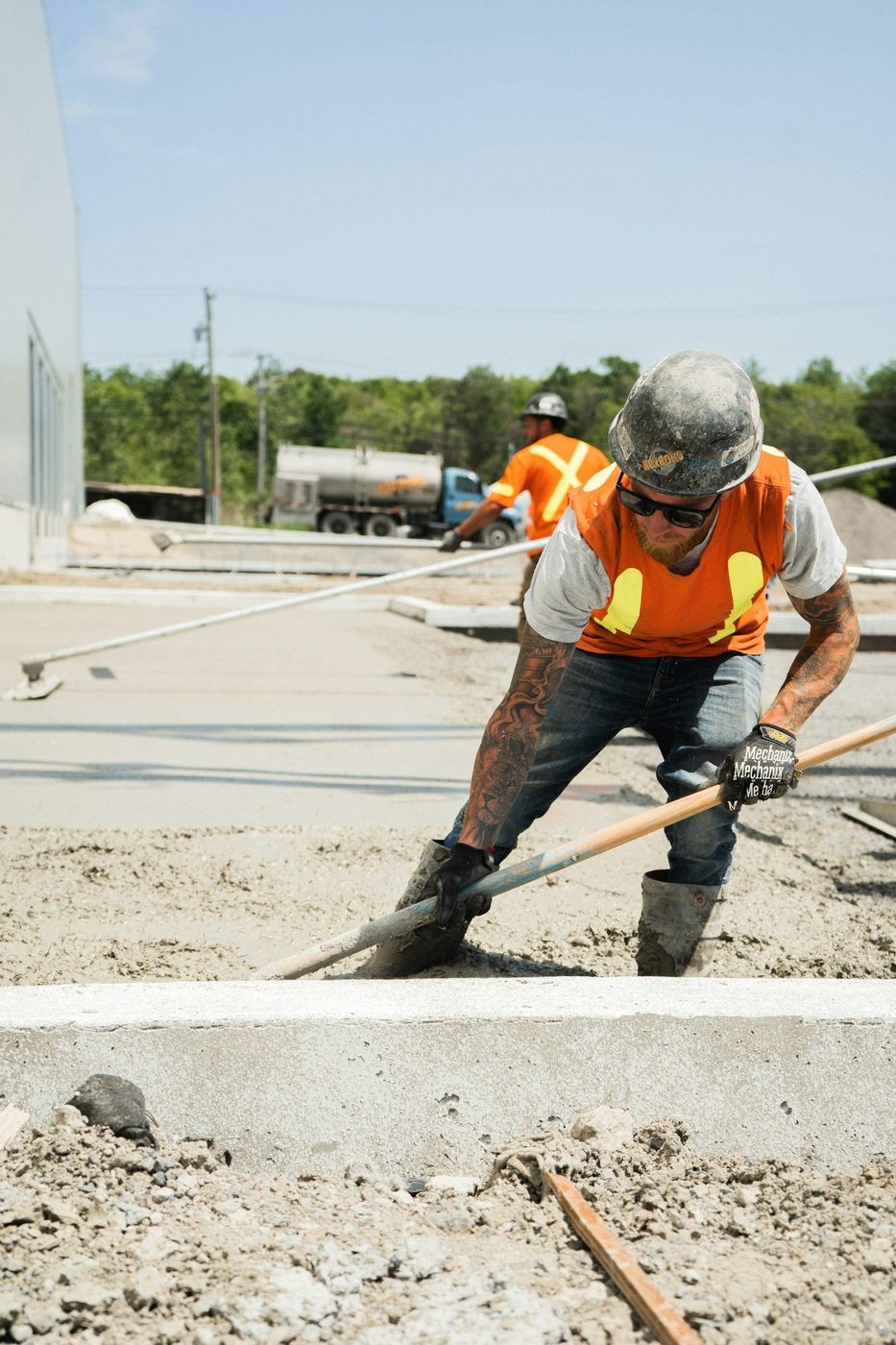
An engineered shell shaped around how your household actually spends a Tuesday in the water.
Most pools get chosen from a photograph and then lived in for twenty years, which is backwards. So we open with different questions. Who is actually in the water on an ordinary Tuesday in July? Is anybody swimming laps, or is this people standing around in three and a half feet of water talking? Do grandparents need a step they can trust with wet feet? Is there a dog?
Those answers shape the shell, and shaping the shell is the whole reason to build in concrete rather than drop in a form somebody else drew. Depth, bench placement, step geometry, how wide the shallow shelf runs, where the evening sun lands. All of it is yours to set, and all of it is permanent the day the concrete goes on.
The shallow end does the heavy lifting in nearly every backyard we've built. Not the deep water. The stretch where an adult stands comfortably is where the hours pile up, and widening it costs less than people assume, since it's the easiest part of the dig. Be honest about that before anybody draws a diving well.
Benches are the best value in the shell. A ledge carved along a wall while the material is workable gives you seating in the water at almost no cost, and once people find it they never sit anywhere else. Same with a swim-out at the far end, where kids catch their breath and adults set a drink.
Steps deserve more thought than they get. Consistent risers, generous tread depth, and a properly anchored handrail decide whether everyone uses the pool or somebody's mother stays on the deck. We shape those by hand during placement.
Then the sun. At 5,471 feet the afternoon light is strong and evenings cool off fast, so setting the lounging side to hold late sun is free now and impossible later. Most of our shells go into the larger newer lots around Southshore, Saddle Rock, and Tallyn's Reach, where there's room to place a pool rather than squeeze one in.
Most of what we build is pneumatically placed. Ready-mixed concrete arrives batched at the plant, pumps through a hose, and takes air at the nozzle. We like it for a reason that isn't speed: the water-to-cement ratio was fixed before the material left the plant, so nobody is judging it by eye in your backyard. It also lets the crew carve curves, benches, and step noses by hand while the material is workable.
Cast-in-place has its place. Rectangular pools, raised walls, and vanishing edges all form up well. Forms are a straight-line tool, so free-form shapes get expensive that way in a hurry.
Either method, the shell is engineered. A pool is a rigid vessel holding many tons of water in ground that moves with the seasons, so bar size, spacing, wall thickness, and the floor-to-wall tie are all drawn and stamped. Because our structural engineer works in house, that drawing exists early instead of getting chased during permitting. And however the shell goes on, it gets seven days of wet curing, since our dry air strips moisture out of green concrete faster than crews from wetter climates expect.
| Feature | How often it gets used | What it asks of the design |
|---|---|---|
| Wide shallow shelf | Constantly, every age, all season | A broader footprint and a careful slope out of it |
| Bench along a wall | Daily, once people find it | Almost nothing. Carved during placement. |
| Generous steps with a handrail | Every entry and exit | A bit more steel and hand shaping. Worth it. |
| Swim-out at the far end | Often, especially with kids | Minor, but planned before the cage is tied |
| Deep well for diving | Rarely, in most households | Real excavation, more shell, more water to heat |
| Waterfall or spill wall | Party days, quiet most evenings | Structure, plumbing, a pump. Decide early or skip it. |
| Attached spa | Year round if it's heated for it | Its own shell, heater, and details |
The design work happens in January. Let's get engineering and the excavation scheduled while the ground is still closed.
Ask a family in August where everyone actually stands and they'll point at the same six feet of water every time. It's never the deep end. We've stopped drawing pools that pretend otherwise, and nobody has called us later wishing they'd bought more depth.The crew lead's read on it
Still unsure about something?
Call the crew at (303) 569-4046 and we will talk it through.

Get a free, no-obligation estimate from a crew that knows Colorado soil, Colorado weather, and how to finish concrete that lasts.
Accessibility
Adjust the site to fit how you read and browse. Your choices are saved on this device.