
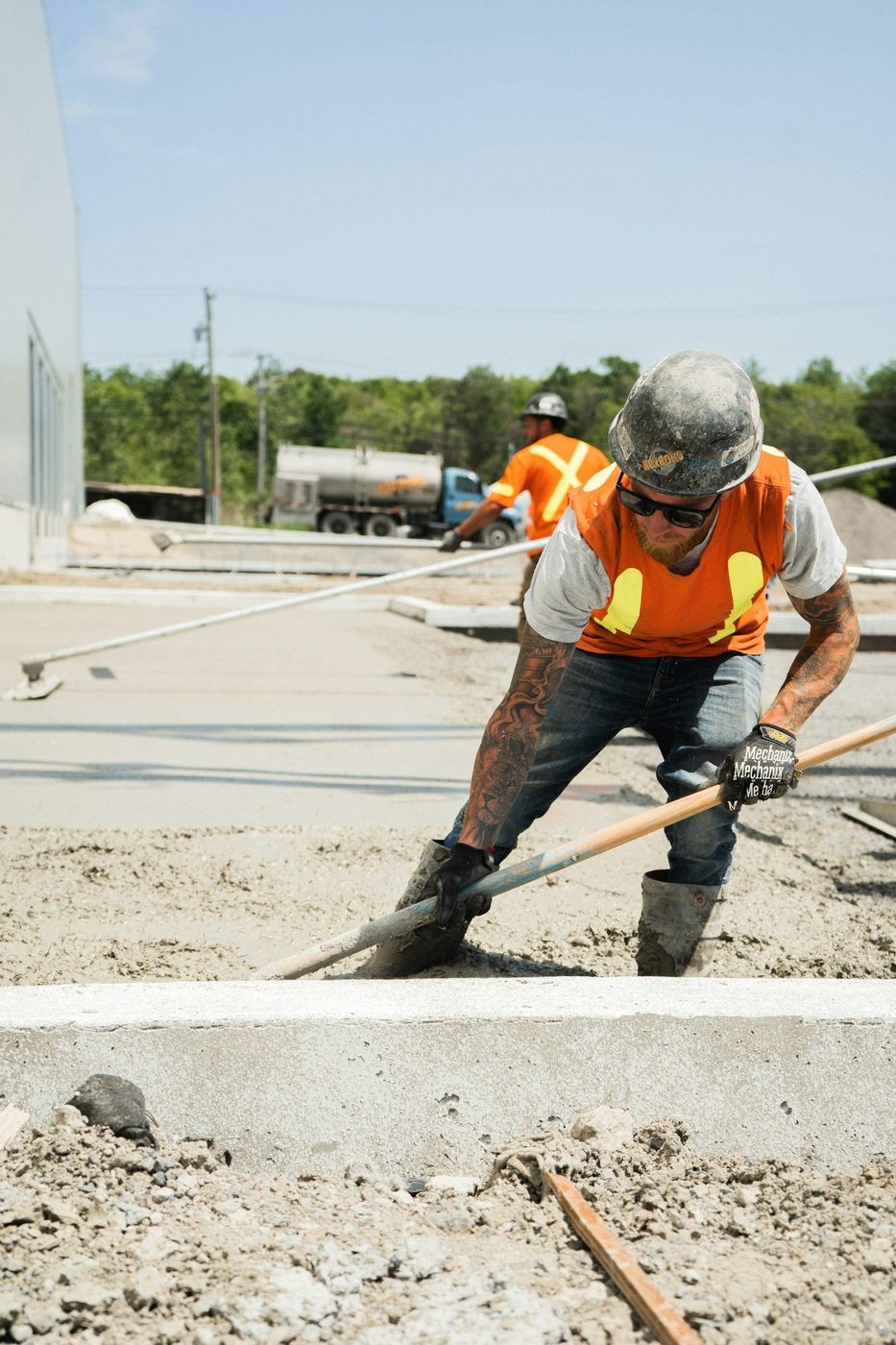
Pick your texture by the chores it creates, not by how it photographs on a sunny afternoon.
Nobody stands on their patio admiring the finish. They drag a chair across it, walk it barefoot after the sprinklers run, sweep cottonwood fluff off it in June, push a shovel down it in January, and hose grill grease off it in the fall. Years of that is the real test, and it's nothing like the test a finish passes the day the forms come off.
So when we spec texture we're thinking about the chores. A heavy broom on a dining patio means every chair leg catches and every crumb needs a stiff brush. A steel trowel outdoors means a beautiful surface that turns to glass in February. Getting this right costs nothing extra. Getting it wrong costs you a surface you quietly stop using.
Every finish is the same concrete treated differently in the last hour. The bull float knocks the surface flat and pushes the big rock down. A magnesium or wood float opens it up and leaves a sandy, matte texture with real grip. A steel trowel closes it, pressing the paste tight until it goes hard and smooth. And a broom pulled across a floated surface leaves ridges you can feel through a shoe.
Which one belongs where isn't a style question, it's a physics question. Closing the top layer with steel is exactly right for a garage or a shop, where you want a dense surface that sweeps clean and won't soak up oil. Outside, that same tight skin plus water plus twenty freeze cycles a winter is a recipe for the top eighth of an inch letting go. Which is why you'll never see us hard trowel a driveway, no matter who asks.
Broom direction matters too, and hardly anyone mentions it. Ridges run across the way people walk and across the way water runs, never with it. On a sloped drive we pull the broom side to side, so meltwater tracks off the edges instead of racing down a wheel path and freezing at the apron.
| Finish | Sweeping and hosing | Bare feet | Snow shovel | Shows dirt |
|---|---|---|---|---|
| Heavy broom | Needs a stiff brush; a soft broom skips over the ridges | Rough after a few minutes | Blade chatters over it but grips well underfoot | Hides it well |
| Fine broom | Easy. Push broom and a hose handle everything | Comfortable | Shovels clean and still gives traction | Fairly forgiving |
| Float, sandy matte | Simple, though the open texture holds fine grit | The best of the group by a distance | Fine, and it stays grippy wet | Middle of the road |
| Steel trowel | Sweeps effortlessly. This is why shops use it | Cool and smooth, and slick the moment it's wet | Glides, but ice sits on it and stays | Shows every mark |
| Knockdown texture | Easy, with a slight tooth that catches leaf litter | Pleasant, low profile | Good | Very forgiving, especially with color |
Front walks and entries get a fine broom with a hand-tooled edge. The edge detail is what makes a walk look finished from the street, and the light texture keeps the shaded stretch beside a north-facing porch from icing into a hazard.
Dining and furniture patios get fine broom or knockdown. Chairs need to slide, plates get set down, and somebody is going to be out there without shoes. The newer backyards around Southshore and Saddle Rock are big enough that we'll often run two textures on one slab: knockdown under the table, something with more bite on the steps and the path out to the yard.
Driveways and any sloped approach get a medium broom. Tire grip in winter is the whole argument, and Aurora gets enough overnight refreeze on melted snow that a smooth drive is a genuinely bad idea. Garages and shops get the steel trowel, since they're covered, the traffic is rubber, and you may want a coating or a polish on that floor down the road.
Pool surrounds and covered porches get a float finish. Open texture, no glare in the afternoon, comfortable to stand on wet. What we push back on is a salt finish outdoors here. Those little craters look great and they hold water, and water freezing inside a pocket twenty times a winter widens the pocket.
We'll ask how each space gets used and spec the finish around the answers. No charge.
You can tell a lot by which finish somebody put on the back patio. If it's slick as a countertop out there, either it never gets used or somebody has already fallen on it.What the crew sees on site
Still unsure about something?
Call the crew at (303) 569-4046 and we will talk it through.
Get a free, no-obligation estimate from a crew that knows Colorado soil, Colorado weather, and how to finish concrete that lasts.
Accessibility
Adjust the site to fit how you read and browse. Your choices are saved on this device.