
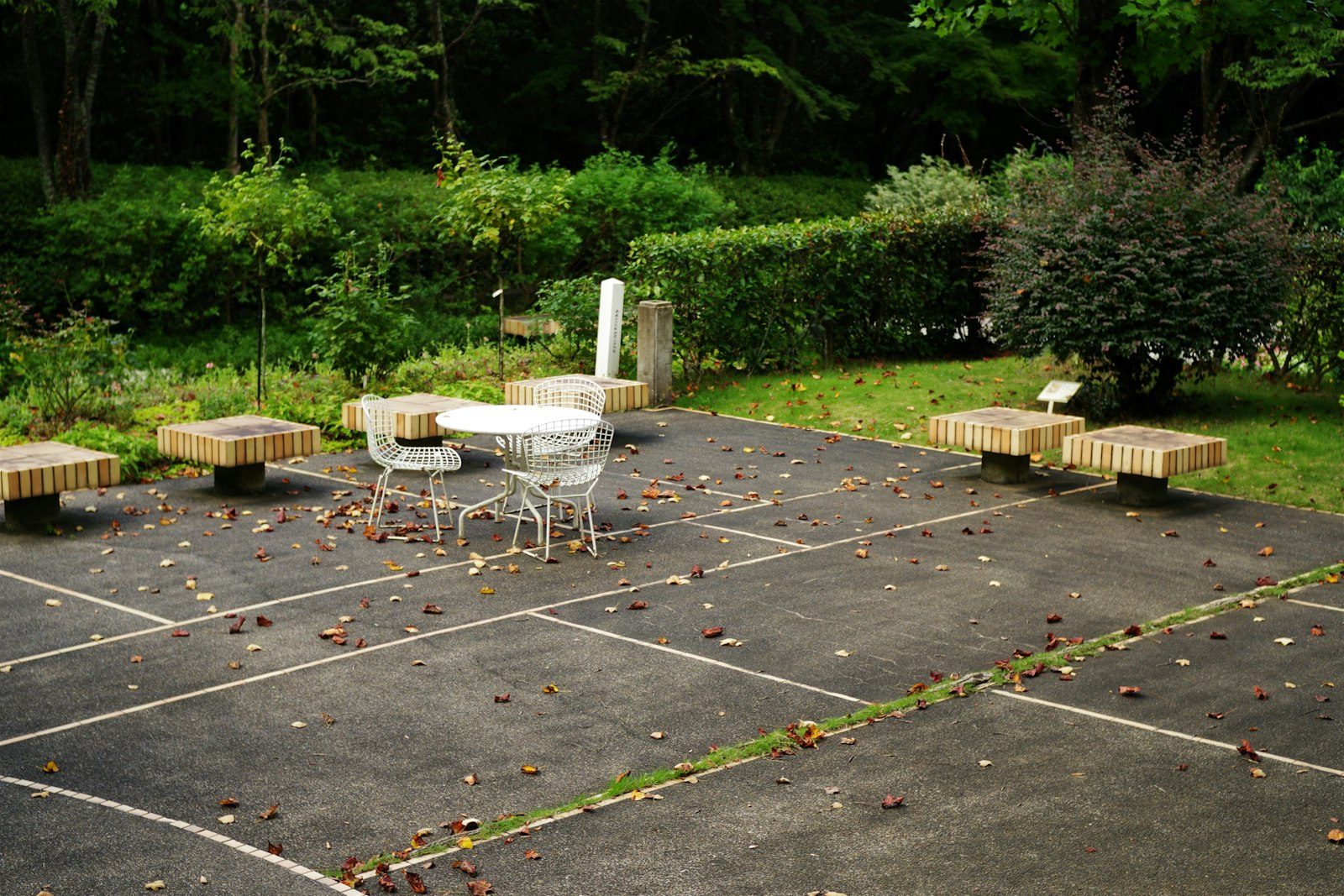
Built around the four things that actually happen out there: chairs, the grill, the dog, and a table that has to sit flat.
Ask somebody what they want from a patio and you will hear about size and finish. Ask them how they use the one they have and the answers get useful. The table only fits if two chairs hang off the edge. The grill sits half on grass. Everybody funnels through one doorway with plates in both hands, and there is a low spot near the step that holds a puddle for two days after a storm.
That second conversation is the one we want. A patio is furniture, traffic, and water management pretending to be a slab. Get the layout right and it disappears into daily life. Get it wrong and you spend six summers shimming a table leg with a folded coaster.
Walk out your back door and you will find the space already divides itself. There is the landing right outside the door where nobody lingers. There is a dining area that needs to be flat and clear. There is a grill or a cooking corner that takes heat, grease, and a lot of standing. And usually there is a lounge end, where the chairs face whatever the lot offers, be that a compact yard in Bradburn or a deeper one out in Quail Creek.
Each of those wants something different. The dining zone needs the tightest tolerance on flatness and no control joint running under the table. The cooking corner benefits from a finish that hides drips and does not turn slick when something spills. The lounge end can carry a decorative treatment because nothing scrapes across it. We draw those zones on the ground with paint before a single form board comes off the truck, and we get you standing in them.
Broom finish is the default outdoors and it earns the spot. It sheds water, grips wet shoes, and hides dust. But brooming direction matters more than people think. Pull the texture across the way people walk and it grips. Pull it the same way the chairs slide and every leg on the patio set snags.
So we run it across the traffic path, lay the dining area off a touch smoother, and round the joint edges so a chair leg rolls over a cut instead of catching in it. Small things. They separate a patio people use from one they quietly complain about for a decade.
| Zone | The daily reality | What we build for it |
|---|---|---|
| Door landing | Wet boots, snowmelt tracked in, the dog turning around twice | Extra pitch away from the house and an isolation joint at the foundation so the slab moves on its own |
| Dining area | A table and four to six chairs, dragged out and back constantly | The flattest section on the patio, joints planned to fall outside the table footprint, softened joint edges |
| Cooking corner | Grease, dropped tongs, heat, and someone standing in one spot for an hour | Broom texture with grip, a sealer choice that cleans easily, and enough width to walk behind whoever is cooking |
| Lounge end | Chairs that rarely move, a fire feature, foot traffic in bare feet | Room for a decorative finish, and a footing under anything heavy that gets added later |
| Perimeter | Mower wheels, mulch, sprinkler spray, ice melting off the roof line | A thickened edge, positive fall to turf or a drain, and no low spot where the slab meets the lawn |
We will come out, paint the layout, and let you carry a chair around inside it before anything gets priced. Estimates are free.
Sun at 5,384 feet is intense enough that a west-facing patio can be unusable from three until seven in July, which happens to be the exact window people bought it for. East-facing gets morning coffee and shade by afternoon. South-facing melts off first in winter and gives you shoulder-season use nobody expects. Moving a patio ten feet on paper is free. Moving it after the pour is not.
Then there is the storm that shows up at five, dumps hard for twenty minutes, and clears. A patio that drains right is dry enough to sit on within the hour. One that ponds is done for the evening. That is the best argument for pitch we know, and it has nothing to do with foundations. Build season runs late April through October, we pour into the cold with heated water and blankets when someone wants the space ready for spring, and we never place concrete on frozen ground.
Still unsure about something?
Call the crew at (303) 569-4046 and we will talk it through.

Get a free, no-obligation estimate from a crew that knows Colorado soil, Colorado weather, and how to finish concrete that lasts.
Accessibility
Adjust the site to fit how you read and browse. Your choices are saved on this device.