
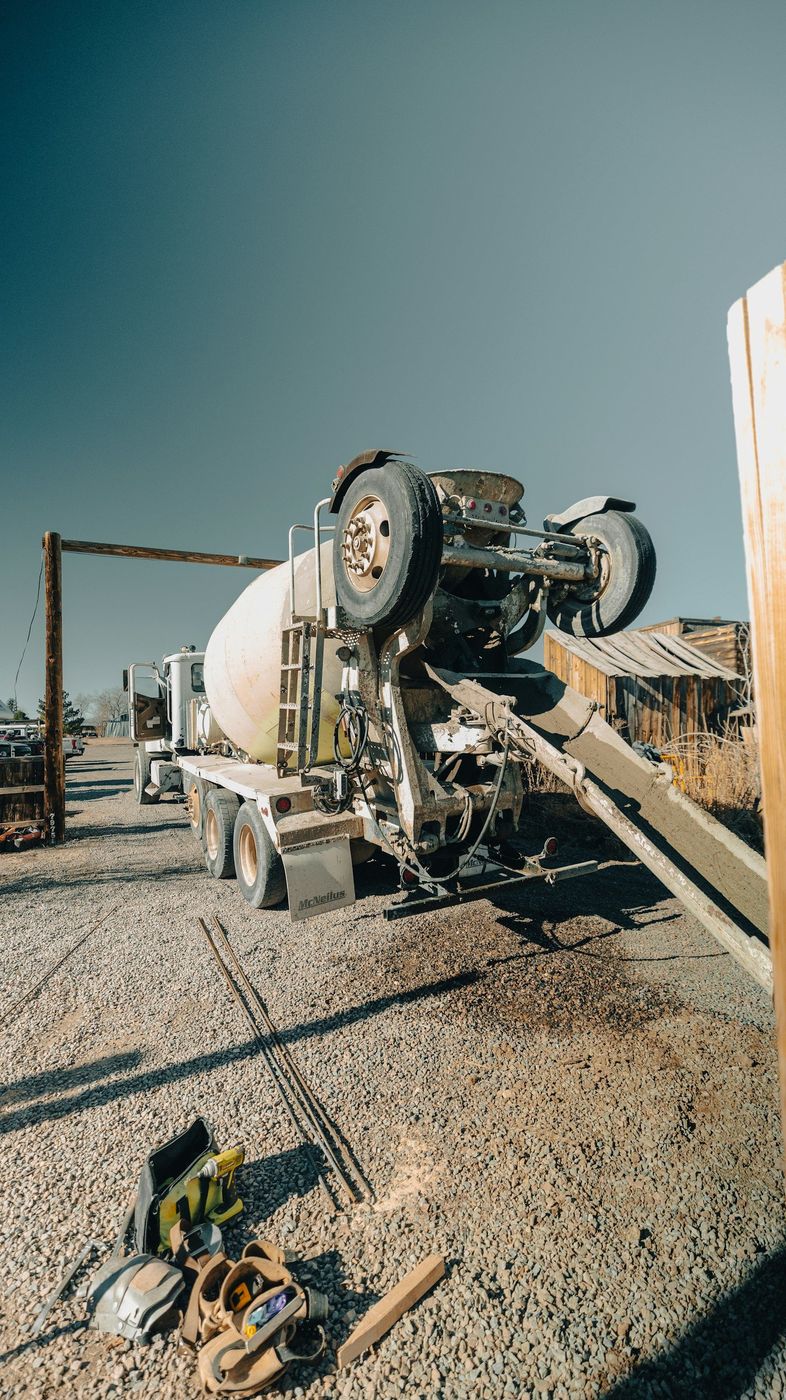
Concrete, asphalt, millings, or road base. The right answer changes with how many loaded trucks a week actually use the thing.
Nobody should pour concrete on a whole service drive just because a concrete contractor showed up. Plenty of routes on plenty of properties are fine in asphalt, and a few are fine in nothing but compacted rock. What we care about is matching the surface to the traffic, because the expensive mistake goes in both directions: paying for concrete on a road that barely gets used, or paving a truck route with something that turns to soup by the second spring.
We build access roads, service drives, and equipment routes on commercial, industrial, and utility property around the north metro. Some run behind flex buildings out where the working side of Westminster sits. Some are association maintenance routes near Legacy Ridge or The Ranch. This page is about the decision itself, laid out the way we'd argue it with you on site.
Here's the question we ask first, and it isn't about budget. How many loaded vehicles cross this route in a normal week, and where do they slow down? Not how long the road is. Not how it looks. Weight and where that weight stops.
Because pavement doesn't fail evenly. A loaded tandem rolling straight at fifteen miles an hour distributes its weight across a fair bit of surface. That same truck turning tight, stopping at a gate, backing to a dock, or setting outriggers puts everything into a few square feet. Asphalt is flexible, which is exactly why it deforms under a stopped load and recovers under a moving one. Concrete is rigid, which is why it spreads a point load across a wide area and doesn't care that the truck stopped.
So the honest answer on most properties isn't one surface. It's the right surface in the right place. The straight run gets whatever the budget supports. The turns, the gate, the dock approach, and the pad where equipment parks get concrete, because those are the spots that would have failed first anyway.
There's a middle option people forget. On a route where the traffic is predictable and the drivers hold a line, you can pour concrete strips under the wheel paths and leave the center and shoulders in gravel or asphalt. It's a genuinely old idea and it still works, because the load only ever travels where the tires go.
When does it pay? Long runs, consistent vehicles, straight alignment, and a property that isn't worried about the look. When does it fail? Trailers that track wide on a curve, snow that hides the strip line, and any route where a driver has to hunt for the pavement in the dark. If you're going to have to widen the strips to eight feet each to make people comfortable, just pour the road.
| Surface | Where it earns its place | Where it gives up |
|---|---|---|
| Compacted road base | Seasonal access, light pickups, a route that may move later | First thaw. Ruts, potholes, and a grader bill every spring |
| Recycled asphalt millings | Better than raw rock, cheap, decent dust control | Softens in July, ruts under a loaded tandem, no structural value |
| Asphalt | Long runs, moving traffic, a budget that has to cover distance | Anywhere weight stops: gates, turns, docks, outriggers |
| Concrete | Turns, gates, dock approaches, equipment pads, wash areas | Cost per foot on a long straight run with light traffic |
| Concrete wheel strips | Predictable vehicles on a straight, well marked alignment | Trailers tracking wide, and any route drivers use after dark in snow |
Walk the route with us. We'll tell you which sections actually need concrete and which ones don't.
Still unsure about something?
Call the crew at (303) 569-4046 and we will talk it through.

Get a free, no-obligation estimate from a crew that knows Colorado soil, Colorado weather, and how to finish concrete that lasts.
Accessibility
Adjust the site to fit how you read and browse. Your choices are saved on this device.