
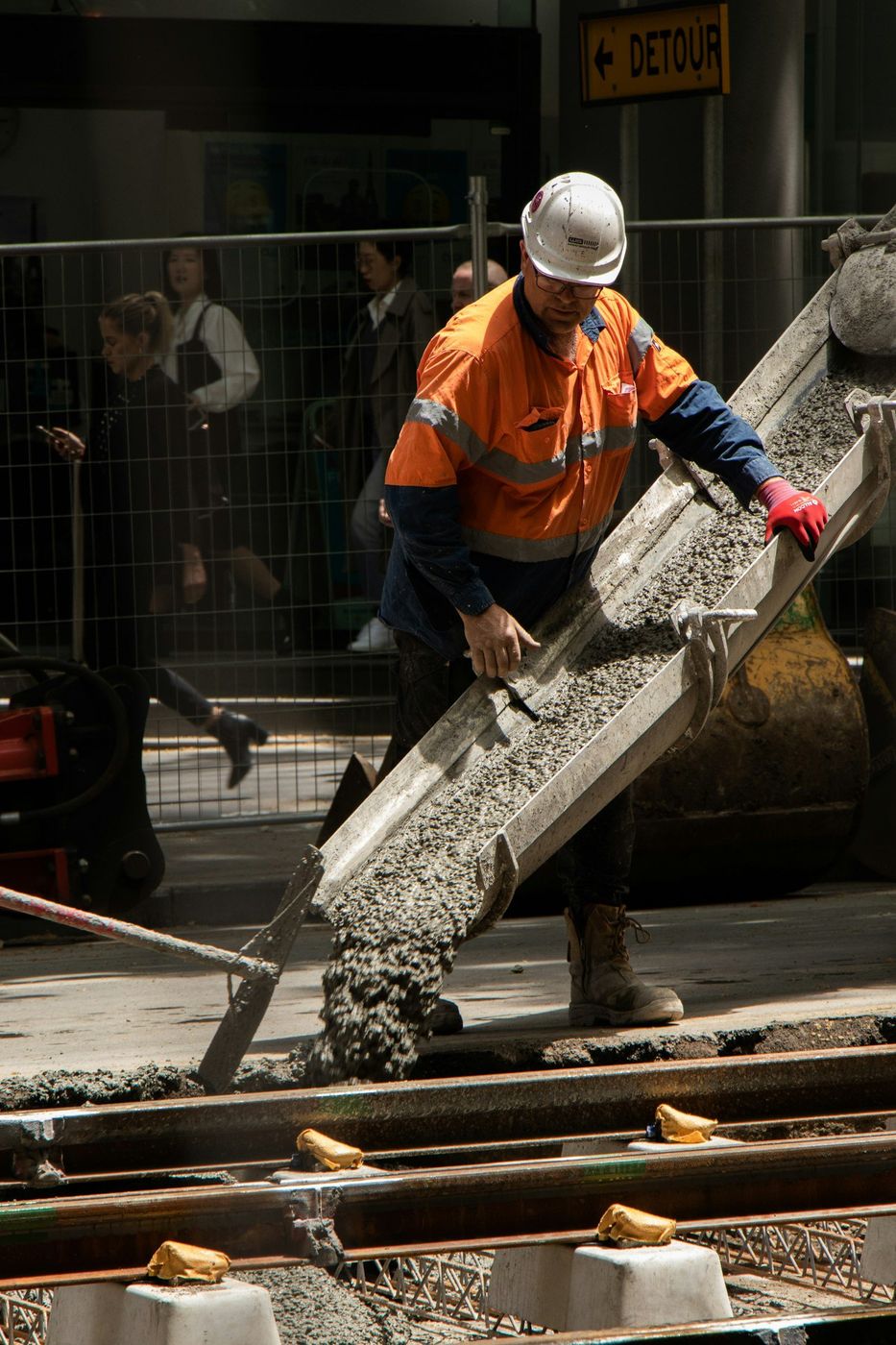
Three different products get called sealer, and two of them went on before you ever thought about it.
Ask ten homeowners when their driveway was sealed and half will tell you the contractor sprayed something on it the day it got poured. That milky stuff wasn't sealer. It was curing compound, a completely different job, and it finished about a month later.
Sealing is a schedule, and the schedule starts on pour day. What goes on the fresh slab, what has to come off later, when the first real coat goes down, and how often it gets renewed after that are four decisions most people never hear about. So here's the whole timeline, from the truck to the fifth winter, the way we walk Thornton homeowners through it at the kitchen table.
Concrete doesn't dry. It cures, which is a reaction that needs water to keep running, and if the surface gives its water up to a dry Colorado afternoon the top layer never reaches the strength the rest of the slab has. That's where dusting and early scaling start, in the first week of a slab's life.
So on pour day, once the surface has set enough to take it, curing compound goes down. It's a thin membrane with one job: hold water in the concrete for the first week or so. It looks like a sealer. It behaves nothing like one, and it wears off over the following weeks, which is the design.
Some products combine both functions and get called a cure and seal. Fine on the right job, mostly interior and commercial work. On a residential driveway we'd rather cure and seal as two separate events, because the first has to happen on a wet slab and the second absolutely must not.
The rule we give everybody: wait a full month, then wait for the slab to be dry. Twenty-eight days gets the concrete to design strength. Dry gets the water out of the pores. Both have to be true, and the second one is the one people rush.
Sealing over a damp slab is the most common failure in this trade and it isn't subtle. The moisture underneath has nowhere to go, so it collects at the film and returns as a white cloudy haze inside a few weeks, and the only fix is a complete strip and a fresh start. Rain on Tuesday does not mean dry by Wednesday, whatever the surface looks like. When we're unsure we tape a sheet of plastic down overnight and check under it in the morning.
After that, product choice follows the surface. Penetrating sealers soak in, react inside the concrete, and leave nothing on top, so there's no film to peel and no change to appearance or grip. That goes on most driveways, walks, and washed surfaces here. Film-forming sealers sit on top, deepen color, and give decorative work that wet look. Those are a commitment: renewed on schedule they're terrific, neglected they fail where everyone can see.
| Product | When it goes on | What it's actually doing | What goes wrong if you treat it as another |
|---|---|---|---|
| Curing compound | Pour day, once the surface has set | Holding water in the slab so the top cures as hard as the bottom | You assume the slab is sealed and skip the real coat for five years |
| Cure and seal | Pour day, as one product doing two things | Curing first, then leaving a light protective film behind | It has to come off before a different sealer goes on, and people forget it's there |
| Penetrating sealer | A month or more after the pour, on a dry slab | Reacting inside the pores so water and salt can't get in | Very little. This is the forgiving one on the list |
| Film-forming sealer | On clean, cured, thoroughly dry concrete only | Building a protective layer and deepening the color underneath | Over a damp slab it hazes white, and over an unknown old coating it peels |
Put a reminder on next spring's calendar and call us then. Sealing early does more harm than skipping it entirely. (303) 569-4046.
Exterior sealing runs late May through the first week of October, and September is the month we'd choose: dry air, mild days, cool nights, and time to cure ahead of a hard freeze. Spring works once the ground gives up its snowmelt and the slab strings together several dry days. A warm week in March is a trap, because the concrete is still full of winter.
Winter shuts exterior work down completely. These products need temperatures above freezing right through the cure, and a shaded January slab in Quail Valley is never dry. Garage floors and basements run all year with the door closed and some ventilation moving.
What happens between coats decides whether sealing was worth the money. Sand instead of ice melt. Shovel rather than letting a pack build. Rinse the apron in spring where the plow pile sat, since that's where road chemical concentrates. And once a year, throw a cup of water on the tire path. Beads mean you're covered. Soaks in dark means the concrete is drinking whatever comes next.
Still unsure about something?
Call the crew at (303) 569-4046 and we will talk it through.
Get a free, no-obligation estimate from a crew that knows Colorado soil, Colorado weather, and how to finish concrete that lasts.
Accessibility
Adjust the site to fit how you read and browse. Your choices are saved on this device.