
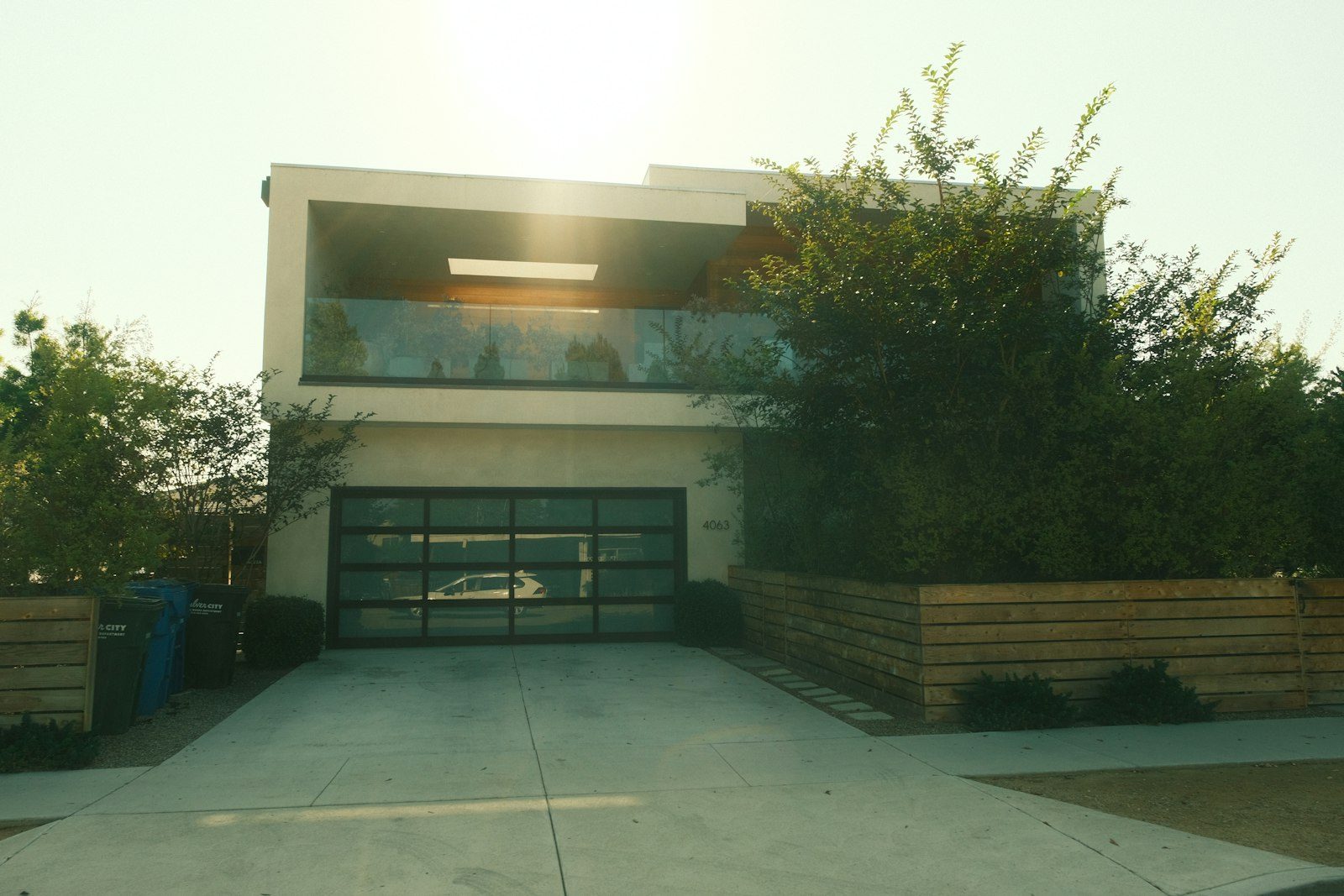
The worn surface is the symptom. We'd rather talk about the eight inches underneath it.
Resurfacing gets sold as a surface product, which makes sense, since the surface is the part you can see and the part you're unhappy with. But we've pulled up enough Adams County flatwork to know that a worn top is often the last thing to go wrong rather than the first. Something below usually started it.
So before we quote a new surface on your driveway, walk, or patio, we want to know what's under it and where the water goes. Sometimes the answer is boring: solid base, decent drainage, a surface that took thirty winters and finally quit. Resurface that and it looks new for a long time. Sometimes the answer is that the slab is spanning a void, and putting a fresh face on it is money you'll spend twice.
| Depth | What it looks like | What it takes |
|---|---|---|
| The top eighth of an inch | Chalky dusting and a fine gray powder on your shoes | A bonded resurfacer handles this cleanly. Best case on the list |
| The top half inch | Scaling and flaking, with aggregate starting to show in patches | Grind or blast the loose material off, rebuild to a plane, then resurface |
| Full slab depth | A crack you can see light through, or one running edge to edge | Route and fill first. It will eventually telegraph through any topping |
| Just under the slab | One panel rocks underfoot, or the area sounds hollow when tapped | Lift and fill the void before anything goes on top. Foam or slurry |
| The base layer | Panels stepped at the joints, edges breaking downward | The base has failed. Resurfacing here is spending money on a symptom |
| The subgrade and the water | Puddles that sit for days, or a slab tipping back toward the house | Regrade and fix the water first, then decide about the concrete |
The clay here takes the blame for most of the cracking we get called about, and honestly it's the water's doing. Ground held at a steady moisture content sits still. Ground soaked by a downspout every storm and then baked dry through August does not, and a slab bridging between a wet zone and a dry one is under bending stress nobody designed it for.
Then there's what went under the slab in the first place. On the older Eastlake blocks we routinely find flatwork poured straight on native ground with no base at all, which worked fine for decades and then stopped working all at once. Newer construction gives us a different problem: utility trench spoil pushed back in loose, or fill placed in one thick lift and driven over twice. Both settle unevenly. None of that turns up in the photo you'd send us of a flaking driveway, and all of it decides whether resurfacing is an investment or a delaying tactic.
Tap the slab with a hammer and listen for hollow spots, then look at where your downspouts land. Tell us what you found. (303) 569-4046.
A bonded resurfacer is a polymer-modified cement mortar. Placed on properly prepared concrete it grabs hard, and it gives you a new wearing surface with a broom texture, a trowel finish, color, or a pattern, for a fraction of a tear-out. On the right slab it's a good product and we sell plenty of it.
What it cannot do: hold two panels together that are moving apart, correct a slope of any real magnitude, add structural capacity, or survive over a void. It also cannot fix drainage. Every one of those failures gets blamed on the resurfacer afterward, and not one of them is the material's fault.
The test we use is simple. If the concrete is flat, quiet under a hammer, and jointed sensibly, and the only thing wrong is the top layer, resurface it and don't think twice. Any other answer and we'd rather have the harder conversation today than the expensive one three years from now.
Exterior resurfacing runs from about mid-May to the end of September here. These products want surface temperatures above roughly fifty degrees and rising, a couple of frost-free nights after placement, and a slab genuinely dry underneath before prep begins. A spring slab that looks dry at ten in the morning is often still holding snowmelt.
Wind is the underrated risk. A thin layer gives up its water to a dry Colorado breeze fast, and a resurfacer that flashes off before it bonds comes up in sheets the following year. We work smaller sections, keep the surface damp, and move the date on a genuinely windy day rather than argue with it.
First winter, be gentle. No chloride ice melt, sand for traction, a plastic blade, and don't let a plow pile sit against the slab edge all season. Everything we resurface goes into November with a written set of rules.
Still unsure about something?
Call the crew at (303) 569-4046 and we will talk it through.
Get a free, no-obligation estimate from a crew that knows Colorado soil, Colorado weather, and how to finish concrete that lasts.
Accessibility
Adjust the site to fit how you read and browse. Your choices are saved on this device.