
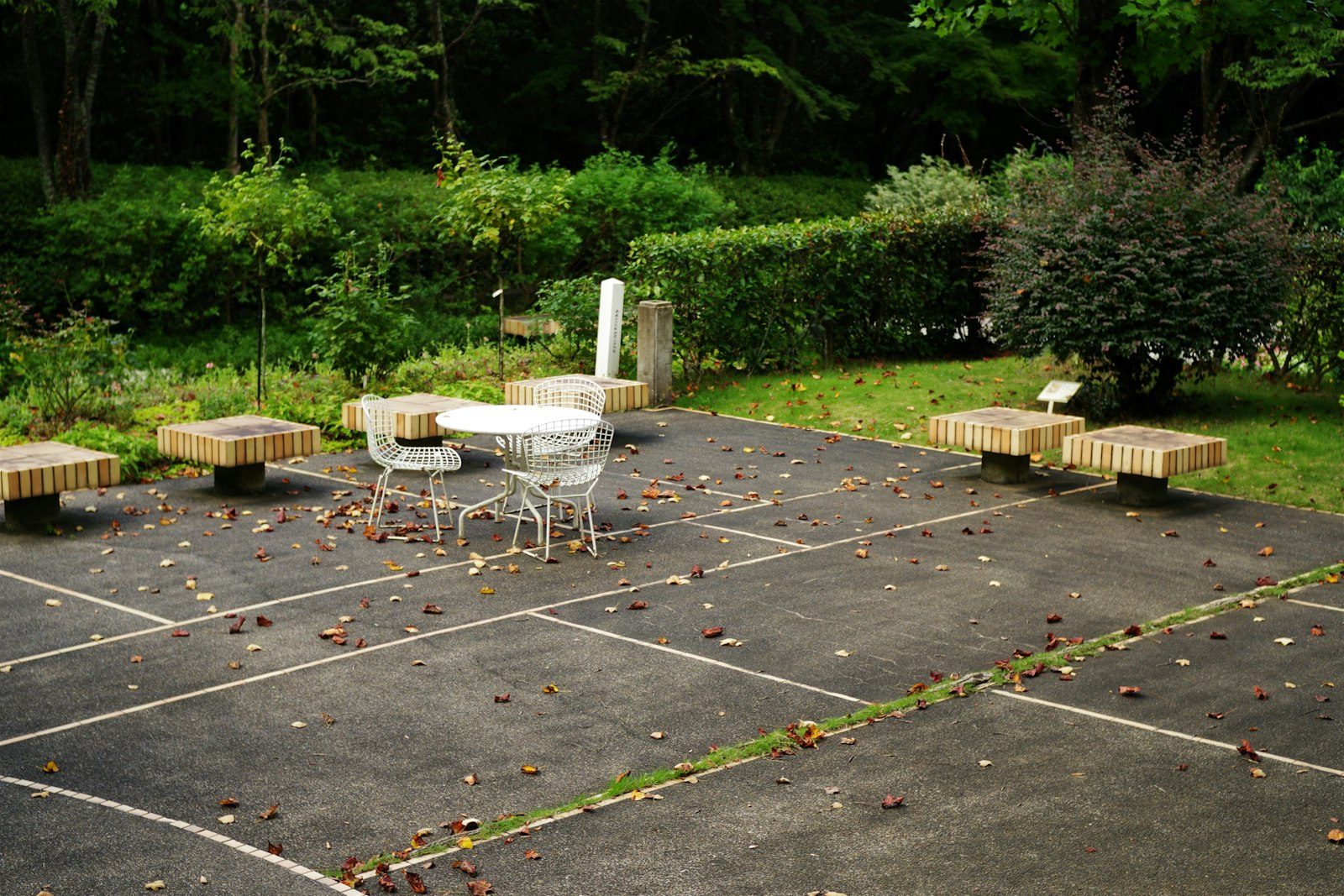
Color is the cheap part of a stain job. The prep underneath it is where the money and the result both live.
Staining is the least expensive honest way to change how a slab looks. You keep the concrete you already paid for, and your budget goes toward color and protection instead of demolition and a ready-mix truck. That arithmetic is why so many of these calls come from Carriage Club and Fairways, where patios and basement floors are structurally fine but tired of looking the way they look.
Here's what never shows up clearly on a bid: color isn't where the labor sits. Grinding off old sealer, lifting glue residue, scrubbing out a decade of grill drippings, that's the job. Ask any two crews what touches your slab before color does. Their answers sort the real quote from the wishful one.
Acid stain is a chemical reaction, not paint. Metallic salts in the solution hunt down free lime in the cement paste and turn into a mineral color that lives inside the top layer of the concrete. Nothing rides on the surface waiting to flake off. That's the durability case, and it's a strong one.
A reaction needs something to react with, though, and every slab supplies a different amount. A troweled basement floor in Montecito behaves nothing like a broomed patio that took fifteen summers of Douglas County sun. So we run a test patch somewhere hidden before anybody talks color seriously. Promise an exact swatch on an existing slab and you're guessing, and the homeowner is the one who lives inside the guess.
| Line item | What it buys | What skipping it costs |
|---|---|---|
| Mechanical grinding or shot blast | A surface open enough for color to bite into | Blotchy patches where old sealer blocked the reaction |
| Neutralize and rinse | Balanced surface chemistry so the sealer can hold | Sealer that lifts in sheets inside a year |
| Sealer, two coats | UV protection and resistance to grease and wine | Chalky, faded color that can only be ground off |
| Traction grit in the sealer | Footing on a wet or refrozen surface | A patio nobody wants to cross in shoulder season |
| Crack and joint detailing | Lines that read as design instead of damage | Every flaw framed in fresh color and impossible to ignore |
The bids that come in low are almost always low in one place, and it's prep. Somebody plans to mop the floor and start spraying. We've stripped and redone a fair number of those. Grinding a slab twice costs more than grinding it once, and the homeowner pays both times.The crew lead's read on it
We'll tell you what color your concrete can realistically give up, and exactly what the prep on it looks like.
Reactive stain gives you the mottled, geological look, with a short palette set by chemistry: rust, tobacco, moss, warm grays. Dyes go the opposite direction. Wide color range, faster application, far more even, and much less tolerant of our sun once they're outdoors.
The cost gap comes from time. Acid work needs a reaction period, neutralizing, rinsing and vacuuming residue, then drying before sealer. Dye skips most of that. When two quotes sit far apart and one of them is dye, you aren't comparing the same day of labor. Outdoors here we push acid nearly every time, because ultraviolet at 5,817 feet is merciless toward pigment sitting near the surface. Dye pays off in basements.
Outdoor color work wants mild, dry stretches. May into June, then late August through early October, are our steadiest windows. Sealer is the fussy half of the process. It wants moderate surface temperatures and no rain for a day on either side, and a summer thunderstorm rolling in off the foothills onto fresh sealer leaves a cloudy film that only comes off with a strip and redo.
Interior floors run all year. Basements in Fairways and Heritage Hills hold a steady temperature no matter what December is doing outside, so we book those through winter and keep the exterior calendar open. Want a patio colored in April? Call in February.
Still unsure about something?
Call the crew at (303) 569-4046 and we will talk it through.
Get a free, no-obligation estimate from a crew that knows Colorado soil, Colorado weather, and how to finish concrete that lasts.
Accessibility
Adjust the site to fit how you read and browse. Your choices are saved on this device.