
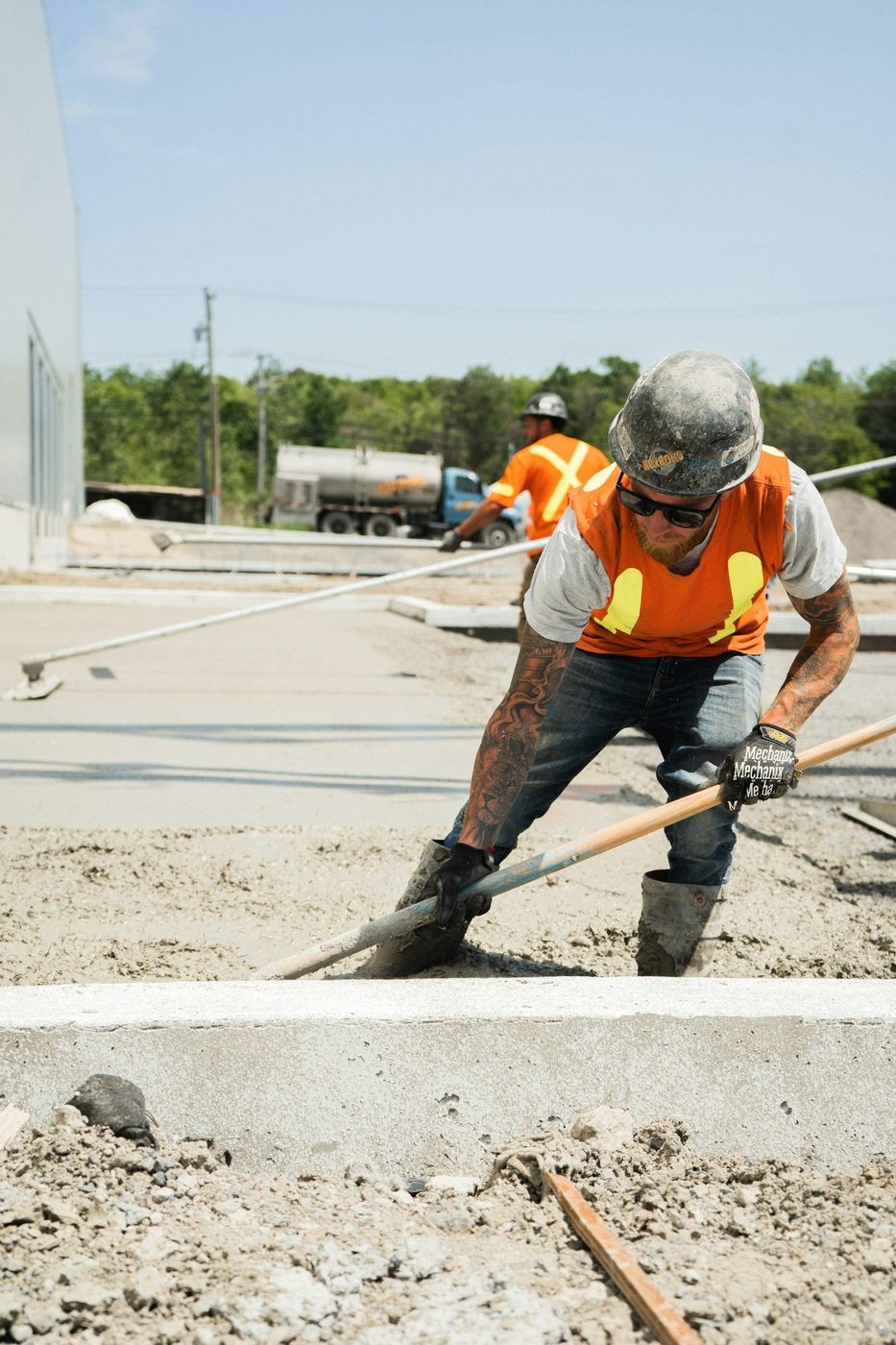
Steel cage, sprayed shell, engineered for Douglas County soil and the water table under it.
Mid-October in Lone Tree, and the crew is watching the overnight low the way other people watch the weather before a road trip. There's a steel cage in the ground, plumbing is tied and pressure tested, and the shotcrete rig is booked for six in the morning. A shell sprayed on a cold, still morning with a rising sun behind it turns out beautifully. A shell sprayed into a front that drops the temperature twenty degrees by noon does not.
That's pool building on the Front Range in one scene. The engineering, the steel, and the plumbing are things we control completely. The weather runs the schedule, and knowing when to move a shoot two days is worth more than any brochure. We build cast-in-place and sprayed concrete pools, we bring a structural engineer to the design instead of borrowing somebody else's detail sheet, and we build for soil that has opinions.
Everybody gets excited about the shoot day. But the pool is really built the week before, when the steel goes in and the plumber ties his lines. If the cage is right and the pipes are tested, spraying it is just a long, loud, satisfying morning.From the crew lead on these jobs
A pool is a structure holding tens of thousands of pounds of water in ground that changes volume with moisture. That's the whole problem in one sentence, and it's why we won't build one from a generic plan. Our engineer sizes the shell thickness, the steel pattern, and the bond beam for the soil we actually find in your excavation, and where groundwater is a factor we detail a hydrostatic relief valve so the shell isn't fighting uplift when the pool is drained.
Excavation tells us a lot. Douglas County digs vary block to block, and what comes out of a hole in the Fairways can be different from what comes out three streets over. We look at the sidewalls, we look at how the over-dig will be backfilled, and if the bearing isn't what we expected we redesign before steel arrives rather than hoping the shell is thick enough. That's the value of having the engineer in the building instead of on a phone tree.
| Consideration | Shotcrete or gunite shell | Cast-in-place with forms |
|---|---|---|
| Shape freedom | Anything you can draw, curves included | Straight runs and simple radii, or the formwork gets expensive. |
| Formwork | Only the interior face needs shaping | Both faces formed and braced, which adds days. |
| Crew skill | Everything rides on the nozzleman and the finishers | More forgiving. The forms hold the geometry for you. |
| Cold weather | Harder. Thin sprayed sections lose heat fast | Easier to blanket and protect in a formed wall. |
| Typical use here | Most residential freeform pools we build | Rectangles, spa walls, and some commercial work. |
| Cure discipline | Water cure daily for a week or it checks | Forms hold moisture, so it's a little more forgiving. |
Every step gates the next. Layout and excavation come first. Then the plumber sets main drains, returns, skimmer lines, and any spa plumbing, and everything goes under pressure and stays under pressure through the shoot so a nicked line can't hide. Steel goes in as a tied cage on chairs and dobies, held off the dirt so concrete wraps every bar. Electrical rough for bonding, lights, and equipment happens in there too.
Then inspections, and then the shoot. After the shell cures we're on to tile, coping, and the deck, then plaster and startup. You get a calendar at the start and a phone call whenever something moves it.
Start the conversation in fall. Design, engineering, and permits take longer than the build.
Digging starts as soon as the ground is workable, usually March or April, and the busiest shooting months run through October. A pool started in spring is swimming by mid-summer if the inspections cooperate. A pool started in July is more likely a next-season pool, and we'd rather tell you that in the first meeting than in August.
Fall builds are underrated. Cooler air is kinder to a curing shell than a hundred-degree afternoon, and finishing the structure in October leaves the deck and plaster for early spring. We'll shoot into November when the forecast allows, using heated mix water and blankets over the shell overnight, but the ground can't be frozen and we won't spray into a storm. Snow on a green shell is a repair, not a delay.
Winter is design season. The Heritage Hills estate pools and the tighter RidgeGate and Montecito builds that come together best are the ones that spent January on paper.
Still unsure about something?
Call the crew at (303) 569-4046 and we will talk it through.

Get a free, no-obligation estimate from a crew that knows Colorado soil, Colorado weather, and how to finish concrete that lasts.
Accessibility
Adjust the site to fit how you read and browse. Your choices are saved on this device.