
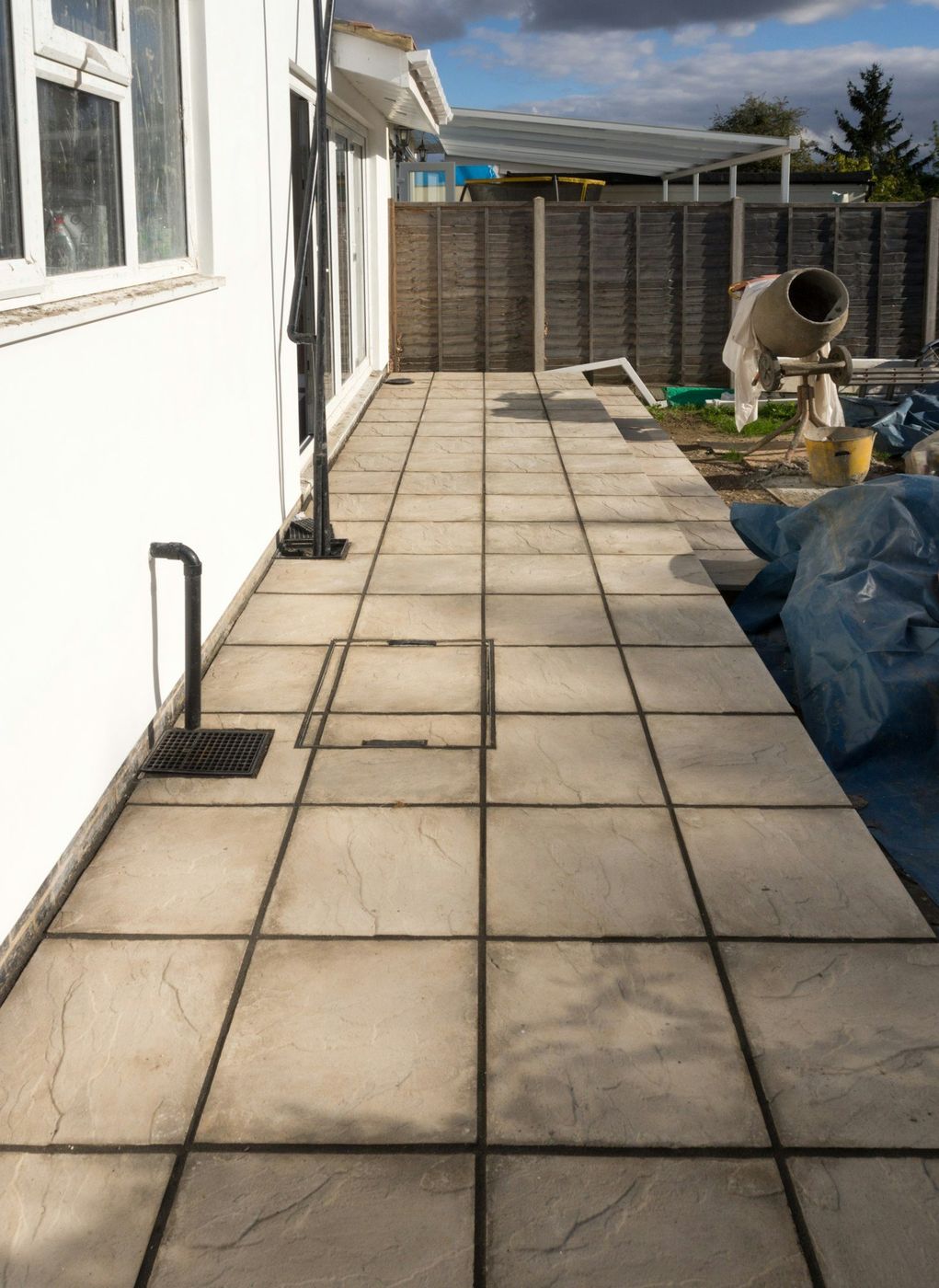
If the table wobbles and the surface sheds grit every time you sweep, your patio is telling you something.
Patios fail quietly. First the finish goes: a little pitting after a hail year, a sandy residue every time you sweep, a gray surface that used to be smooth. Then a corner settles an inch toward the house and water starts pooling by the back door. The table rocks. You shim it with a coaster and stop inviting people over. Sound familiar?
We see that exact patio all over Lone Tree, especially on the original slabs in Fairways and Montecito, where the concrete has been trading punches with clay soil and forty-below-to-sixty temperature swings for decades. The good news is that a patio is the most fixable concrete on your property, and the replacement can be dramatically better than what the builder gave you. Bigger, better placed, and pitched so water finally leaves.
A patio is a horizontal surface that holds snow, sits in shade half the day, and lives right next to your foundation. That combination is rough. Snow lingers on the north side of the house, melts a little each afternoon, refreezes each night, and that freeze-thaw cycling is what chews soft finishes into scaling and pits. Hail lands flat on a patio too, with nothing to deflect it.
Underneath, the clay is doing its usual act, swelling wet and shrinking dry, and a patio poured without a compacted base rides that elevator until a corner drops. And because the slab sits against the house, a patio that settles toward the wall isn't just an eyesore. It's a funnel aimed at your foundation.
| What you're seeing | What it usually means | The fix |
|---|---|---|
| Grit and sand every time you sweep | Freeze-thaw scaling on a weak original finish | Resurface if it's shallow; replace if it runs deep |
| A corner sunk, water sitting near the door | Washed-out or settled base at that edge | Lift the slab, or repour with drainage designed in |
| A web of hairline cracks, surface still flat | Ordinary shrinkage cracking | Seal it and relax; this one's cosmetic |
| Wide cracks with edges at different heights | The slab has broken into pieces that move independently | Replacement; patching moving pieces never holds |
| Fresh pockmarks after every hail season | High-altitude hail beating a soft surface | Repour with an air-entrained mix and a denser finish |
A couple of photos and a rough size gets you a straight answer on repair versus replace, before anyone schedules a visit.
Placement matters more here than at sea level. A west-facing patio in July is unusable from three to seven without shade; the thin air lets that much more sun through. So we ask how you actually live. Morning coffee people want east light. Dinner hosts want the shade line, a pergola footing, or the north side of the house. That decision costs nothing on paper and everything after the pour.
Size it off the furniture, not the lot line. A dining set wants room to slide chairs back. A fire pit wants distance from the fence. In RidgeGate, where yards run tighter, we design smaller slabs that still seat six. Behind a Heritage Hills or Carriage Club home, we're often forming up outdoor kitchens with pads for the grill island, and the slab has to carry that weight without a whisper of settlement.
Everybody calls us about patios in May. But think about the calendar: an October pour cures through the cool season, the sealer goes on right, and the whole setup is broken in before your first barbecue. No waiting through a busy spring schedule while the season slips away. September and October give us warm days, cool nights, and stable ground.
Spring works once the frost is out and overnight lows hold. Summer pours start at first light so we're finishing before the heat, and we track the afternoon buildups over the foothills like hawks. Deep winter? Possible with blankets and heated water, but for a patio there's rarely a reason to force it. We'd rather book you for the first good window.
Still unsure about something?
Call the crew at (303) 569-4046 and we will talk it through.
Get a free, no-obligation estimate from a crew that knows Colorado soil, Colorado weather, and how to finish concrete that lasts.
Accessibility
Adjust the site to fit how you read and browse. Your choices are saved on this device.