
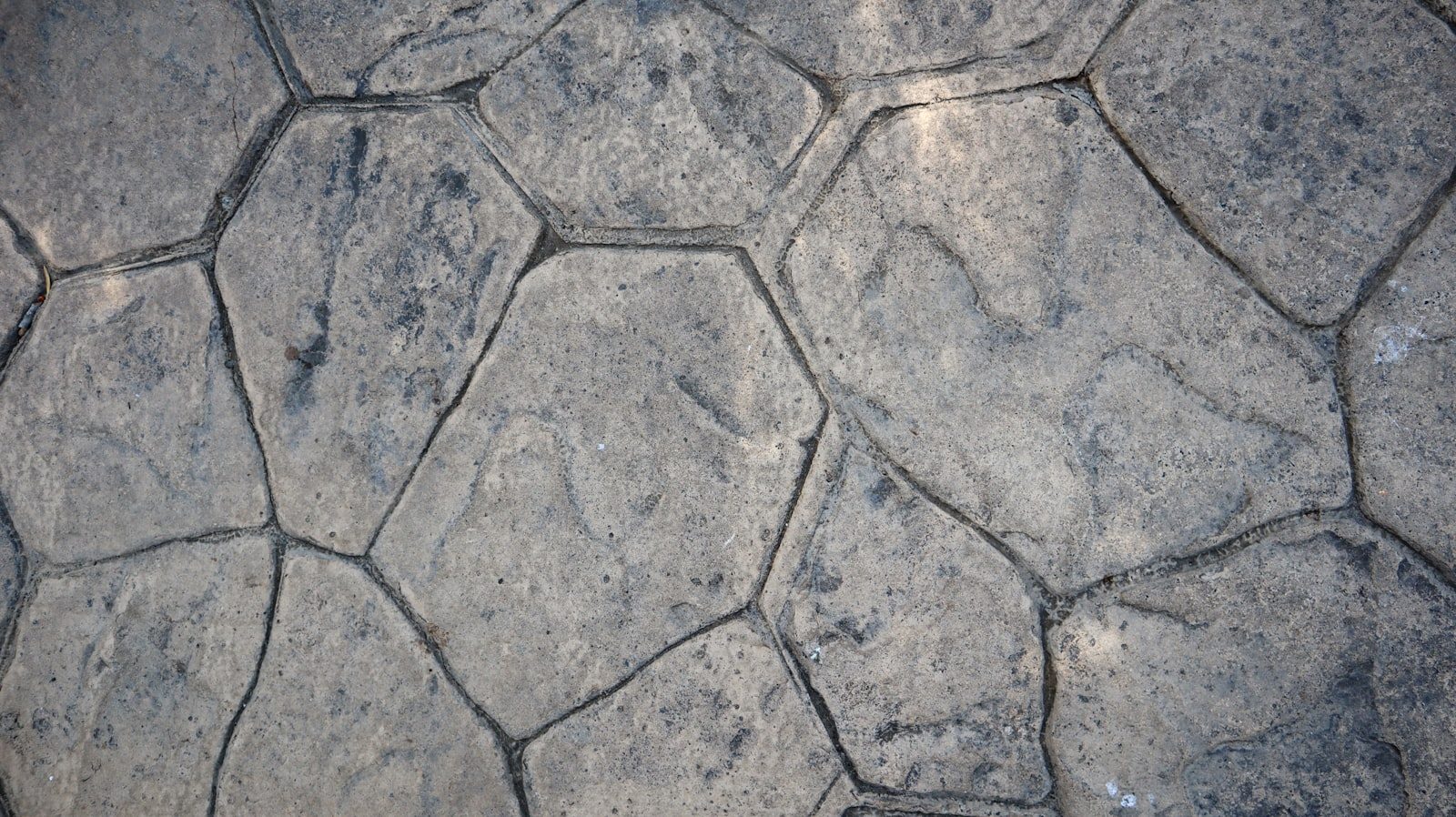
Decorative finishes that survive winters most decorative finishes don't.
There's a week most Novembers when Larkspur gets its first real snow, the kind that hangs in the trees until afternoon, and that week is when stamped concrete either proves itself or starts to die. Water sits in every stamped groove. Nights at 6,720 feet drop hard, days warm just enough to melt, and a surface can run a full freeze-thaw cycle every twenty-four hours for a month straight. A stamped slab that wasn't mixed, sealed, and drained for that rhythm gives up its color and its skin a little at a time, and by spring you can see it from the porch.
Ours are built for that week. Air-entrained mix so freezing water has somewhere to go. Sealer applied on schedule, not when someone remembers. And texture pitched to drain rather than hold. Decorative concrete can absolutely live at this elevation. It just can't be poured like it's in Phoenix.
Every failed stamped patio we get called to has the same autopsy: no air in the mix, sealer that quit years ago, and grooves holding water like cupped hands. None of that is the pattern's fault.Our crew lead, after the walkthrough
Two forces gang up on stamped surfaces here. The first is freeze-thaw, which attacks any texture that traps water, and stamped joints and grout lines are exactly that. The second is sun. High-altitude UV cooks the sealer protecting the color, and once the sealer goes, the color hardener wears and integral color starts to chalk. Neither force cares how good the pattern looked on day one.
The counterpunch is chemistry plus maintenance. We pour stamped work with the same 4,000 PSI air-entrained mix we put in driveways, seal it after the cure, and set you on a reseal cycle of every two to three years. Kept sealed, the color reads like new for decades. Let it lapse and the mountain wins.
| Option | Where it wins | Where it loses |
|---|---|---|
| Stamped concrete | One monolithic slab, any pattern or color, no gaps for weeds or ants | Needs resealing on a cycle, and a repair means matching color and texture |
| Pavers | Individual units can be swapped out, no cure time to wait through | Sand joints invite weeds and ice, and frost loves to shove single stones out of plane |
| Broom-finish concrete | Lowest cost, best winter traction, zero upkeep beyond shoveling | It's gray. Nothing about it says anyone made a design decision. |
Stamped pours book out fast in the warm months. Call (303) 569-4046 and we'll bring pattern samples to the site walk.
Around Perry Park and Bear Dance, the stamped work that still looks right ten years on tends to borrow from the setting: flagstone and random-stone patterns in buff, tan, and gray blends that sit quietly under the pines. Bright terra cotta tones fight the landscape and fade the loudest. We walk samples around your actual yard in your actual light, because color chips lie indoors.
Timing matters more for stamped work than for plain gray. The stamping window during a pour is short, and cold or wind shortens it further, so we run decorative pours from late May into early October and start them at first light. Fall pours get extra cure time before sealing. And winter? Winter is for design decisions, not stamping. Pick patterns in January, pour in June, and the schedule works for you instead of against you.
Still unsure about something?
Call the crew at (303) 569-4046 and we will talk it through.

Get a free, no-obligation estimate from a crew that knows Colorado soil, Colorado weather, and how to finish concrete that lasts.
Accessibility
Adjust the site to fit how you read and browse. Your choices are saved on this device.