
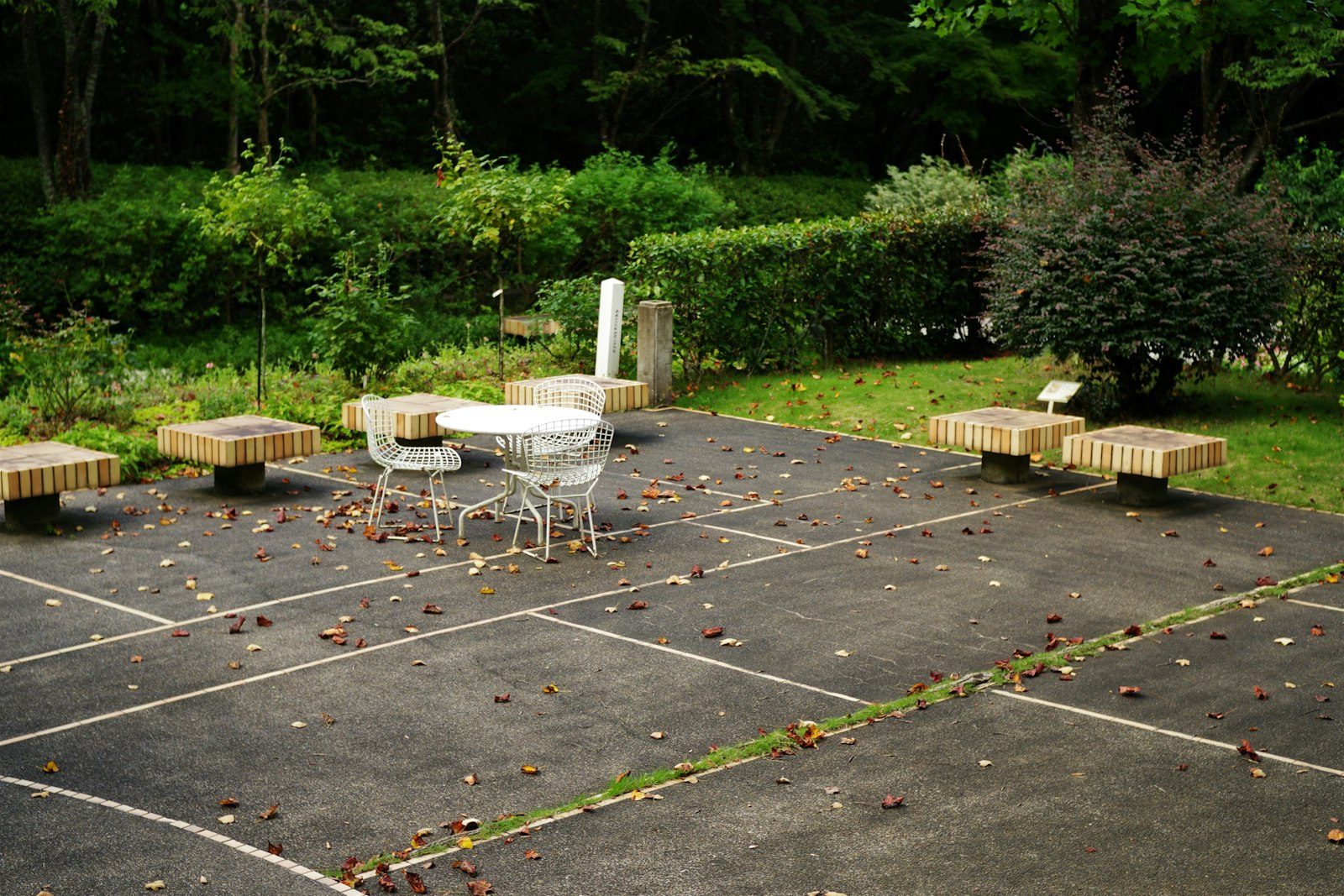
Acid and dye color read from the driveway: what's failing is almost never the color.
You can usually call it from the driveway. The color in the traffic path has gone pale while the edges under the furniture still look right. A milky white bloom sits across one corner. Near the step a clear film is lifting off in flakes. That's a colored slab telling you its top coat quit.
Almost none of that is the color's fault. Reactive stain becomes part of the concrete; it can't peel, because it isn't sitting on top of anything. What hazes, flakes, and chalks is the sealer above it. Up here the sun runs harder on that sealer than it does down in the metro, so the maintenance clock in Larkspur is shorter than whatever the product label promises. Keep the clock and colored concrete holds its depth for decades.
Two chemistries do most of the work and they behave nothing alike. Reactive acid stain uses metallic salts in an acidic carrier to react with free lime in the cement paste, and the result is mineral, permanent, and mottled in ways nobody predicts. That unpredictability is either the appeal or the problem, depending on your taste. Water-based dye is pigment instead of reaction. Cleaner, more repeatable, a much wider color range, and more dependent on the sealer for protection.
We pick between them by looking at your slab, not a catalog. An older exterior pour with a tight troweled surface takes acid unevenly, and sometimes that unevenness is the best thing about the finished floor. Plenty of jobs use both. Acid for the movement underneath, dye for the accent on top, one sealer system over everything.
| What you see | What actually happened | The fix |
|---|---|---|
| Color pale in the walking path only | Sealer wore through where feet travel, and the bare paste is abrading | Blend color back into the worn band, then reseal edge to edge |
| Milky white haze across a section | Moisture trapped under a film applied while the slab was still damp | Strip it, let the concrete dry out, come back with a breathable product |
| Clear coating peeling in sheets | Sealer built too thick or laid over dirt, so it never bonded | Full strip and start clean. Recoating a failing film buys one season. |
| Dark ring under a downspout | Steady wetting plus minerals in the runoff working through a thin spot | Fix the discharge first, then treat the stain. Otherwise it returns. |
| Chalky color that rubs off on shoes | Bare paste breaking down under ultraviolet and repeated freezing | Wash, neutralize, recolor where needed, and get a real sealer on it |
Here's the part homeowners in milder places never have to think about. Thinner air means more ultraviolet landing on your patio, and ultraviolet is what breaks down the resins holding a sealer together. A product rated for five years in a low, mild climate is running a much shorter race up here, particularly on a south or west exposure with nothing shading it. Under heavy pine cover the same sealer lasts noticeably longer, which is why two slabs on one property can be on two different schedules.
So we don't hand out a single number. Full-sun surfaces get resealed roughly every two years. Shaded ones stretch to three. The tell is sheen, not the calendar. When the gloss goes flat in the lanes people walk and the color looks thirsty on a dry afternoon, the top coat is finished. Call then, not two winters later.
Reseal, recolor, or strip and start over. We'll tell you which. (303) 569-4046.
Perry Park and Sage Port hold most of the older houses we color, and the calls tend to be one of two projects. A walkout lower level that spent twenty years under carpet and pad, or a big sun-facing patio that has outlived its finish. Bear Dance runs newer, so more often it's a slab we placed ourselves, colored a few weeks later once it has cured.
Outdoor color work is warm, dry-weather work. Stain wants a dry slab going in and dry hours coming out, and sealer wants surface temperatures inside a fairly narrow band. Late May into early October is our exterior window, and we start early so we're off the slab before the afternoon cells build. Interior floors run all year, which is why winter callers usually do their inside work first while we hold a spring slot for the patio.
Nine times out of ten the homeowner is sure the stain failed. We lay a wet rag on it for a minute and the color jumps right back. Nothing wrong with the color. The sealer above it burned off and nobody noticed for four summers.The crew lead's read on it
Still unsure about something?
Call the crew at (303) 569-4046 and we will talk it through.
Get a free, no-obligation estimate from a crew that knows Colorado soil, Colorado weather, and how to finish concrete that lasts.
Accessibility
Adjust the site to fit how you read and browse. Your choices are saved on this device.