
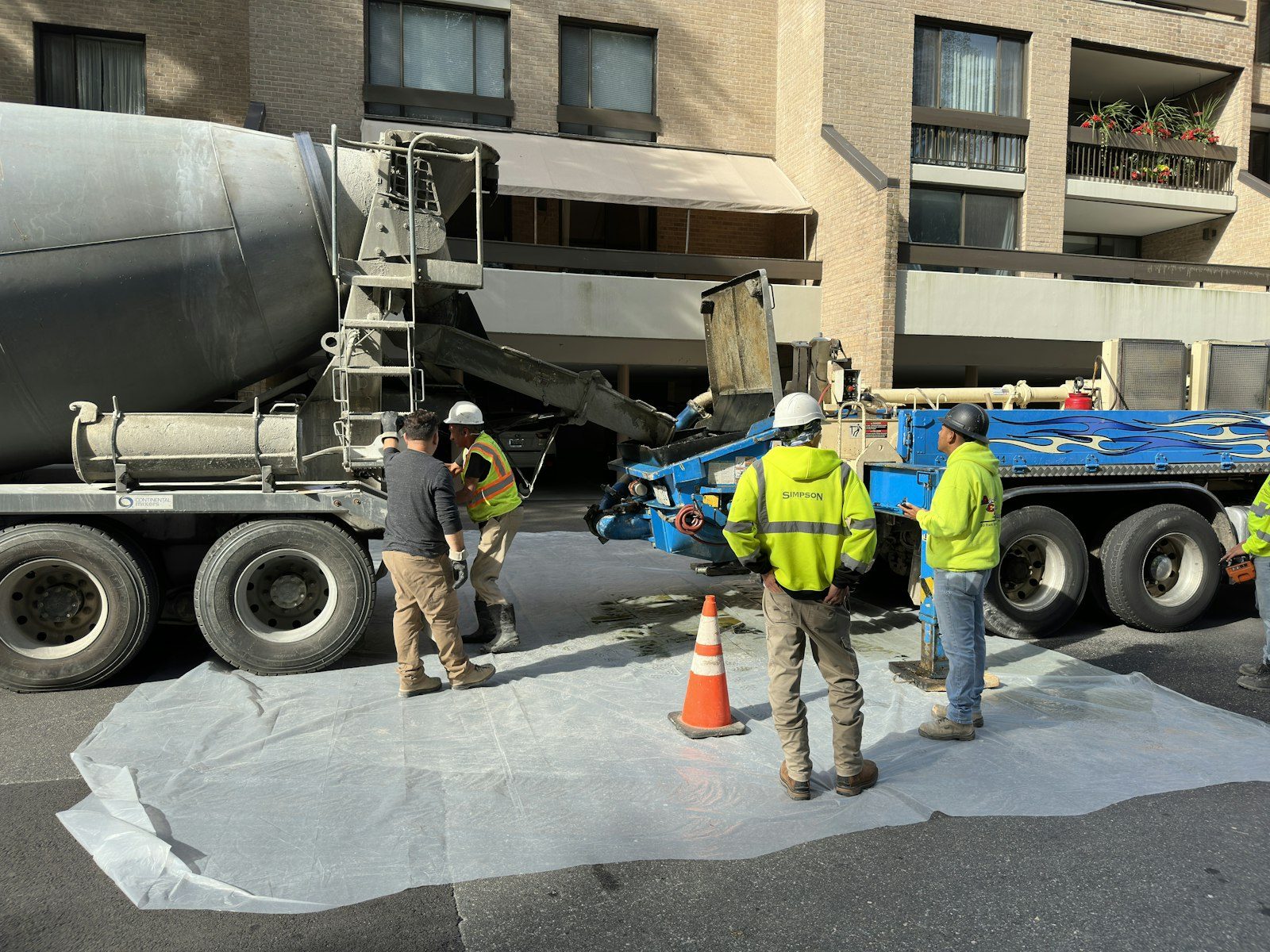
Long drives, steep grades, and pine shade. We plan the pour before we plan the slab.
Before we talk thickness or finish on a Larkspur driveway, we walk the approach. A loaded mixer is tall, wide, and unforgiving, and plenty of properties out here sit at the end of long wooded drives with tight turns, low ponderosa limbs, and grades that make a delivery driver radio back to the plant. So our first planning hour has nothing to do with concrete. It's about where the truck stops, whether we pump, and how we move mud the last two hundred feet if we can't get closer.
That's the job in this corner of Douglas County, and we like it. We've staged pours in Perry Park where the drive ran longer than most cul-de-sacs, and every one started with the same three questions. Where does the truck sit? Where does the water go? And what is the ground doing under all those pines?
Long drives don't get poured like suburban ones. We break them into sections and place the concrete in stages, so no load rides in the drum too long and no cold joint lands where a tire will hammer it. If the grade or the trees keep the mixer out, we bring a pump and run line past the trouble spot. Branches get flagged before the truck arrives, not after it takes a mirror off.
We start early. Mornings up here stay cool even in July, which is a gift for finishing, and it puts the pour ahead of the afternoon storm that builds over the Front Range most summer days. By the time the sky goes dark we want joints planned, surface closed, and plastic sitting on the tailgate ready to deploy.
Larkspur sits higher than any other town on our route, and the slab pays for it. Frost reaches deeper here than it does down in Denver, winter runs longer, and a surface can freeze at night and thaw by noon for weeks on end. That cycle is what tears apart concrete with the wrong mix. Ours goes down air-entrained at 4,000 PSI, which gives the water inside the slab room to freeze without breaking anything.
Hills add the second problem: water. A driveway cut into a slope collects everything the hillside sheds, so we shape the base to carry runoff across and away instead of letting it pool under an edge. Wet base plus deep frost equals heave. Dry base, no drama.
Send us your address and a photo of the drive. We'll tell you how we'd stage it before you commit to anything.
| Surface | What you sign up for | How it holds up here |
|---|---|---|
| Gravel | Regrading after every rough winter, washboard on the grade, dust in the dry months | Cheap to start. You buy it again every few years, one truckload at a time. |
| Asphalt | Softens in high-altitude sun, edges crumble without curbing, sealcoat on a schedule | Struggles on south-facing grades. The UV at this elevation is not gentle. |
| Concrete | Highest first cost, then decades of doing nothing but shoveling it | Handles frost, sun, and plow blades. On a long drive, it's the last surface you'll buy. |
The Sage Port drives with the tight switchbacks are where the pump earns its keep. Mixer stays at the bottom, we run line up the hill, nobody loses a mirror. People assume the trees are the hard part. It's the turns.Straight from the crew
Still unsure about something?
Call the crew at (303) 569-4046 and we will talk it through.

Get a free, no-obligation estimate from a crew that knows Colorado soil, Colorado weather, and how to finish concrete that lasts.
Accessibility
Adjust the site to fit how you read and browse. Your choices are saved on this device.