
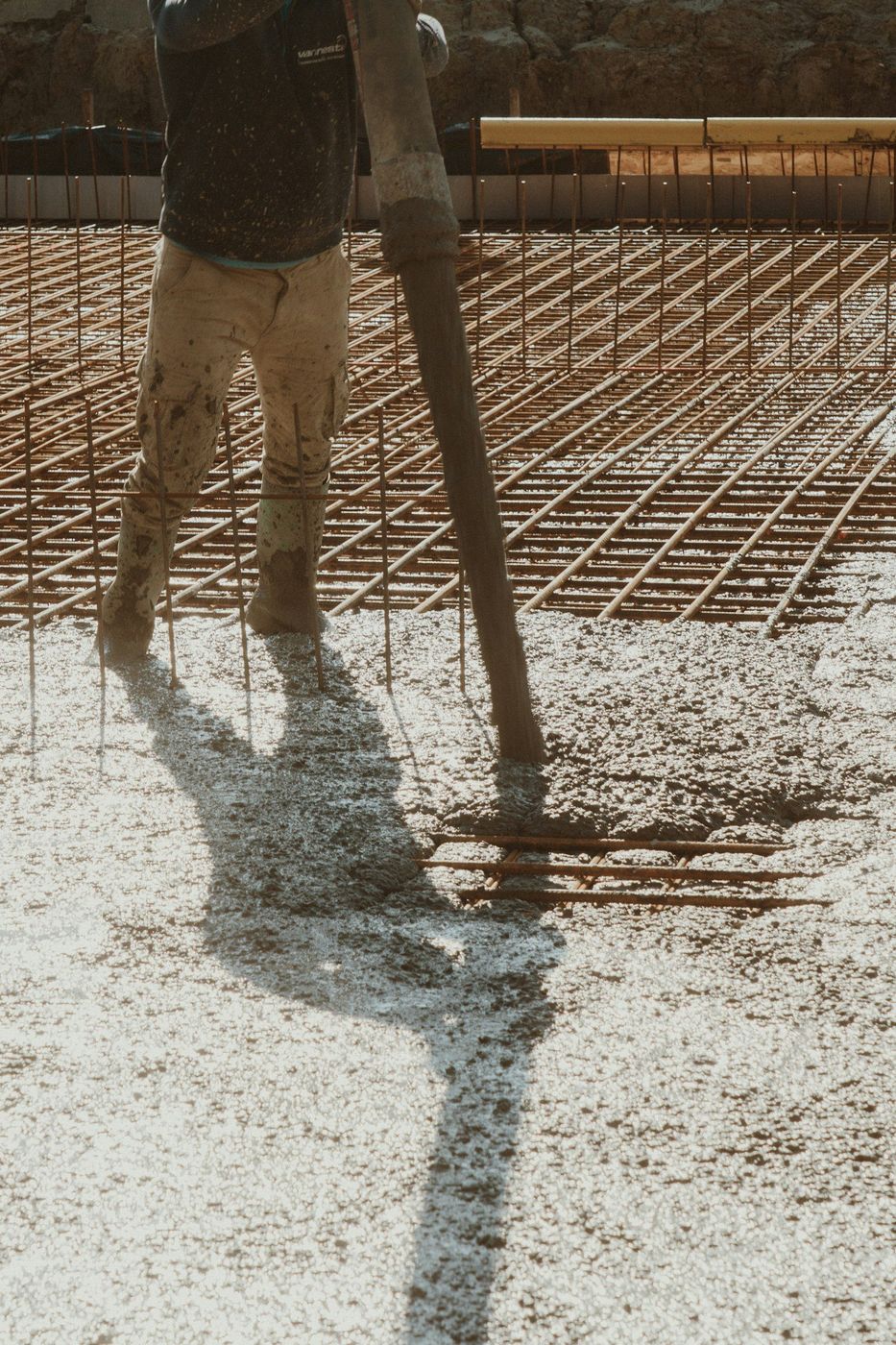
Garage floors, additions, shops, and basement floors poured for the way houses here were actually built.
Highlands Ranch went up subdivision by subdivision over a few decades, and you can tell which era a house came from by what's under its floors. Homes in Northridge and Westridge came with attached garages poured thin and fast, often straight onto whatever the grading crew left behind. Eastridge and Southridge got somewhat better practice. BackCountry and The Hearth got vapor retarders and engineered fill as standard, because by then the county's soil reputation had caught up with the industry.
That history matters because a slab on grade is only as good as the day it was built. We pour new ones, we replace failed ones, and we do a lot of first-time slabs for people finishing a shop, adding a sunroom, or converting a bare crawl area into usable floor. The concrete part is simple. Everything under it is the job.
| Where the slab goes | How we build it | The reason |
|---|---|---|
| Attached or detached garage floor | Four inches on compacted base, pitched to the door, joints laid out on the rectangle | Cars drip, snow melts off fenders, and that water has to leave under its own power |
| Heated room addition | Vapor retarder under the slab, thickened section under any bearing wall, insulation at the perimeter | Moisture drives up into flooring, and the walls above concentrate load in a line |
| Detached shop or outbuilding | Thicker section where a lift or heavy bench lands, conduit and drains sleeved before the pour | Retrofitting a drain or a power stub through finished concrete is miserable work |
| Basement floor replacement | Hand demolition, clean rock capillary break, new vapor retarder, slab poured floating at the walls | The floor has to move independently of a foundation going nowhere |
| Sunroom or three-season space | Isolation joint at the house, careful pitch away, control joints tight enough to hide cracking | It's exposed to more temperature swing than a conditioned room and moves accordingly |
Compaction comes first and it can't be faked. Base material goes down in lifts and each one gets run with a plate or a roller, because eight inches of loose road base dumped in one pass is a softer version of the problem you were solving. Second is the capillary break, clean angular rock that gives ground moisture nowhere to wick upward.
Third is the vapor retarder, and this one starts arguments. Plenty of crews still skip it and cover that with a shrug. We put it under anything heated, floored, coated, or lived on. Concrete is not waterproof. It's a sponge with strength, and whatever the ground offers it will happily pass up into your flooring adhesive.
Reinforcement rounds it out. Bars on chairs for anything carrying vehicles or equipment, mesh only where the load is genuinely light and someone will keep it off the dirt during the pour, fiber as a supplement to either and never as a replacement for steel.
We'll measure the space and tell you what the slab needs before quoting it. (303) 569-4046.
Interior slabs give us a schedule advantage nothing else does. A garage with a door that closes, a basement, a shop with walls up: those spaces can be heated, and once the ground is thawed and the air holds temperature, we pour in January the same as June. The concrete never knows the month. Access is the constraint, since a pump line has to get inside somehow.
Exterior and unheated slabs follow the usual Front Range calendar. Summer means starting early and watching the sky, because a hard afternoon cell landing mid-finish beats loose water down into the fresh paste, and that bill arrives later as dusting and scaling. Fall is ideal, with steady temperatures and no rush on the finish. Winter pours need heated water, blankets, and ground that isn't frozen, and we'd rather push an outdoor slab to spring than fight it.
One rule for a new slab's first winter, and people break it constantly: no deicing salt. Magnesium chloride tracked off your tires eats a young surface. Sweep, shovel, use sand if you need grip.
Still unsure about something?
Call the crew at (303) 569-4046 and we will talk it through.

Get a free, no-obligation estimate from a crew that knows Colorado soil, Colorado weather, and how to finish concrete that lasts.
Accessibility
Adjust the site to fit how you read and browse. Your choices are saved on this device.