
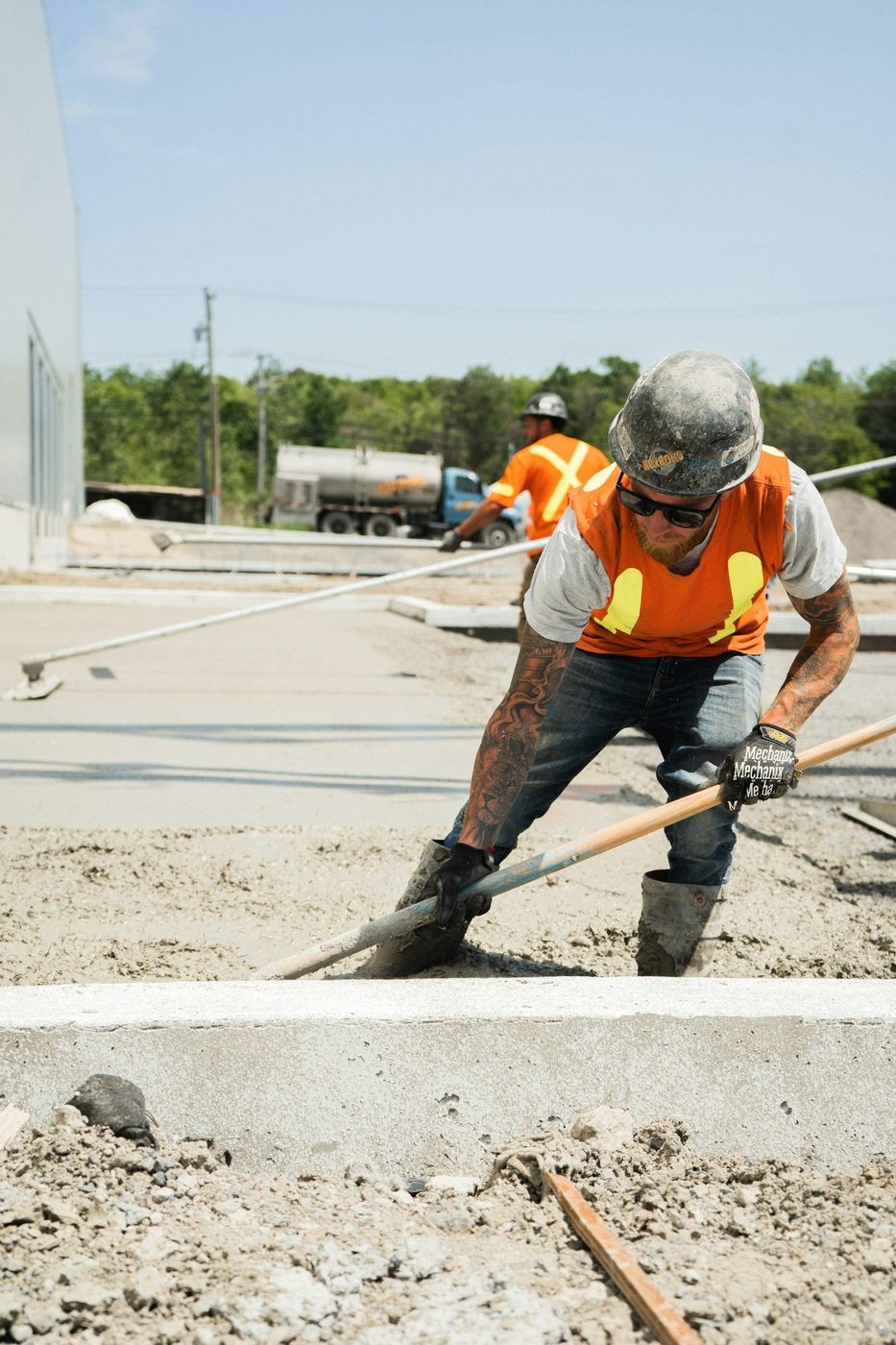
New surface, same slab, for the thousands of homes here that were built in the same decade.
This town went up in waves, and whole streets share a birthday. That means whole streets also share a wear curve. When the original flatwork in one Westridge cul-de-sac starts giving up its top layer, the neighbors are usually two summers behind, and we end up quoting four houses on the same block within a year. It is the single most predictable pattern in our business.
Resurfacing is what we recommend for a big share of those homes. If the slab underneath is still doing its job, we can put a fresh wear layer on top of it and reset the clock without a jackhammer, a dumpster, or a week of your driveway being a dirt pit. The trick is knowing which properties qualify. Not every tired slab does, and we say no often enough that it surprises people.
| The problem | Does resurfacing solve it | What we would do instead |
|---|---|---|
| Sand showing, finish worn off, chalky | Yes. Exactly what it is for | Nothing else needed |
| Scaling and light flaking on the top layer | Yes, once the loose material is removed | Nothing else needed |
| Discoloration, stains, mismatched patches | Yes, and you pick a color while we are at it | Nothing else needed |
| A panel that has dropped and made a trip edge | No | Foam lifting or mudjacking first, then resurface if you want |
| A crack that moves and keeps opening | No | Find out why. Usually the base or the drainage |
| Crumbling edges, corners breaking off | Partly | Rebuild the edge, then judge the field |
| A slab pitched back toward the house | No | Remove and repour at the correct fall |
The original-owner home is the classic case. Somebody bought new, raised a family, kept the place up, and now the driveway and front walk are the last thing that looks its age. The concrete is thick enough, the base was fine, the joints held. What died is the finished surface. Those jobs go beautifully and the homeowner gets a driveway that reads as new from the sidewalk.
Then there's the home about to go on the market. Sellers call us in Eastridge and Southridge because a rough entry walk is the first thing every buyer steps on, and it colors the whole showing. Resurfacing turns that around in two days on a schedule that fits between a listing appointment and photos.
Rentals and second properties are a third group, where the calculus is simply about buying more years for less money. And the one nobody expects: newer houses out in BackCountry and The Hearth whose builder flatwork was finished thin and started shedding early. Age is not really the variable. Whoever finished the surface is.
We look, we test the surface, and we tell you if it is a candidate. No charge and no pitch. Call (303) 569-4046.
Three things do most of the damage here, and they gang up. Deicing chemicals soak into the top layer and expand when the temperature drops overnight, popping small flakes loose a few at a time. Magnesium chloride is the worst offender and it's on every road in the county by December. Second is the count of freeze cycles: a sunny February day thaws a slab by noon and refreezes it by six, over and over. Third is sun, harder on sealer than people think.
A slab finished properly and kept clear of chemicals shrugs all of that off for decades. One that got troweled a shade too wet, or scaled its first winter and got ignored, sheds its wear layer early and then sheds faster every year, because each flake opens more room for water.
Timing matters for the repair too. These materials bond and cure best in mild weather, so the season runs May into early October with September the pick. We watch afternoon storms all summer and keep the calendar flexible, since a fresh surface caught in a downpour is a redo. Cold months stay indoors.
Half the time the homeowner has already gotten a tear-out quote and is bracing for the number. We walk the slab, sound it out, look at the joints, and tell them the concrete is fine and only the top of it quit. That's a good day. The other half we tell them the truth about the base, and that one is harder.The crew lead's read on it
Still unsure about something?
Call the crew at (303) 569-4046 and we will talk it through.

Get a free, no-obligation estimate from a crew that knows Colorado soil, Colorado weather, and how to finish concrete that lasts.
Accessibility
Adjust the site to fit how you read and browse. Your choices are saved on this device.