
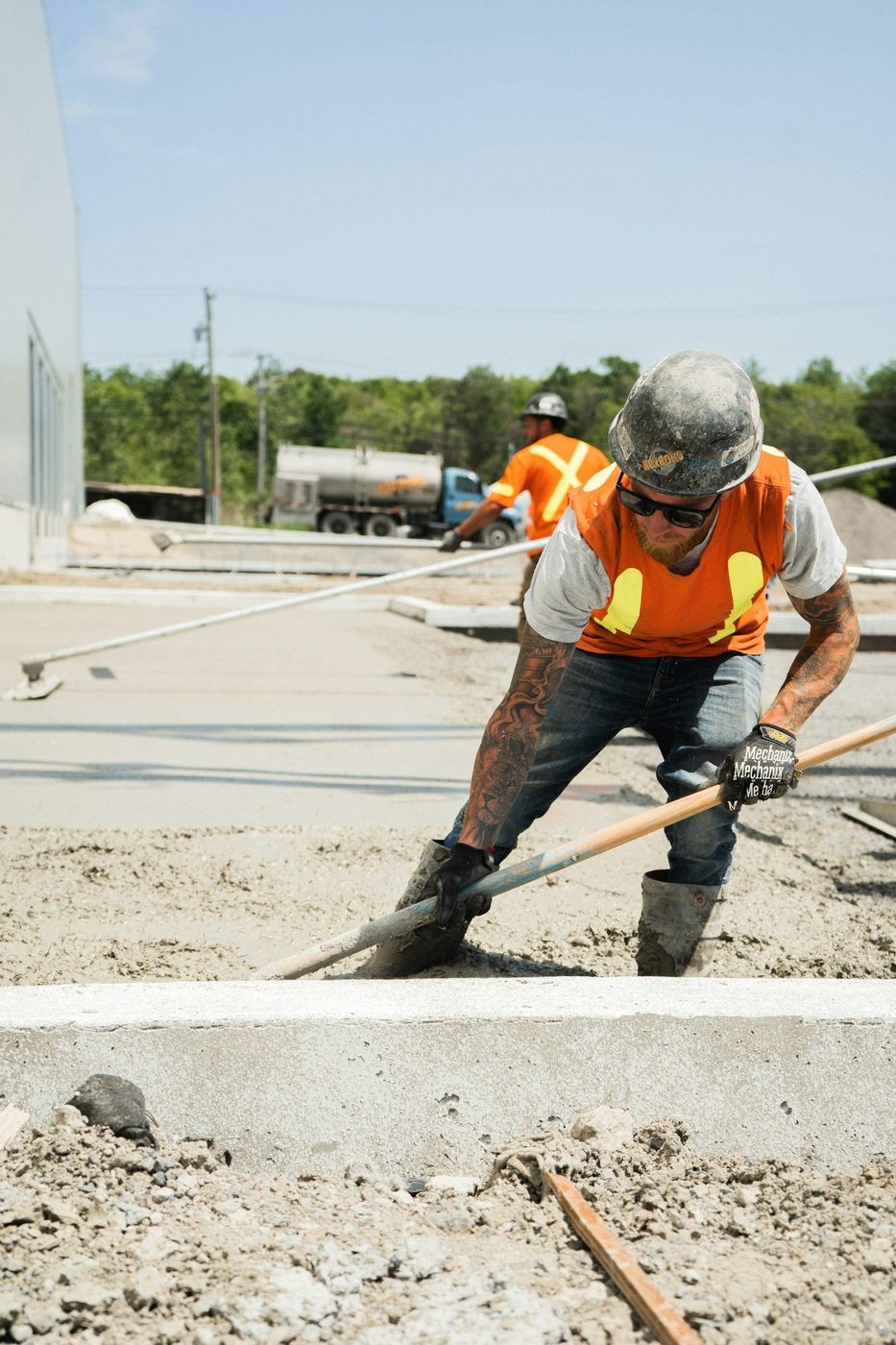
An Old Town lot and a Registry Ridge lot ask completely different questions of a pool crew, and the shell is the last thing either one decides.
The first thing we look at on a pool job isn't the design. It's the property. A concrete shell is a structure that has to be excavated, reinforced, shot or cast, and cured, and every one of those steps happens inside whatever room your lot is willing to give up. Fort Collins hands us wildly different lots depending on where you are in town, and that difference drives more of the build than the shape you picked off a rendering.
Older properties around Old Town come with mature trees, narrow side yards, alleys instead of driveways, and utilities that were placed before anyone drew a plan you could look up. Newer builds in Rigden Farm and The Landing give us clean access and known utility locations, but tighter setbacks, less yard, and an HOA that wants to see the plan. Larger lots out toward Fossil Creek and Registry Ridge trade all of that for real room to work. Same pool, three very different jobs.
Excavation makes spoil, and spoil has to go somewhere. A residential pool hole produces a serious volume of dirt, and on a lot with a single narrow gate that means haul-off by the truckload, which is a real line on the estimate. On an open lot we can often regrade some of it on site and the whole equation changes.
Access decides equipment. If a machine can reach the hole, the dig is straightforward. If it can't, somebody is either removing fence sections or bringing in smaller equipment and taking longer. Shotcrete helps here, because the pump line reaches places a concrete truck's chute will never see. That's part of why we spray shells instead of forming them.
Then the invisible stuff. Where the sewer lateral runs, where the gas comes in, what the water table does in a wet spring, and what the soil is like eight feet down. Our structural engineer is in-house, so what comes back from the dig goes straight into the steel schedule instead of into a two-week wait on an outside consultant.
| Property type | What the lot allows | What it costs you in the build |
|---|---|---|
| Older in-town lot, alley access | A machine can often work from the alley instead of the yard | Mature trees and shallow utilities of unknown vintage set the dig limits |
| Older lot, no alley, narrow side yard | Small equipment only, sometimes hand work | Longer dig, more haul-off trips, fence sections out and back |
| Newer subdivision home | Clean access, documented utilities, level starting grade | Tight setbacks and HOA review shape the footprint before we do |
| Larger lot with open ground | Full-size equipment and room to stage steel and material | Longer runs for plumbing and power to the equipment pad |
| Lot with a high spring water table | Buildable, with the right design | Hydrostatic relief details that add cost and cannot be skipped |
Both put structural concrete in the ground and both work. They just fit different situations. Shotcrete is placed pneumatically against the excavated earth and the steel cage, so the dirt itself acts as the outside form. That means no formwork to build and strip, compound curves and free shapes are easy, and the whole shell goes in during a single shoot day. For a residential pool on a Colorado lot, it's what we reach for nearly every time.
Cast-in-place has its place on simple rectangles, on jobs where a shotcrete crew and pump can't reach the hole, or where a design calls for architectural wall faces that want to be formed. You get very predictable surfaces. You also get forms on both faces, more time in the hole, and cold joints in places a sprayed shell wouldn't have them.
Whichever way it goes in, the steel is engineered rather than assumed, the shell is cured with water for days rather than left to dry in the wind, and the backfill around it gets placed and compacted properly. That ring of disturbed soil is what your deck later has to bridge, and dumping it back loose is how a two-year-old deck ends up cracked at the coping.
We'll walk your lot, talk access and soil, and tell you what the site actually supports before you pay anyone for a design.
Still unsure about something?
Call the crew at (303) 569-4046 and we will talk it through.
Get a free, no-obligation estimate from a crew that knows Colorado soil, Colorado weather, and how to finish concrete that lasts.
Accessibility
Adjust the site to fit how you read and browse. Your choices are saved on this device.