
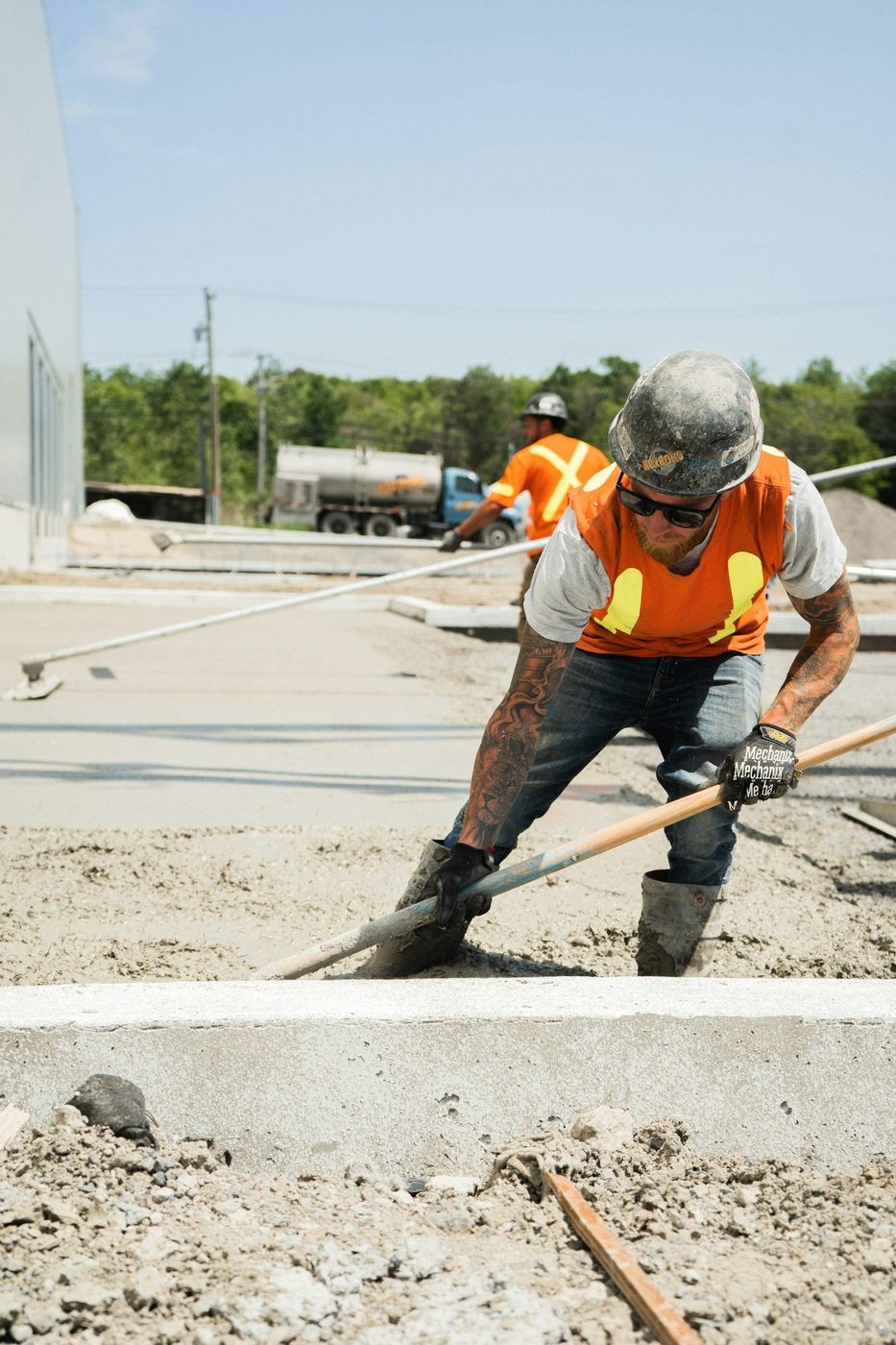
Five kinds of property in this town, and not one of them wants the same tool in the last hour of the pour.
You can date a lot of the concrete in this town just by looking at it. Flatwork around Old Town runs narrow, hand-worked, edged by somebody who cared, finished with whatever texture the crew favored that year. A surprising amount is still doing its job. Out in the newer subdivisions the concrete gets wider, flatter, more uniform, finished with a light broom because that's what production building asks for. Neither is wrong. They answer different questions.
Finishing is the last hour of a pour and it's the only part anybody sees or feels for the next thirty years. Doing it well starts with the property rather than a catalog page: what's already down, what the house looks like, who walks across it, and what happens to it in February.
Around Old Town the walks run narrow, with hand-tooled joints and a soft radius on the edges, and plenty carry a swirl or fan texture from years when that was simply how it was done. Adding onto work like that, texture is the least of it. What your eye registers is width, joint rhythm, and edge, so those get matched first and the broom pattern second.
Neighborhoods that filled in later tell a different story. Wide broom-finished drives, sawed joints, aprons patched more than once by whoever was cheapest that spring. That concrete is sound where the base was built right and shot where it wasn't, and the finish had almost nothing to do with which way it went.
Then the newer stock. Rigden Farm, Registry Ridge, The Landing: light consistent broom, tight panel layouts, and neighbors close enough that a drive two shades off from the street stands out. Around Fossil Creek the lots get bigger and the question changes again, since a long drive and a big patio mean somebody is clearing all of it in January. Along the Harmony corridor the commercial walks want a heavier broom, pulled one direction so the approach reads as a single surface.
Half the time somebody asks us for a fancy finish, what's really bothering them is the layout. Fix the joint spacing and clean up the edges and a plain broom finish suddenly looks like money well spent.From the crew lead on these jobs
| Property type | What's usually already there | What we'd put next to it |
|---|---|---|
| Old Town original flatwork | Narrow hand-worked walks, tooled joints, swirl or fan texture | Match width and joint rhythm first. Medium broom reads right; hard trowel doesn't |
| Postwar ranch stock | Wide broom drives, sawed joints, an apron patched a few times | Medium broom on the drive, finer on the walk, washed stone for a step up |
| Newer subdivision lots | Light uniform broom, tight panels, an association that reviews changes | Light broom to match the street, with a scored border where you want separation |
| Large lots and long drives | More square footage than anybody wants to clear in January | Heavier broom on the slope, lighter in the flats, drainage settled before texture |
| Commercial entries and walks | Whatever the last round of tenant work left behind | Heavy broom across the whole traffic path, all pulled the same direction |
Send a close photo with something for scale and we'll name it. (303) 569-4046.
After the concrete is placed and screeded, water rises to the top. That bleed water has to come up and leave before anybody touches the surface, because working a slab while water is still moving seals it in and you get a weak skin that blisters or peels a year later. That's the whole discipline of finishing. Wait, watch, wait some more.
Our air makes that harder than it sounds. At five thousand feet with low humidity and a breeze, the surface dries faster than the bleed water rises, so the top looks ready while the slab underneath is still working. A crew trusting its eyes instead of its hands starts too early. We use evaporation retarders on windy days and work the slab in the order the sun hits it, since the west end runs a good twenty minutes behind the east.
We pour flatwork from April into October and get particular at both ends. Cold stretches the set until a crew is troweling by headlamp; hot afternoons shrink the window to nothing, so summer pours start early. Late in the year it's heated water, a non-chloride accelerator, and blankets, and we never place on frozen ground. Then keep chloride deicers off it the first winter. Sand works and doesn't eat the surface you just bought.
Still unsure about something?
Call the crew at (303) 569-4046 and we will talk it through.
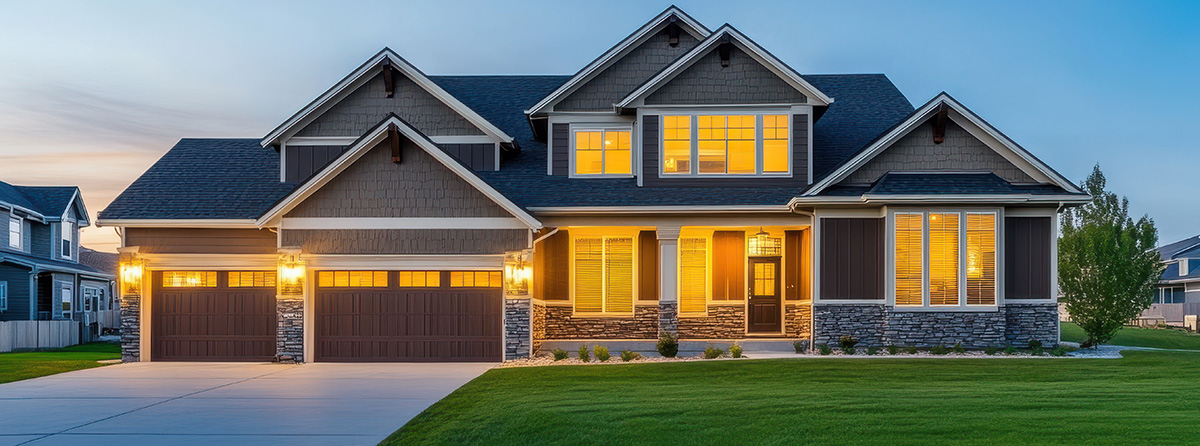
Get a free, no-obligation estimate from a crew that knows Colorado soil, Colorado weather, and how to finish concrete that lasts.
Accessibility
Adjust the site to fit how you read and browse. Your choices are saved on this device.