
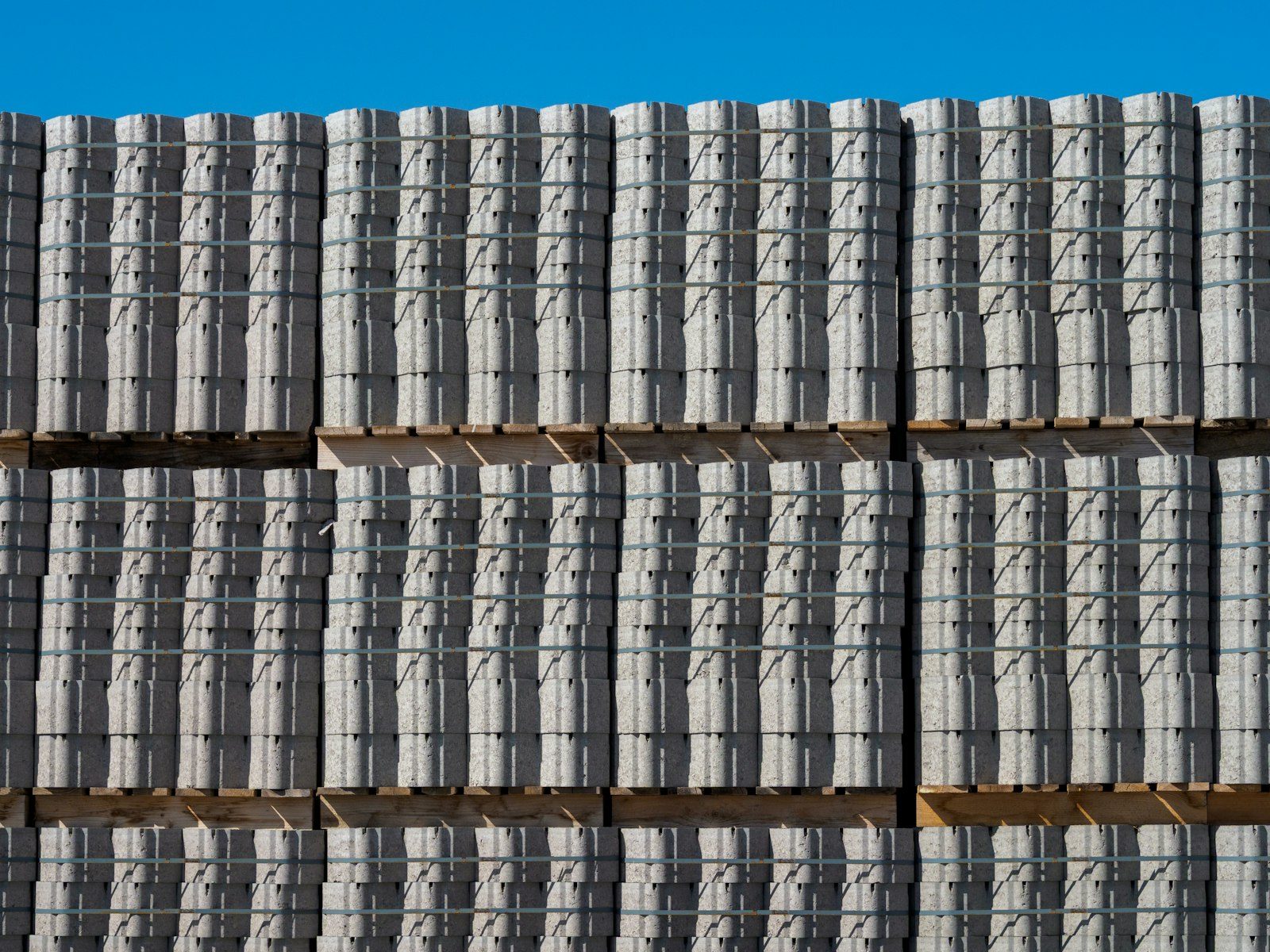
Saw lines in the morning, graded ground by afternoon, and the alley left the way we found it.
Demo day is loud, dusty, and finished sooner than most people expect. The crew rolls in early, a saw draws the cut lines, a breaker turns your old slab into pieces a machine can pick up, and a trailer hauls it out. Come home from work and there's graded dirt where forty years of concrete used to be.
What isn't obvious from the street is how much of the day was decided before anybody pulled a trigger on a hammer. Breaking concrete is the easy part. On a Denver lot the real questions are how the machine gets to the slab, where the loaded trailer sits, and what the ground under there is going to look like once it's exposed.
We walk the scope with you before anything gets loud. Where the cut line falls, which panels stay, what's getting protected. Sprinkler heads get flagged. Private lines get marked, and by private we mean the ones no locate service will find: low-voltage lighting, a gas run out to a grill, the dog fence somebody buried in 2011.
Then we set the route. Plywood or mats go down wherever a machine crosses grass, and the fence line gets padded if the gate is tight. On alley-loaded lots we stage so a neighbor can still get to their garage, because nobody wants to be the house that blocked the alley for a day. Once the route is set, the saw comes out.
| When | What's happening | What you'll notice |
|---|---|---|
| First hour | Scope walked, lines marked, protection laid along the machine route | Quiet. Chalk, marking paint, and plywood. |
| Mid morning | Wet saw cuts the perimeter, following existing joints wherever it can | The loudest wet stretch. Slurry water gets contained and rinsed away. |
| Late morning | Breaker and machine reduce the slab to liftable pieces | Ground vibration you can feel indoors. This is the part that rattles picture frames. |
| Midday | Pieces loaded out, rebar cut free and separated for metal recycling | Steady in and out along the alley. |
| Early afternoon | Subgrade scraped, roots and dead base pulled, soft spots found | The first honest look at what was hiding under there. |
| End of day | Grade set, gates closed, alley and street blown clean | Bare compacted ground, no rubble pile, no dust film on the car. |
We'll break out and haul the old slab whether or not we're the ones pouring the new one. One crew, one less contractor to chase.
Access decides the price more than square footage does. A drive we can attack from the street with a full-size machine is a different animal than a back patio behind a Wash Park bungalow where the only path is a thirty-six inch gate. Narrow means smaller equipment, more passes, and sometimes hand demolition with a breaker and a wheelbarrow. It's slower. We price it honestly instead of discovering it on day one.
Older blocks in Cherry Creek, Park Hill, and University Hills give us the most of these. Central Park is friendlier, with alleys built for garages and modern setbacks. The teardown pockets around Berkeley and Sloan's Lake add a wrinkle of their own, because there's often a build going on two doors down and the alley already has somebody else's dumpster in it. We coordinate rather than complain.
You never really know what's under a slab until it's off. We've pulled up patios and found a second patio underneath, brick pavers, cinder block, a stump somebody poured around. That's why we look at the subgrade with the customer before we call the day done.Straight from the crew
Still unsure about something?
Call the crew at (303) 569-4046 and we will talk it through.
Get a free, no-obligation estimate from a crew that knows Colorado soil, Colorado weather, and how to finish concrete that lasts.
Accessibility
Adjust the site to fit how you read and browse. Your choices are saved on this device.