
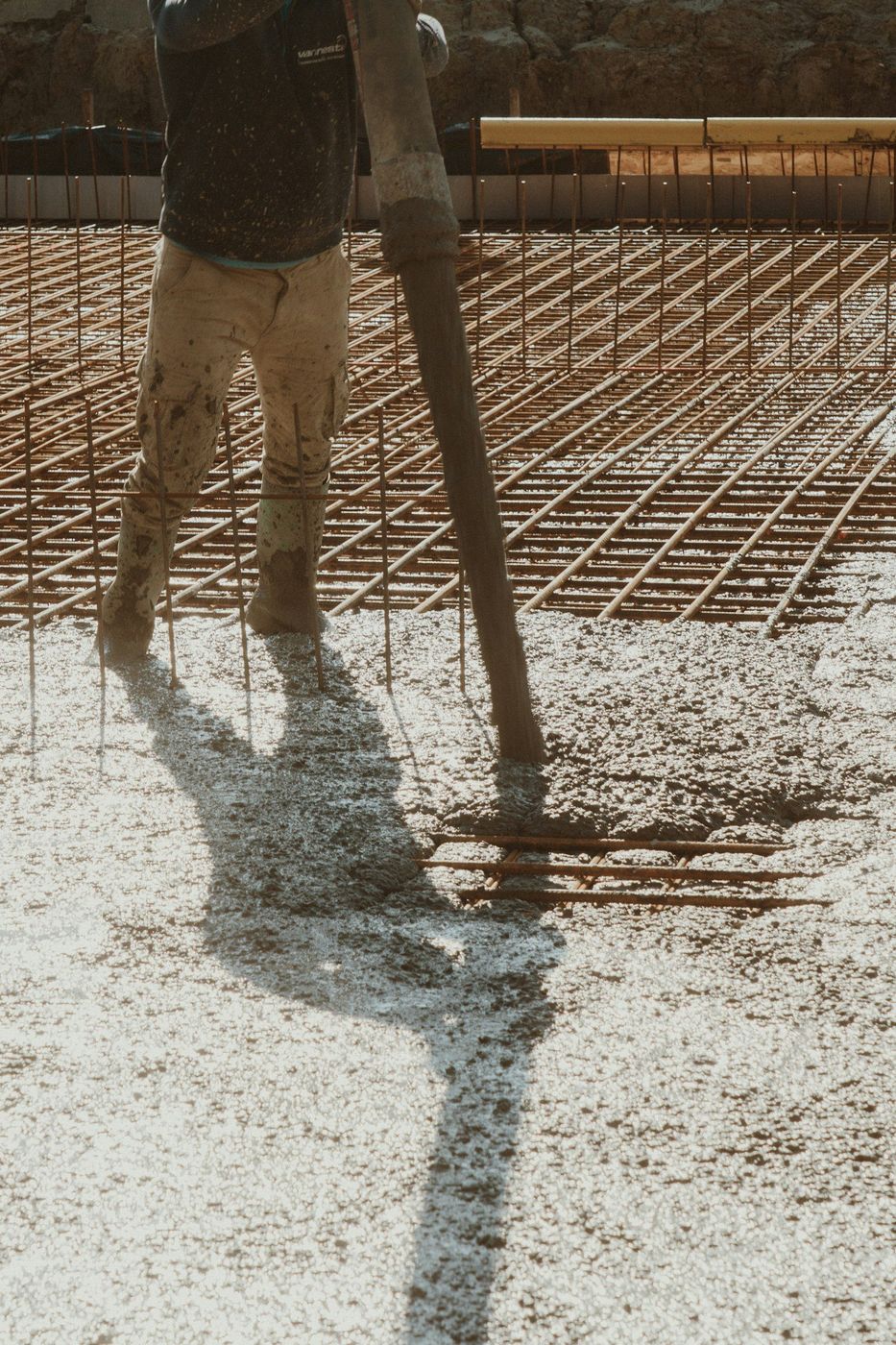
Where the spa sits matters as much as how thick the slab is, and picking the spot costs nothing today.
Most spa calls open with a question about thickness. Ours opens with one that costs nothing to answer and plenty to get wrong: where is this thing going to live for the next fifteen years? Off the back door, at the far corner of the yard, tucked against the patio, under a cover. Each of those is a different slab, a different conduit run, and a very different walk in February with wet feet.
Once the location is settled the concrete part is straightforward, and it should be. Six inches, steel on chairs, a base that was compacted rather than raked smooth, and a finished plane flat enough that a filled cabinet doesn't need shims under one corner. Backyards across Homestead, Southglenn, and Willow Creek are getting spas dropped into them every spring, and the pads that fail were almost never failures of concrete. They were decisions made in a hurry.
Walk out the door you'll actually use in January and count the steps. That number predicts whether a spa gets used in winter, which is when a spa is worth owning. Twelve feet of shoveled path in a robe is fine. Forty feet across an unlit lawn is a tub you'll use in October and abandon by New Year's.
Then think about wind and sightlines. An open corner of the yard catches every gust, and a cover that lifts in the wind is a cover that gets damaged. A fence, a wall, or the house on the windward side buys real comfort. Privacy is cheap to design in now and expensive to add later.
Last, look at where the water goes. Everything around a spa gets wet: drips, splash over the side, and a full drain-down three or four times a year. The ground below the pad has to want that water, and the pad has to send it away from the house rather than toward it.
| Where it goes | What you gain | What the build has to answer |
|---|---|---|
| Right off the back door | Short winter walk and a lit path you already have | Drainage aimed away from the foundation, and a slab isolated from the house |
| At the corner of the existing patio | Feels like part of the living space | A thickened, reinforced section, not four inches of patio slab |
| Freestanding out in the yard | Privacy, views, no pump noise at bedroom walls | Longer conduit run, a real path, undisturbed ground |
| Under a pergola or roof cover | Snow stays off the lid and off you | Post footings poured with the pad, clearance for the cover to open |
| On an existing deck | No new concrete | A structural review. Most decks were never framed for this. |
Tell us the date and the model. We'll work backward and tell you the last day the pour can happen.
A patio slab spreads a lot of small loads over a big area. A spa does the opposite. Several hundred gallons of water, the cabinet, and everybody in it all press down through the frame at the perimeter, and much of that lands on the corners. That's a point load, sitting in one place, permanently. Four inches of unreinforced concrete over ordinary patio base will carry it right up until the ground under one corner gets wet and gives.
So we go six inches with a tied bar grid, poured over compacted aggregate base rather than whatever the yard offered. We run the pad past the cabinet footprint on all sides, both to keep the edge load off the corner of the slab and to give you a place to stand that isn't grass turning into mud.
Flat matters as much as thick. A spa shell is engineered to be fully supported, and a tub on a slab that dishes or tilts carries stress it was never designed for. Doors stop closing right and cabinets rack. We check the plane with a straightedge before anybody leaves.
Electrical is the item that trips up schedules. A spa on a dedicated circuit needs conduit routed to the equipment side of the tub, and the moment to place that sleeve is before concrete arrives, not after. Coring a finished pad is possible and it's a waste of your money. We coordinate with your electrician on the stub location, sleeve it, and mark it clearly so nobody has to hunt for it later.
For season, April through October is the comfortable window here at 5,833 feet, with late spring and early fall the sweet spot. Cold-weather pours are doable when a delivery date won't move: warm water in the mix, an accelerator with no chloride in it, blankets over the slab, and never any concrete onto frozen ground. That costs a bit more and takes longer to reach strength, which is why we ask about your delivery date on the first call. Give a new pad seven days before a filled tub goes on it, and don't put deicers anywhere near it that first winter.
Still unsure about something?
Call the crew at (303) 569-4046 and we will talk it through.
Get a free, no-obligation estimate from a crew that knows Colorado soil, Colorado weather, and how to finish concrete that lasts.
Accessibility
Adjust the site to fit how you read and browse. Your choices are saved on this device.