
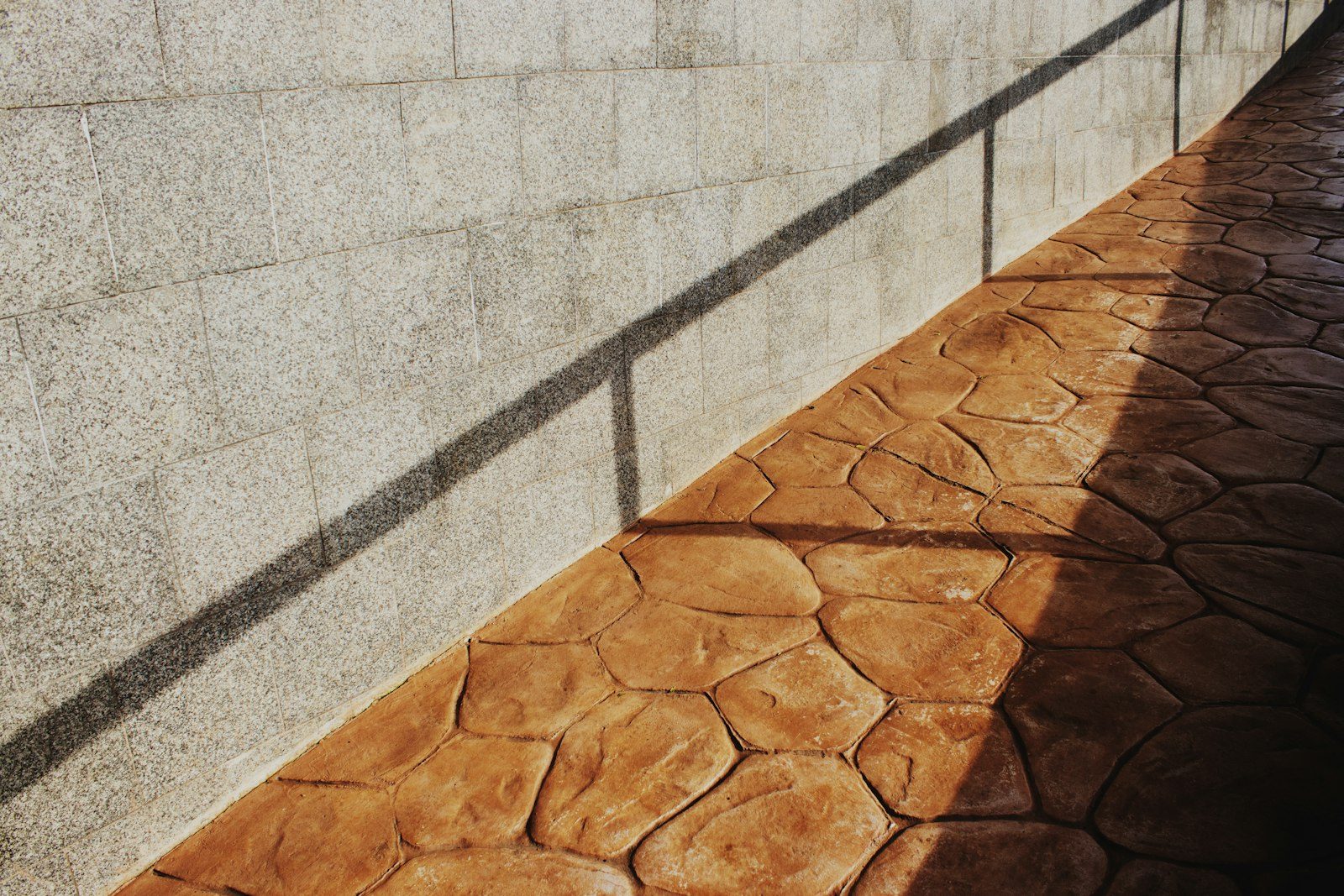
Before a board asks what the concrete costs, it has to answer a harder question: which of it belongs to the association.
The first thing we ask a board is not where the bad concrete is. Somebody always knows that already, usually because a resident has been emailing about it since March. The harder question is which of that concrete the association actually owns, and that gets answered by your governing documents and your jurisdiction, not by whoever is standing on the sidewalk pointing at it.
It matters because two communities a mile apart in Centennial can carry completely different obligations. One association is responsible for a few thousand feet of common walk and the pool deck. Another owns every drive, apron, and stoop up to the front door. Those are two different programs, two reserve pictures, and two conversations with residents. We build bulk programs for both, across the communities around Walnut Hills, Willow Creek, Foxridge, Homestead, Piney Creek, and Southglenn.
A survey walk takes a day or two depending on how much ground there is, and it produces something a board can use: every defect photographed, located on a map, sorted by what it is and what it takes to correct. Trip hazards get measured, not eyeballed, because the difference between a quarter inch and an inch is the difference between grinding and replacement.
What comes back is rarely spread evenly. Damage clusters, and the clusters have causes. A run of walk below a downspout. Panels where a tree was planted a few feet too close decades ago. Curb chewed along a cul-de-sac where the plow turns the same way every storm. The pool deck, taking chemical exposure, bare feet, and freeze cycles all at once.
Communities here were not built to one standard or in one year, so we read the concrete itself too. Joint spacing, panel width, whether there is steel in it and where, how the walk ties into the curb. Two associations can start from very different conditions, and pricing a program without knowing which one you have is how boards end up with a number that changes halfway through.
| Community type | Concrete the association typically carries | Where the program usually starts |
|---|---|---|
| Single-family with common areas only | Trail connections, amenity walks, entry monuments, pool deck | Amenity access and any ramp that no longer measures |
| Townhome or patio home | Private drives, aprons, unit walks, and stoops | Drive aisles and aprons, since a failure there blocks a resident's car |
| Condo court | Shared entry walks, landings, stairs, and trash areas | Stairs and landings first. That is where the injury risk sits. |
| Community with a large amenity center | Pool deck, clubhouse walks, court slabs, parking | Pool deck surface and the accessible route into the building |
| Anything with walks along a public street | Depends entirely on your documents and your jurisdiction | Confirm responsibility in writing before a single panel is priced |
We will survey the community, map every defect, and give your board unit pricing it can drop straight into the budget conversation.
A community job site has residents in it, which changes everything about how the work gets sequenced. People need their cars, their mail, their trash service, and their front door. So we take small bites: a handful of homes at a time, with the sequence published far enough ahead that management can answer questions without calling us. Walkboards where somebody has to reach a door. Hard barricades, since tape does not stop a delivery driver or a curious kid.
Season sets the shape of the whole program. Just under six thousand feet, we run community work from about mid-April into October, and we front-load the exposed items like curb and ramps so they have real age before their first winter of plows and deicer. A program that starts too late in the fall gets split, and we would rather split it on purpose than rush the last phase and hand a community scaled surfaces in March.
The last thing every board should plan for is the first winter. New concrete needs sand, not chloride, and magnesium chloride does more damage to a young slab in one season than years of ordinary freezing. One memo to residents, one conversation with the snow contractor, and a marked map of the new areas. That is the cheapest maintenance in the entire program.
Still unsure about something?
Call the crew at (303) 569-4046 and we will talk it through.
Get a free, no-obligation estimate from a crew that knows Colorado soil, Colorado weather, and how to finish concrete that lasts.
Accessibility
Adjust the site to fit how you read and browse. Your choices are saved on this device.