
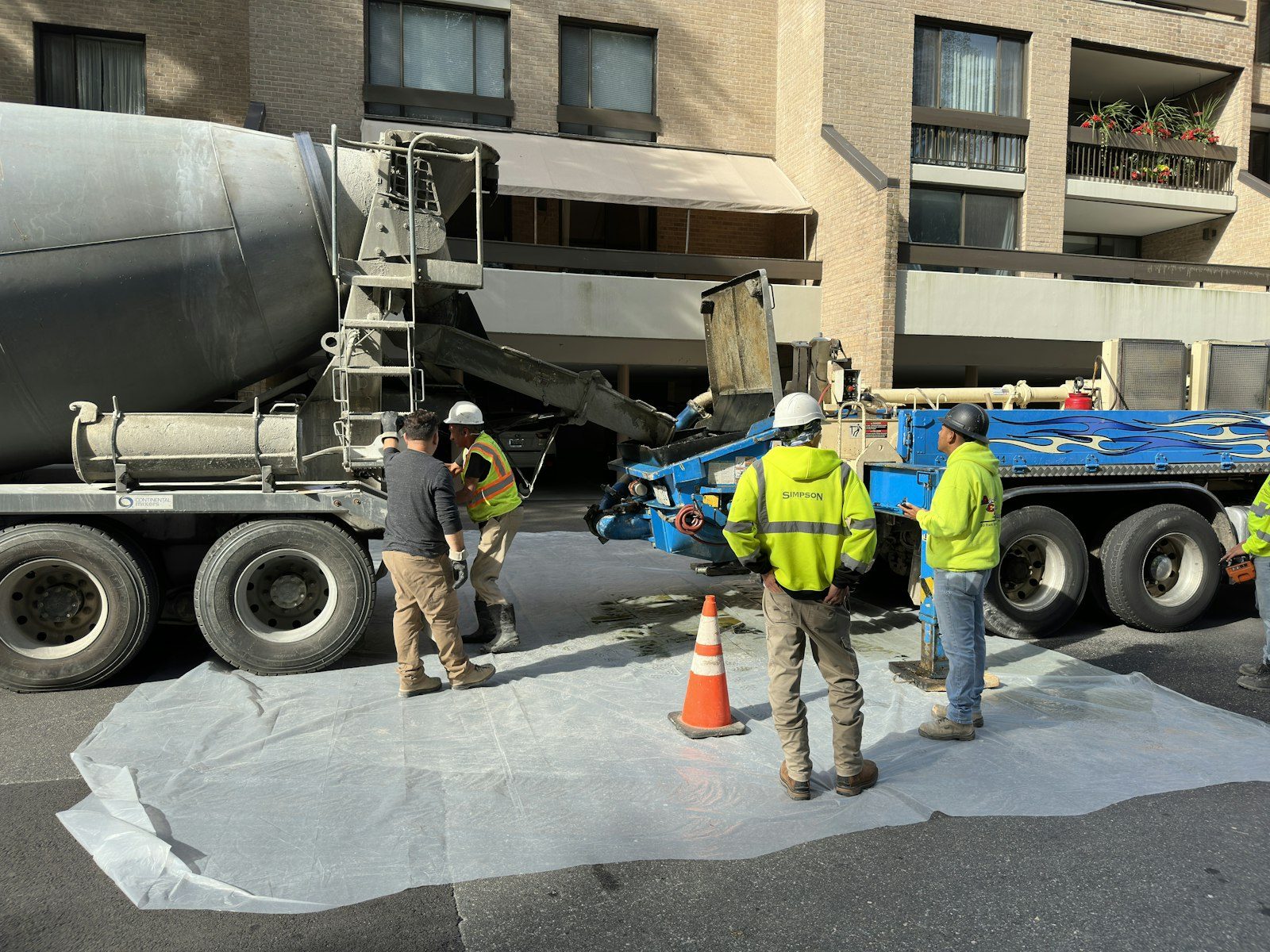
The concrete is the cheap part. What costs money is how many times somebody has to drive out here.
These calls arrive with a deadline stapled to them. The condenser quit during a hot week, the replacement is on order, the HVAC crew is booked Thursday, and somebody mentioned the old pad has tipped and won't do. Now three trades need the same eight feet of side yard in one week, and concrete is the piece with a waiting period built in.
That's the actual cost driver here, and it has nothing to do with how many yards go in the ground. Sequence and trip count set the number. So here's what moves the price, what's worth buying, and how to keep a small pour from becoming three visits.
Getting a crew, tools, forms, base, and a small load of concrete into your side yard costs about the same whether the pad is three feet square or six. That's the arithmetic of small pours, and it's why a third visit hurts more than extra square footage ever will.
So we put real effort into the calendar. Old unit out and the new one not landed yet? We form and pour in a morning and leave. Electrician runs conduit before we form? It gets cast in properly instead of drilled later. And if you've been considering a generator, a hot tub, or a second condenser, say so now, because two pads on one visit costs far less than two visits a year apart. Around Homestead and Willow Creek, the people who bundle come out ahead.
| How it gets sequenced | What happens on the schedule | What happens to the price |
|---|---|---|
| Old unit gone, new one not yet delivered | One mobilization. Form, pour, finish, clean up, leave | Best case, and what we quote whenever we're allowed to |
| Demolition and pour on separate visits | Two setups, disposal handled apart from the placement | A full extra mobilization for a couple of yards of work |
| Conduit not run yet on pour day | We block out and return, or somebody drills later | Either a return trip or a hole cut through new concrete |
| Several pads on the property, poured together | One truck, one setup, one cleanup | The cheapest concrete per pad we sell |
| Unit delivered early and sitting in the way | Work around it, then rig and set it after cure | Rigging cost, plus a schedule answering to somebody else |
| Access is a thirty inch gate | Wheelbarrows and buggies instead of a chute | Labor hours replace material cost, and the day runs longer |
Spend it below the pad. These almost never fail because concrete was weak. They fail because the ground settled, tipped the unit, and bent a refrigerant line that costs more to fix than the pad did. So we dig out the soft material, bring in road base, compact it in lifts, and get the pad bearing on something that behaves.
Spend on thickness matched to the equipment, steel where the load justifies it, slope that sends water away from the house, and a top that's genuinely flat. Level tolerance isn't a luxury on mechanical gear; compressors and generators have opinions about it. What we wouldn't buy: a decorative finish nobody sees, square footage past the service clearances, or heavy steel under a condenser lighter than a piano.
Call (303) 569-4046 with the model number and the date. We'll tell you honestly whether we can hit it, and what it takes.
Air conditioning is an emergency business in July and a planned one in April. Generators run opposite; those get bought in fall after a weekend without power. Either way, the cheapest pads are poured on a normal week with no truck waiting on them.
Cold weather doesn't stop us. Small pours come up to temperature quickly with heated water, an accelerator, and a blanket, and a January pad is ready for a March install with room to spare. Frozen ground is the real limit, since we won't place on it. And keep deicer off entirely the first winter. Shovel around it and let sand do the traction work.
Still unsure about something?
Call the crew at (303) 569-4046 and we will talk it through.

Get a free, no-obligation estimate from a crew that knows Colorado soil, Colorado weather, and how to finish concrete that lasts.
Accessibility
Adjust the site to fit how you read and browse. Your choices are saved on this device.