
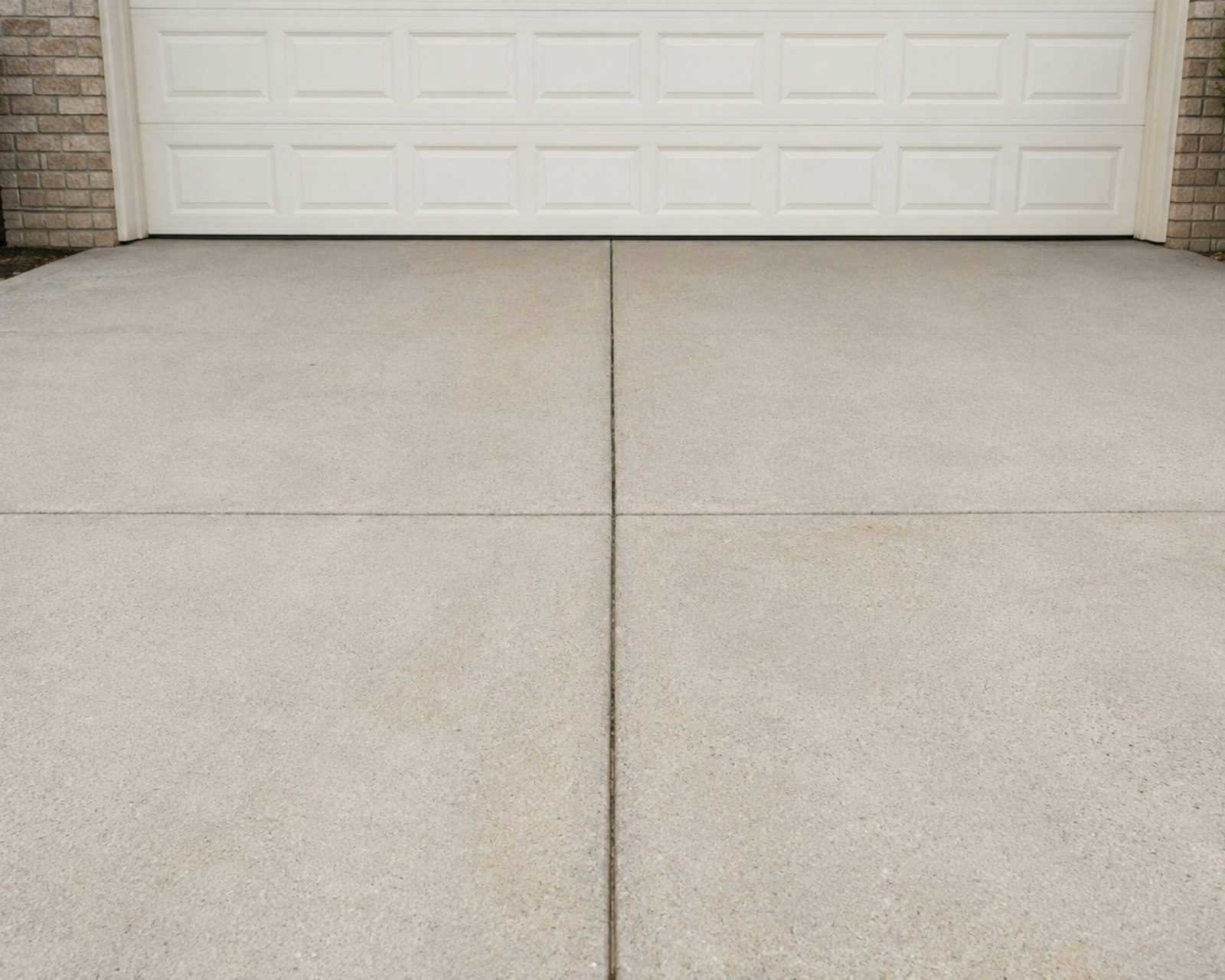
A warm Saturday in February is the most dangerous day of the year for a can of sealer.
A warm Saturday in February is the most dangerous day of the year for a can of sealer. Sun's out, the driveway feels dry underfoot, there's product left in the garage from a fall project, and the whole thing looks like a free afternoon. Two weeks later a white haze has spread across half the surface and nobody can work out why.
Concrete doesn't dry out in February. It thaws. The top inch feels dry at two in the afternoon while the rest of the slab is still holding a month of snowmelt, and the temperature is going back below freezing by nine that night. Sealer applied in that window traps moisture, then the freeze drives it up through a film that never finished curing. We take those calls every March, and the fix is always more work than the original job would have been.
Every sealer has a temperature window, and it has nothing to do with how the afternoon feels on your face. It's the surface temperature of the concrete, plus what the thermometer does overnight while the product is still forming a film. Most exterior sealers want the slab up in the fifties and want it to stay there a day or more afterward. A February thaw hands you three hours of that and then takes it back.
Moisture is the other half. A slab that sat under snow all winter is saturated well below the surface, and water leaves concrete far slower than anybody expects. Coat it and that water is now under a film with nowhere to go, which is exactly what turns a sealer cloudy. With a penetrating product the failure is quieter: it can't get into pores that are already full, so you spent an afternoon accomplishing nothing.
We say the same thing every winter. Your driveway is not asking to be sealed in February. It's asking you to remember it in September.From the crew lead on these jobs
| Surface | What we put on it | How often | What shortens its life |
|---|---|---|---|
| Broom-finished driveway | Penetrating, breathable, invisible once dry | Several years between coats | Deicers, plow blades, sun on the unshaded half |
| Garage floor | Penetrating, sometimes over a densifier | Several years, watching where the vehicle drips | Chloride slush melting off the car all winter |
| Stamped or colored patio | Film-forming with ultraviolet protection and grit in the final coat | Every two to three years | South exposure, and furniture feet without pads under them |
| Exposed aggregate walk | Film-forming, applied thin so it never pools | Every two to three years | Heavy application, which leaves a glossy mess in the low spots |
| Interior stained or polished floor | A maintenance coat, not an exterior sealer | When the sheen goes uneven in the traffic path | Grit tracked in from the garage, and acidic cleaners |
Late spring, once the slab has a stretch of dry weather behind it and the nights have quit freezing. Then early fall, which is the better of the two. September and the first part of October give you warm concrete, dry air, afternoons cool enough that a film levels instead of flashing off the roller, and a slab that has been drying since June.
New concrete runs on its own schedule. A curing compound goes on right away, while a film-forming sealer waits roughly a month as the slab releases moisture and finishes gaining strength. Either way, a first-winter slab gets sand and nothing else. High summer works if we start at daylight, though a hot slab sets a film before it can spread out, and those lap marks are permanent.
September and early October go quickly, and they're the best weeks we get all year. Free estimates. Call (303) 569-4046.
The reason we're strict about the fall window is what comes right after it. From November on, everything landing on your concrete works against the sealer: chloride slush dripping off vehicles, sand acting as an abrasive underfoot, the plow that clips a driveway edge out at the curb. A sealer in decent shape absorbs all of that and keeps water out of pores where it would otherwise freeze.
A worn sealer does none of it. Around the older properties in Southglenn and Willow Creek, most of the surface damage we get called to look at traces back to a sealer that quit two or three winters before anybody noticed. Pour a cup of water on your driveway in October. If it darkens the concrete instead of beading, you have your answer and about a month to act on it.
Still unsure about something?
Call the crew at (303) 569-4046 and we will talk it through.
Get a free, no-obligation estimate from a crew that knows Colorado soil, Colorado weather, and how to finish concrete that lasts.
Accessibility
Adjust the site to fit how you read and browse. Your choices are saved on this device.