
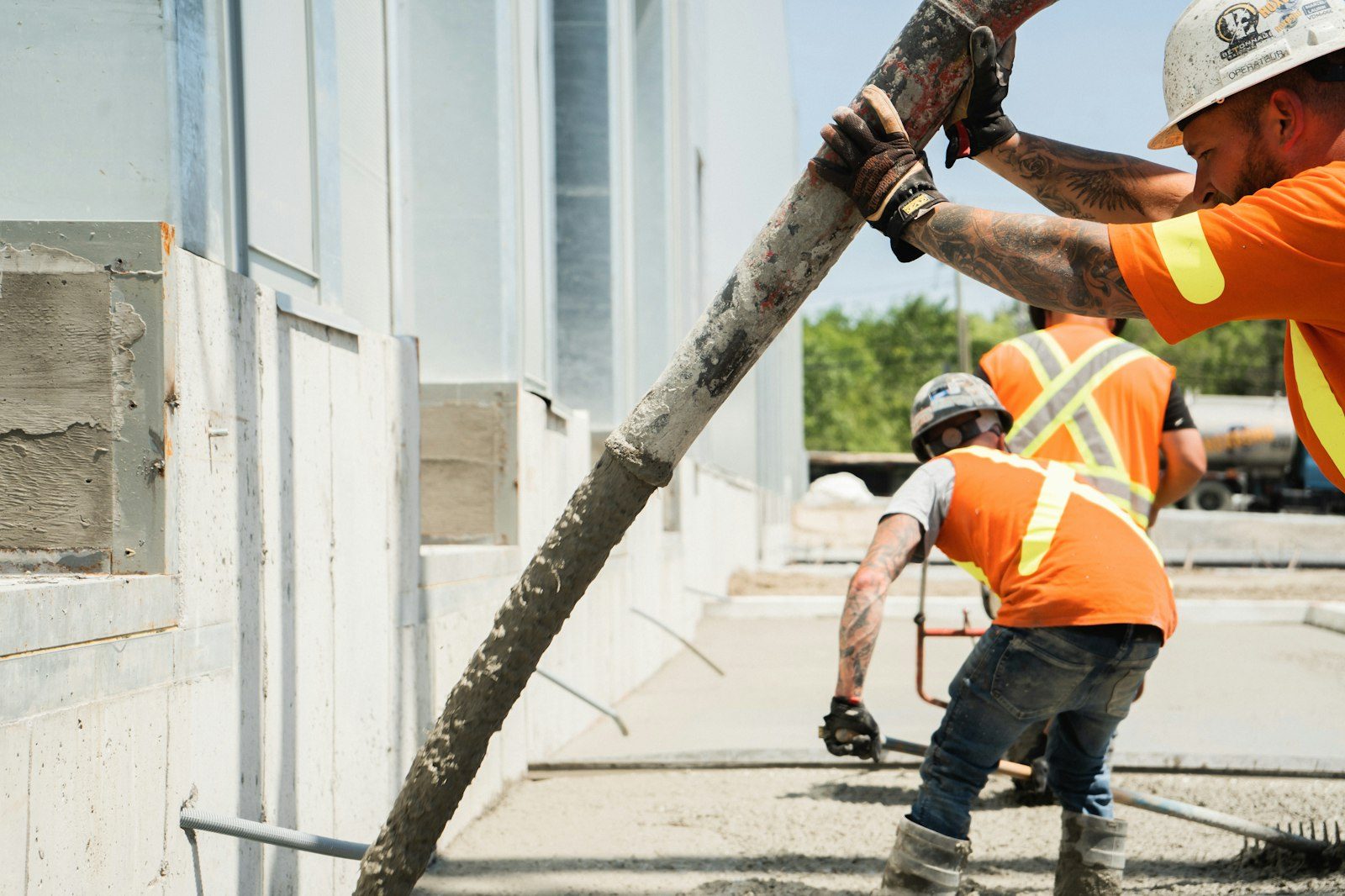
Even risers, solid treads, and a handrail anchored into something that will still be there in twenty years.
Steps force a decision that most concrete work doesn't. A cracked walk is a cracked walk. A set of front steps with crumbling nosings is either a two-hour patch, a resurfacing job, or a full demolition and rebuild, and the three cost wildly different amounts. Homeowners get three opinions and no way to referee them.
So here's how we make the call, out loud, so you can make it with us. It comes down to three questions in order: is the geometry legal, is the structure sound, and is the damage in the surface or all the way through. Answer those honestly and the right choice picks itself. Get one wrong and you either waste money patching something doomed or tear out a flight that had fifteen good years left.
Risers need to be consistent. Not close. Consistent. Your foot learns the height on the first step and expects it on every one after, and a quarter inch of variation is enough to catch a toe. Code caps how much they may differ across a flight for exactly that reason, and it bounds riser height and tread depth too.
Plenty of the older stoops we look at in Founders Village and Plum Creek predate anybody checking, and some were fine until a settling bottom step turned an even flight into an uneven one. If the geometry is already out of range, patching preserves a hazard in nicer clothing. That's a rebuild, and it's the one case where we won't argue for the cheaper option.
Sound the steps with a hammer. Solid concrete rings. Delaminated concrete answers with a dull thud, and that hollow spot is coming off eventually no matter what goes on top of it. We check the sides for cracks running the full section, look for a flight pulling away from the house, and shine a light underneath if there's a void.
Then we look at where the damage lives. Flaking nosings, pitted treads, a scaled surface: those are top-layer problems with top-layer answers. Cracks passing through a riser, steps rotating away from the structure, or a flight that has settled and dragged the walk with it are structural. No overlay fixes structural. It just hides it until spring.
| What we find | What we do | What it gets you |
|---|---|---|
| A chipped nosing or two, rest is solid | Partial-depth patch with a bonding agent | A few more years cheaply, if the steps stay sealed |
| Scaled or pitted surface, structure intact | Resurface the treads and risers with a bonded overlay | A uniform new surface without touching the core |
| Hollow spots when sounded, spreading delamination | Remove the loose material and rebuild those sections | Stops the spread. Color match is never perfect |
| Full-depth cracks or a flight pulling off the house | Demolition and a new pour with proper footing | The only real fix, and even riser heights throughout |
| Whole flight settled but still in one piece | Lift and stabilize, then evaluate the surface | Often the cheapest path back to level, when it applies |
We'll sound the steps, check the riser heights, and tell you which of the three jobs you're actually looking at.
Nosings go first, always. That front edge is thin, it sticks out where the wind hits it, and it takes the shovel every storm. When somebody tells me their steps are fine except the edges, I already know how the rest will sound under the hammer.What our crew lead tells homeowners
Steps are the one piece of concrete that has to keep working while it's being replaced, and that shapes the calendar more than weather does. We stage the job so there's a safe way in and out: a temporary ramp, one side of a split flight at a time, or routing you through the garage for a few days. Tell us early if somebody in the house can't manage a detour.
Season wise, the long window runs late April into October, and warm days with cool nights give the best finish on vertical faces. Patches and overlays are fussier than a flat pour, since bonding materials carry their own temperature ranges and a cold riser face won't take the repair. Winter rebuilds happen under tented enclosures when the situation demands it, though we'd rather do a temporary safety fix in January and build properly in April.
And keep the deicer off them. Steps get more salt than anything else on a property, because that's where people worry about slipping. Sand a fresh flight instead, at least the first winter.
Still unsure about something?
Call the crew at (303) 569-4046 and we will talk it through.

Get a free, no-obligation estimate from a crew that knows Colorado soil, Colorado weather, and how to finish concrete that lasts.
Accessibility
Adjust the site to fit how you read and browse. Your choices are saved on this device.